 English
 Lietuvių
 Latviešu
 Eesti
 Polski
 Русский
 Українська
 Deutsch
 Nederlands
 Čeština
 Slovenčina
 Svenska
 Norsk
 Dansk
 Suomi


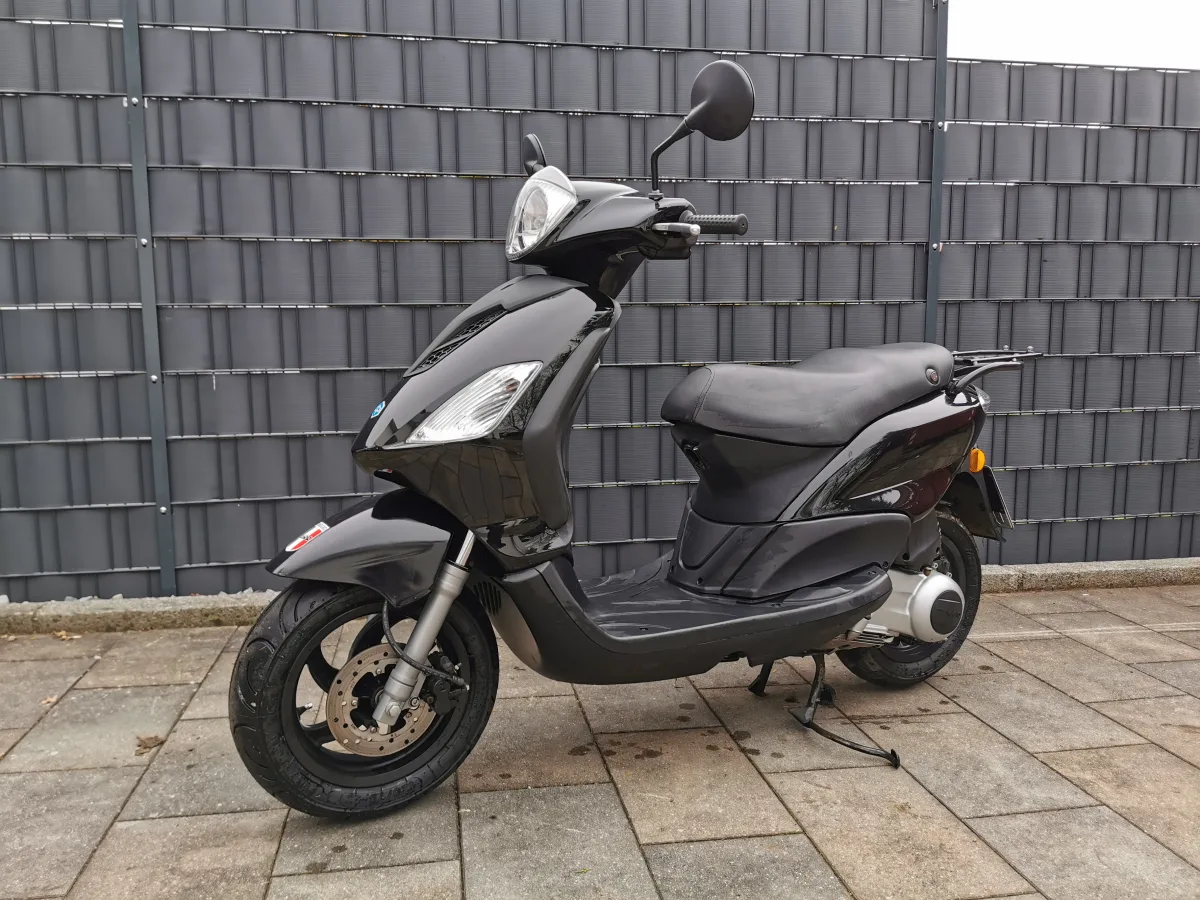
Piaggio Fly: 50, 125 and 150 cm³ versions, what to check when buying
Piaggio Fly — produced since 2004, this compact city scooter is a staple of urban commuting. We look at its versions, engines and what to check when buying used.






Fly in brief
Fly — a lightweight and practical city scooter designed for daily use. Its compact size makes it easy to manoeuvre through traffic and suits those who need simple, affordable transport.
Used Fly scooters are often chosen by beginners and those looking for an affordable daily ride.
Versions
Fly is offered with various engine sizes — from 50 cm³ up to 125 and 150 cm³. The smallest, 50 cm³, is aimed at younger riders and shorter distances, while 125 and 150 cm³ are better for frequent use.
In later years, the manufacturer offered updated engines, so the newer the model, the more likely it is to be economical and modern. Check the specific equipment by year.
Engines and transmission
Fly uses small single-cylinder engines: the 50 cm³ versions come in both two-stroke and four-stroke, while the 125 and 150 cm³ are four-stroke. Transmission on all models is automatic belt-driven (CVT).
Low weight and simple construction mean easy maintenance, but the condition of the variator and belt is crucial for each example.
What to check when buying a used Fly
Check the engine — it should start easily, run smoothly and not smoke excessively. Inspect the variator, belt, brakes and tyres, as well as the plastics and seat.
In two-stroke versions, check the oil supply and cylinder condition. Request the service history, check the electrical equipment, and ensure the documents match the moped's number.


Versions and trims
Names and equipment vary by market and year; here we describe the main versions.
Fly 50
2004–The smallest version for younger riders.
- 50 cm³ engine
- Light and compact
- Ideal for short urban distances
Fly 125
2004–The most popular version for daily use.
- 125 cm³ four-stroke engine
- More power for city commuting
- Suitable for frequent driving
Fly 150
2004–A slightly more powerful version.
- 150 cm³ four-stroke engine
- More reserve power for faster roads
- Similar equipment to the 125
Comparing Fly versions
| Fly 50 | Fly 125 | Fly 150 | |
|---|---|---|---|
| Who it's for | For young drivers | For daily driving | For frequent driving |
| Engine size | 50 cm³ | 125 cm³ | 150 cm³ |
| Engine type | Two-stroke or four-stroke | Four-stroke | Four-stroke |
| Transmission | CVT | CVT | CVT |
| Price in the used market (relatively) | € | €€ | €€ |
The Fly is perfect for daily city commuting. For the tightest budget, the 50 cm³ version will do, but for more frequent drivers, the 125 or 150 cm³ options are worth considering.
Pros
- Light and compact
- Simple and cheap to maintain
- Easy to navigate through city traffic
- Wide selection in the used market
Cons
- Modest power, especially in the 50 cm³ version
- Not suitable for long journeys
- Two-stroke versions require more maintenance
Frequently asked questions
Is the Fly suitable for beginners?
Yes, it's lightweight, simple, and easy to handle. Choose a version that matches your driver's license category.
Which Fly version is the most popular?
The 125 cm³ version is most sought after, as it's ideal for daily use.
Does the Fly have ABS?
This depends on the version, year and market — smaller-capacity Flies often don't have it. Check the specific example's equipment.
Updated 2026-10-21 · Trim levels and equipment vary by market and model year — check the equipment of the specific car. · Translated automatically


