 English
 Lietuvių
 Latviešu
 Eesti
 Polski
 Русский
 Українська
 Deutsch
 Nederlands
 Čeština
 Slovenčina
 Svenska
 Norsk
 Dansk
 Suomi


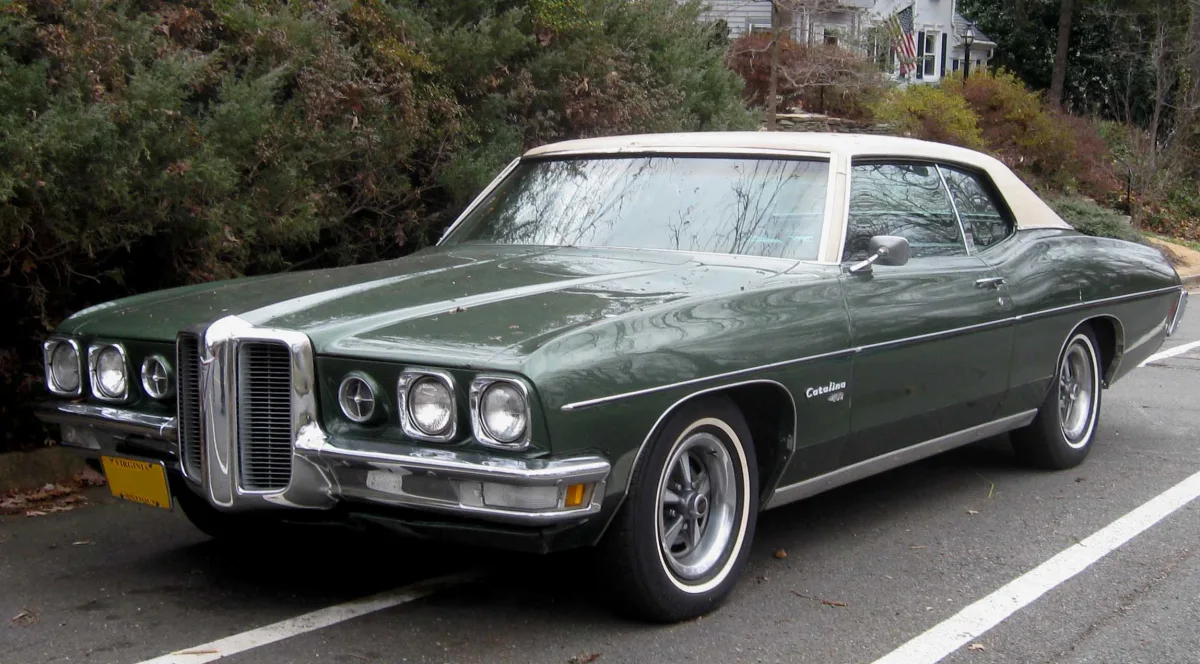
Pontiac Catalina: generations, engines, and what to check when buying
The Pontiac Catalina is a classic American full-size car produced from 1950 to 1981. From 1959, it became a standalone entry-level Pontiac model. We look at the generations, engines, trims, and what you need to know when hunting for a classic Catalina.






Catalina in brief
Initially, the Catalina was just the top trim level for hardtops (1950–1958), but in 1959, it became a standalone model. It was Pontiac's best-selling model and laid the groundwork for the Pontiac Grand Prix, 2+2, Ventura, and Safari wagons.
The Catalina was offered in various body styles: four-door and two-door sedans, hardtops, convertibles, and the Safari wagon. Many of these cars came with a big V8 engine and an automatic transmission.
Generations — what's the difference
The first generation (1959–1960) was a product of the new General Motors B platform with split grilles and a wider track. The second (1961–1964) and third (1965–1970) generations featured new body designs, and a sporty 2+2 version appeared mid-decade.
The fourth generation (1971–1976) grew even larger, but economic troubles and the oil crisis of 1973–1975 reduced sales. In 1977, a smaller, lighter generation was introduced, which was produced until 1981, when the Catalina was discontinued.
Engines and transmissions
The Catalina was offered with V8 engines — from 389 cubic inches (around 6.4 litres) in 1959 to 455 cubic inches (around 7.5 litres) in later years. Power varied greatly across generations and versions, so when buying, check the specific engine code of the car.
Transmissions were a 3-speed manual, with most cars featuring an automatic (Hydra-Matic or later Turbo Hydra-Matic).
What to check when buying a Catalina
First off — rust: inspect the floors, sills, boot floor, wheel arches, and chassis. Given its age and weight, the suspension, steering mechanism, and brakes are crucial — older cars might have drum brakes.
Check if the car is original: Pay special attention to rarer versions, such as the 2+2, to ensure they are authentic. Verify the VIN and engine numbers, and for parts, consult classic Pontiac clubs.


Trim levels
We present the main Catalina variants that are most commonly encountered.
Catalina
1959–1981Base trim.
- V8 engine, usually with an automatic transmission
- Several body styles (sedan, hardtop, convertible)
- Front and rear bench seats
Ventura
1962–1970Luxury interior package.
- More upscale interior trim
- Often — additional exterior trim
- Offered on many Catalina bodystyles
2+2
Mid-1960sThe sporty Catalina variant.
- More powerful V8 engine
- Often — sporty details
- The base later became a separate model
Safari
several generationsStation wagon.
- Spacious trunk
- Often — faux wood trim
- Also offered with three rows of seats
Comparing Catalina versions
| Catalina | Ventura | 2+2 | Safari | |
|---|---|---|---|---|
| Who it's for | A classic daily driver | Comfort and luxury | Sporty driving | Family and cargo |
| Body style | Sedan, hardtop | Sedan, hardtop | Coupe, convertible | Estate |
| Engine | V8 | V8 | More powerful V8 | V8 |
| Price in the used market (relatively) | €€ | €€ | €€€ | €€ |
For most buyers, the base Catalina or Ventura will do the trick. The 2+2 is rarer and pricier — check its authenticity before buying.
Pros
- Classic American design
- Powerful V8 engine
- Spacious interior and boot
- Plenty of body styles
Cons
- High fuel consumption
- Parts can be hard to find, especially for rarer versions
- Low safety by today's standards
Frequently asked questions
How does the Catalina differ from the Bonneville?
The Catalina is the entry-level full-size Pontiac, while the Bonneville is the more luxurious and better-equipped model using the same platform.
Which Catalina generation is the best?
It depends on your taste: 1960s cars are prized for their style, 1970s for their comfort, while the 1977–1981 models are easier to maintain but less distinctive.
How much horsepower does the Catalina have?
Horsepower varies greatly depending on the generation and engine, so check the specific car's engine code via the VIN.
Updated 2026-10-21 · Trim levels and equipment vary by market and model year — check the equipment of the specific car. · Translated automatically


