 English
 Lietuvių
 Latviešu
 Eesti
 Polski
 Русский
 Українська
 Deutsch
 Nederlands
 Čeština
 Slovenčina
 Svenska
 Norsk
 Dansk
 Suomi


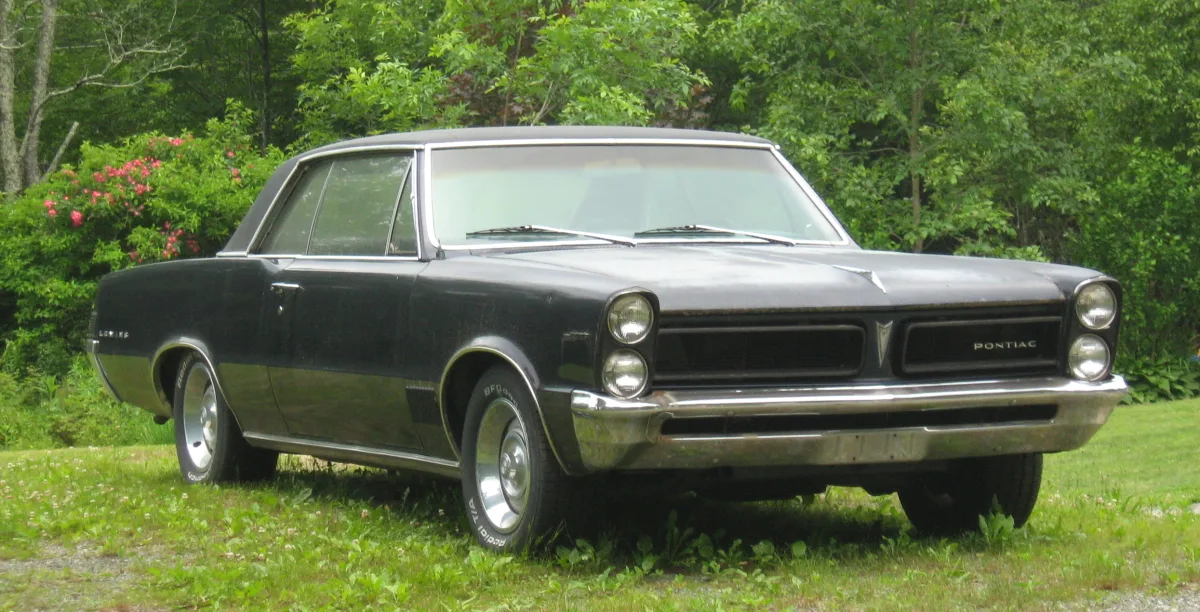
Pontiac Tempest: classic American car, generations and what to know
Pontiac Tempest — the American car family produced from 1961–1970 that gave birth to the famous GTO. In this article, we look at its generations, engines, and what you need to know to buy this classic car.






Tempest in brief
The Tempest debuted in 1961 as a compact Pontiac model, and from 1964 it became a mid-sized car, widely used as the basis for other Pontiac models.
The Tempest 'LeMans' version in 1964 also gave birth to the first GTO — this variant was initially offered as an optional extra package.
Generations — what's the difference
From 1961–1963, the Tempest was a compact car with an unusual design — a rear-mounted transmission and a swing-axle rear suspension. It was one of the bolder solutions of its time.
From 1964, the Tempest changed significantly: it became larger, adopted a conventional rear-wheel-drive layout, and was offered in sedan, coupe, convertible, and station wagon body styles.
The name 'Tempest' was also used for a compact car sold in Canada from 1987–1991, created as a rebadged Chevrolet Corsica. This is a completely different car.
Engines and transmissions
Early Tempests came with a four-cylinder engine, and a V8 was also available. Later, inline six-cylinder and larger V8 engines were offered, and in the mid-1960s, the Pontiac inline six with an overhead valve train.
Transmissions are manual or automatic, and drive is to the rear wheels. The best way to determine the exact engine version is by checking the vehicle documents and engine markings.
What to check when buying a used Tempest
Corrosion and repair quality are the key issues. Inspect the floors, sills, wheel arches, boot and roof. A car that looks good might hide a rust problem.
Many cars have been restored or converted to GTO spec, so ask about provenance and documents that confirm originality.
There's a wide choice of parts thanks to active clubs and suppliers in the US, but shipping to Lithuania can be costly.


Trim levels
Names and equipment vary by market and year; we list the most commonly encountered versions.
Tempest
1961–1970Base model.
- Simpler trim
- Often a six-cylinder engine
- Manual or automatic transmission
Tempest Custom
1960sMore trim and comfort.
- More chrome details
- More comfortable interior
- Often — a bigger engine
LeMans
1962–1970A sportier, more luxurious version.
- Sportier interior
- Often — a V8 engine
- Often — separate front seats
Comparing versions
| Tempest | Tempest Custom | LeMans | |
|---|---|---|---|
| Who it's for | For classic car enthusiasts | For comfort | For sportier driving |
| Engine | Often — a six-cylinder | Six or eight cylinders | Often — V8 |
| Price in the used market (relatively) | €€ | €€ | €€€ |
A great choice for most buyers — a well-preserved Tempest or Tempest Custom. LeMans (and especially GTO) are for collectors.
Pros
- Classic American styling
- A wide range of engine options
- Active clubs and parts suppliers
- The basis for the famous GTO
Cons
- Risk of rust
- High fuel consumption
- Outdated safety and comfort
Frequently asked questions
Are Tempest and GTO the same?
The first GTO (1964) was a Tempest LeMans with an optional extras package. Later, GTO became a separate model.
What's the difference between the 1961–1963 and 1964 Tempest?
Early models are compact and feature an unusual rear gearbox, while from 1964 onwards, they are larger and come with a traditional rear-wheel-drive layout.
What is the Canadian Tempest?
This is a compact car sold between 1987 and 1991, rebranded as the Chevrolet Corsica – it has nothing in common with the classic Tempest.
Updated 2026-10-21 · Trim levels and equipment vary by market and model year — check the equipment of the specific car. · Translated automatically


