 English
 Lietuvių
 Latviešu
 Eesti
 Polski
 Русский
 Українська
 Deutsch
 Nederlands
 Čeština
 Slovenčina
 Svenska
 Norsk
 Dansk
 Suomi


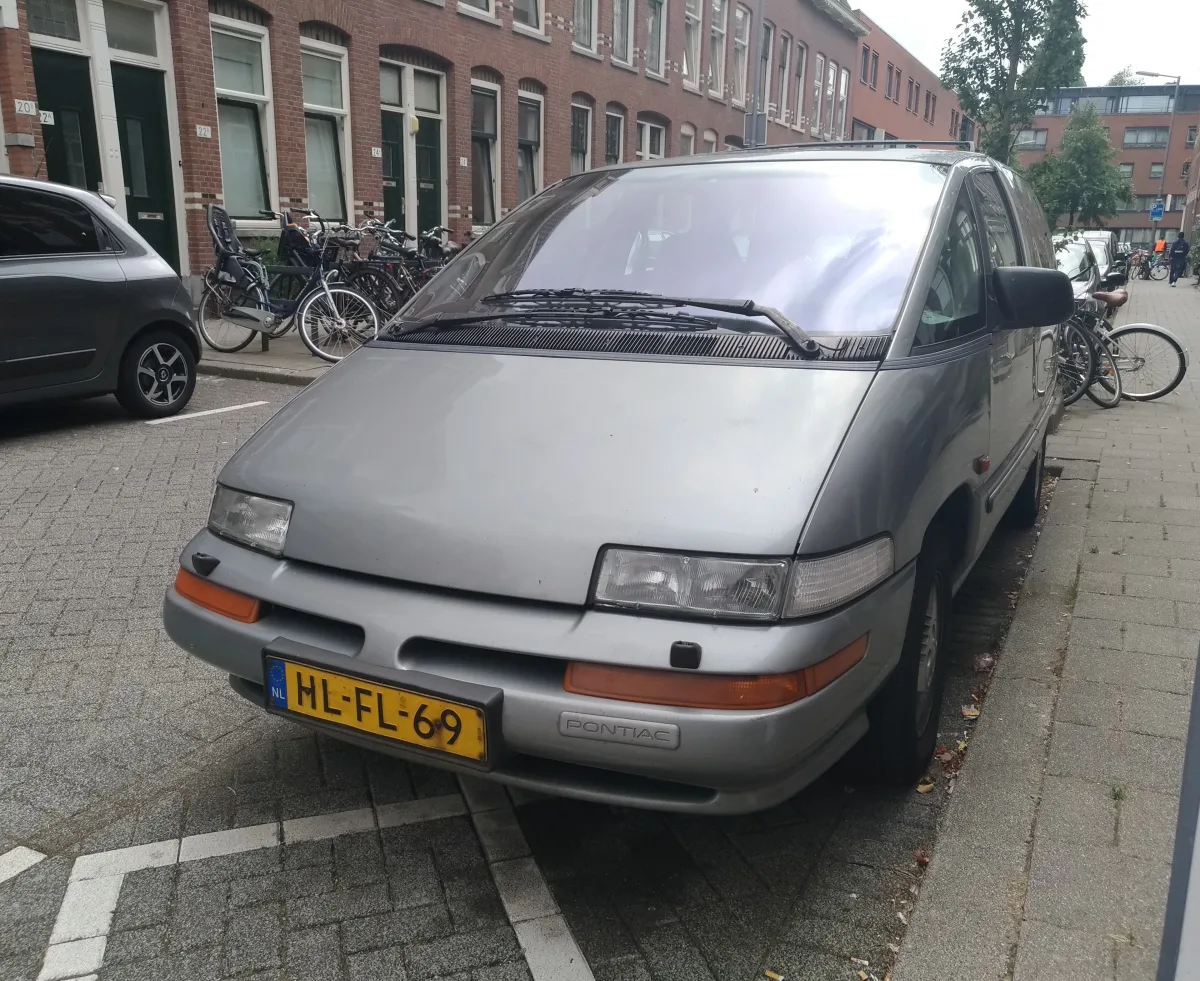
Pontiac Trans Sport: minivan, generations and what to check
Pontiac Trans Sport — the General Motors minivan that debuted in 1990 with a distinctive, futuristic front end and plastic body panels. In this article, we look at the generations, engines, trim levels, and what to check when buying an old minivan.






Trans Sport in brief
The first-generation Trans Sport stood out with its long, low roofline and sleek, sloping front end. In America, it was often nicknamed the Dustbuster due to its shape resembling a handheld vacuum cleaner. The body panels were plastic, so they don't rust and aren't easily dented.
This is a six or seven-seater family car with a spacious interior. It was never a mass-market vehicle in Europe, so today in Lithuania, you'll only find the occasional example.
Which generation to choose
The first generation (1990–1996) is the most recognizable Trans Sport with its plastic panels. It has a unique style, but the technology is outdated, so condition and service history are crucial.
The second generation (from 1997) adopted a more conventional minivan shape, but in North America, it was later renamed the Montana. In Europe, this generation was sometimes sold under different names, such as the Opel Sintra.
Engines and transmissions
The first generation most commonly used 3.1 L and 3.8 L V6 petrol engines with an automatic transmission. Their power is modest — around 120–165 HP, so you can drive a loaded minivan calmly, but not quickly.
The second-generation models often came with a 3.4-litre V6 engine, but versions vary by market, so check the technical specs to be sure.
What to check when buying a used Trans Sport
Since the body panels are plastic, look for cracks, paint damage, and poorly fitted repairs. Rust can be on the frame, sills, and undercarriage — inspect the underside as thoroughly as possible.
Test the sliding doors, window regulators, heating, and air conditioning. Older minivans often have electrical and mechanical niggles, and some parts may need to be sourced from abroad.
If the vehicle was imported from the USA or Canada, check the VIN history and mileage. Before buying, take it for a test drive — the automatic gearbox should shift smoothly, without any jolts.


Trim levels
Trim names and packages vary by market and year; we list the most commonly encountered.
Trans Sport (bazinė)
First generationA basic six- or seven-seater version.
- Often — 3.1-litre V6
- Often — more basic interior trim
- Often — steel or standard alloy wheels
Trans Sport SE
First generationMore features and comfort.
- Often — lightweight alloy wheels
- Often — more comfortable seats
- Often — more electric equipment
Trans Sport GT
First generationA sportier-looking version with a more powerful engine.
- Often — 3.8-litre V6
- Often — sportier trim
- Often — additional features
Comparing Trans Sport versions
| Bazinė | SE | GT | |
|---|---|---|---|
| Who it's for | Ideal for family use | For comfort | For a distinctive look |
| Alloy wheels (most often) | Basic | Light alloy | Light alloy |
| Engine | 3.1-litre V6 | 3.1 or 3.8-litre V6 | 3.8-litre V6 |
| Interior | Basic | More comfortable | Often sportier |
| Price in the used market (relatively) | € | € | € |
For most buyers, the condition of the car is more important than the version. If you're after a unique classic minivan, opt for a well-preserved first-generation model.
Pros
- Distinctive 1990s styling
- Plastic body panels don't rust
- Spacious interior for the family
- Not too heavy on fuel
Cons
- Rare, some parts might need to be sourced abroad
- Plenty of power but high fuel consumption
- Old tech, common age-related issues
Frequently asked questions
Was the Trans Sport sold in Europe?
Yes, but in small quantities. The most commonly encountered cars were imported from the US or Canada, while in Europe, similar minivans were sold under different names from 1997 onwards.
Do the plastic panels rust?
The plastic itself doesn't rust, but rust can occur on the frame, sills, and underbody. It's also worth checking if the panels aren't dented and are properly secured.
Which engine is better?
The 3.8-litre V6 boasts more power and is better suited to a fully loaded vehicle, while the 3.1-litre is simpler and slightly more economical. Both require standard maintenance.
Updated 2026-10-21 · Trim levels and equipment vary by market and model year — check the equipment of the specific car. · Translated automatically


