 English
 Lietuvių
 Latviešu
 Eesti
 Polski
 Русский
 Українська
 Deutsch
 Nederlands
 Čeština
 Slovenčina
 Svenska
 Norsk
 Dansk
 Suomi


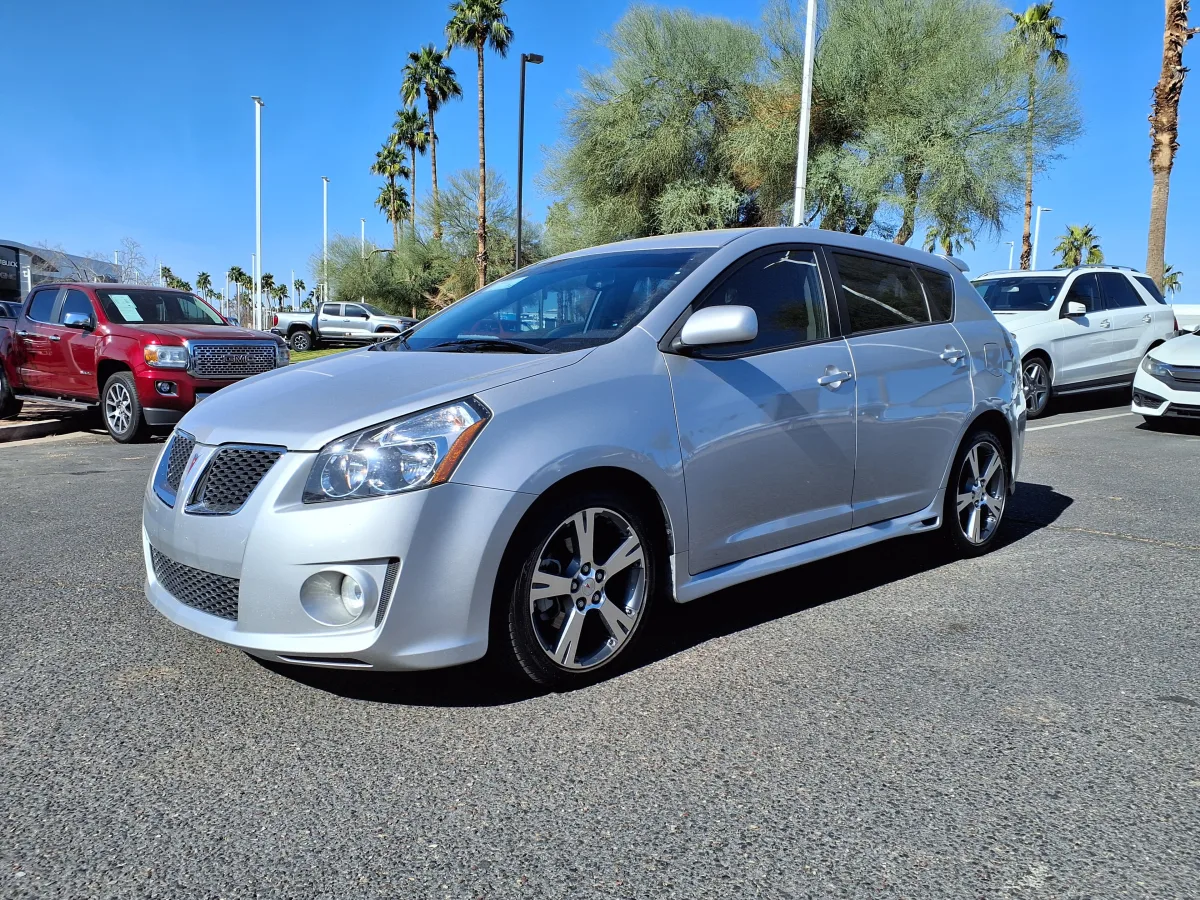
Pontiac Vibe (2003–2010): a practical hatchback with Toyota technology
Pontiac Vibe — a compact hatchback developed jointly with Toyota and produced from 2003 to 2010. We review two generations, engines, and what to check when buying a used Vibe.






Vibe in brief
Vibe — a joint Pontiac and Toyota project: the car is technically close to the Toyota Matrix and Corolla. As a result, it's known for its simple, reliable technology and affordable maintenance.
This is a practical hatchback with the features of a versatile body: plenty of space for cargo, fold-down seats, and a low loading lip. They're not common in Lithuania and are mostly found as US imports.
Generations — what's the difference
The first generation (2003–2008) has a distinctive design with plastic body cladding. The second generation (2009–2010) became more modern, with a sharper design.
Due to its short production run, the second generation is rarer. For most buyers, the condition of the specific car matters more than the generation.
Engines and transmissions
Vibe uses Toyota petrol engines: mostly 1.8 l in the first generation, and 1.8 and 2.4 l in the second. Some sportier GT variants had a more powerful engine version.
The transmission is manual or automatic. Some versions had all-wheel drive, but most cars are front-wheel drive.
What to check when buying a used Vibe
First, check if the manufacturer's recall work on airbags has been completed — this model had extensive recall campaigns. Also, ensure there are no oil leaks and that the oil level is stable.
Some 1.8-litre engines may consume oil, so ask about oil changes and monitor the level. Test the gearbox and clutch.
For a car imported from the USA, it's essential to check its history via the VIN, the body condition for rust, and whether it's suitable for registration in Lithuania.


Trim levels
Names and equipment vary by market and year; we list the versions most commonly found in Europe.
Vibe
2003–2010The base version with the Toyota 1.8-litre engine.
- Basic but practical equipment
- Folding rear seats and a spacious boot
- Often — electrically adjustable windows
Vibe GT
2003–2010A sportier version with a more powerful engine.
- A more powerful engine version
- Often — lightweight alloy wheels
- A sportier ride
Vibe AWD
2003–2010Version with four-wheel drive.
- Four-wheel drive
- Standard automatic transmission
- Suitable for winter and rough roads
Comparing versions
| Vibe | Vibe GT | Vibe AWD | |
|---|---|---|---|
| Who it's for | Everyday driving | For sportier driving | For winter |
| Transmission | Front-wheel drive | Front-wheel drive | All-wheel drive |
| Price in the used market (relatively) | € | €€ | €€ |
For most buyers, the base Vibe is a solid choice — it's economical and straightforward. AWD is worth considering for winter conditions, while the GT is the pick if performance is key.
Pros
- Reliable Toyota engineering
- Practical body
- Low running costs
- Plenty of space for cargo
Cons
- Never officially sold in Europe
- Check for airbag recalls
- Some engines may use oil
Frequently asked questions
Is the Vibe the same as the Toyota Matrix?
Not quite, but they are very closely related: both were developed together and use similar technology.
Does the Vibe have four-wheel drive?
Yes, some versions came with four-wheel drive.
Is the Vibe reliable?
Thanks to Toyota's engineering, it's considered reliable, but it's important to check the specific car's condition and recall campaigns.
Updated 2026-10-19 · Trim levels and equipment vary by market and model year — check the equipment of the specific car. · Translated automatically


