 English
 Lietuvių
 Latviešu
 Eesti
 Polski
 Русский
 Українська
 Deutsch
 Nederlands
 Čeština
 Slovenčina
 Svenska
 Norsk
 Dansk
 Suomi


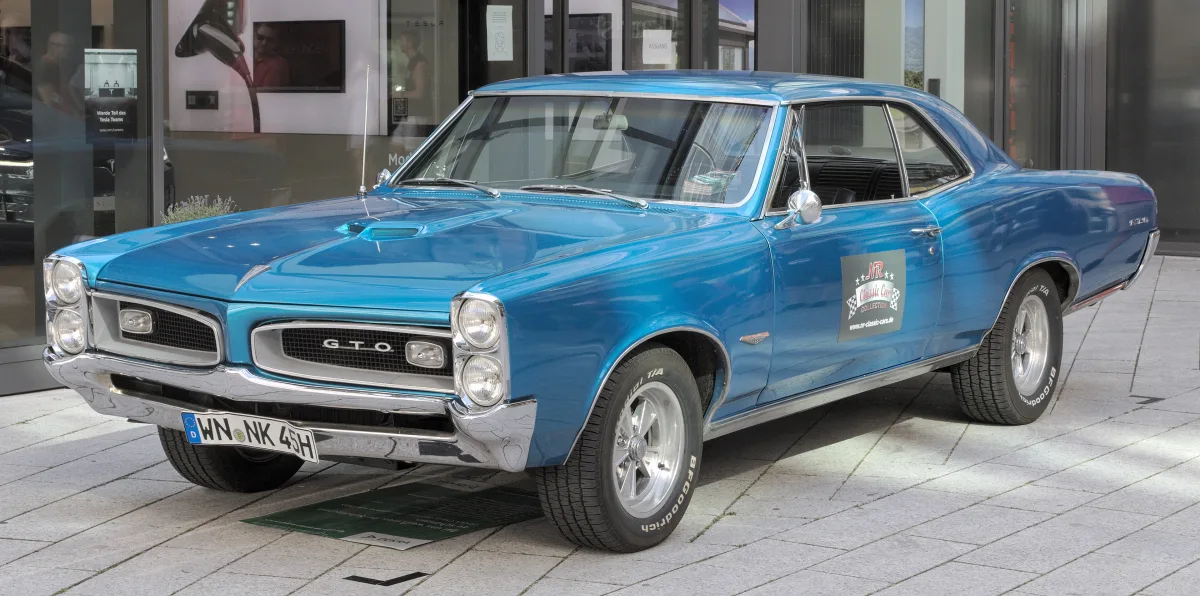
Pontiac GTO: generations, engines, and what to know when buying
The Pontiac GTO is one of the most famous American muscle cars, produced from 1964 to 1974, and later briefly revived from 2004 to 2006. We cover both eras, engines, the most famous trims, and what to check before buying.






GTO in brief
The GTO debuted in 1964 and is often considered the first true muscle car: a large V8 engine was fitted into a mid-size car. The name comes from the Italian 'Gran Turismo Omologato'.
After 1974, GTO production ceased, but the name returned in 2004 for a new generation, which was actually an Australian-built Holden Monaro badged as a Pontiac. So, there are two very different GTOs: the classic and the modern.
Which one to choose
The classic GTO (1964–1974) is divided into several generations: 1964–1967, 1968–1972, and 1973–1974. The most popular among collectors are the late 1960s models, especially the 'The Judge' trim.
The modern GTO (2004–2006) is a coupe with a contemporary V8 engine, a more comfortable interior, and newer safety systems. It's ideal for those who need a fast car for daily driving and don't want the hassles of classic car ownership.
Engines and transmissions
The classic GTO's engines were large V8s—ranging from about 6.4L to about 7.5L in displacement, with power depending on the trim and year. The transmission was manual or automatic, with rear-wheel drive.
The modern GTO featured a GM V8 engine: about 5.7L in 2004, later about 6.0L with more power. The transmission was a six-speed manual or a four-speed automatic.
What to check when buying a used GTO
With a classic GTO, authenticity is key. Many cars have been converted from standard Tempest or LeMans models, so check the VIN, engine codes, and documents to ensure it's a genuine GTO.
Inspect the body for rust: the floor, sills, wings, boot floor, and chassis. Check the engine, gearbox, brakes, and suspension – many older cars have been modified.
The modern GTO is an imported car, so it's essential to check its history via the VIN and ensure it's properly registered. Make sure the car hasn't been in an accident and that the gearbox operates smoothly.


Trim levels
Names and equipment vary by market and year; we list the versions and trims most commonly found in Europe.
GTO (1964–1967)
1964–1967The first generation that kicked off the muscle car era.
- A hefty V8 engine
- A straightforward classic interior
- Rear-wheel drive
GTO The Judge
1969–1971The most striking and collector-favourite version.
- Bold colours and stripes
- A more powerful V8 engine
- Sporty equipment
GTO (2004–2006)
2004–2006Modern GTO with contemporary tech.
- 5.7-litre or 6.0-litre V8 engine
- Six-speed manual or automatic gearbox
- Contemporary interior
Comparing the versions
| 1964–1967 | The Judge | 2004–2006 | |
|---|---|---|---|
| Who it's for | For classic car enthusiasts | For collectors | For daily high-speed driving |
| Engine | Big V8 | Big V8, more powerful | 5.7–6.0-litre V8 |
| Gearbox | Manual or automatic | Manual or automatic | 6-speed manual or 4-speed automatic |
| Price in the used market (relatively) | High-end | High-end | Mid-range |
For collectors, authenticity and documentation are key, so it's best to choose an original classic GTO. If you need a daily driver, the 2004–2006 version is suitable.
Pros
- Legendary muscle car history
- Powerful V8 engine and sound
- Collectible value in classic versions
- The modern GTO is a reliable and fast coupe
Cons
- Never officially sold in Europe
- High fuel consumption
- Classic cars come with rust and authenticity issues
Frequently asked questions
Is the modern GTO a true Pontiac?
It was sold with the Pontiac badge, but was actually made in Australia as the Holden Monaro.
Which classic GTO versions are the most valuable?
Collectors particularly prize late-1960s models, especially the 'The Judge' version.
Is the GTO suitable for daily driving?
The modern GTO is. The classic is more of a collector's item, as it's old and harder to maintain.
Updated 2026-10-19 · Trim levels and equipment vary by market and model year — check the equipment of the specific car. · Translated automatically


