 English
 Lietuvių
 Latviešu
 Eesti
 Polski
 Русский
 Українська
 Deutsch
 Nederlands
 Čeština
 Slovenčina
 Svenska
 Norsk
 Dansk
 Suomi


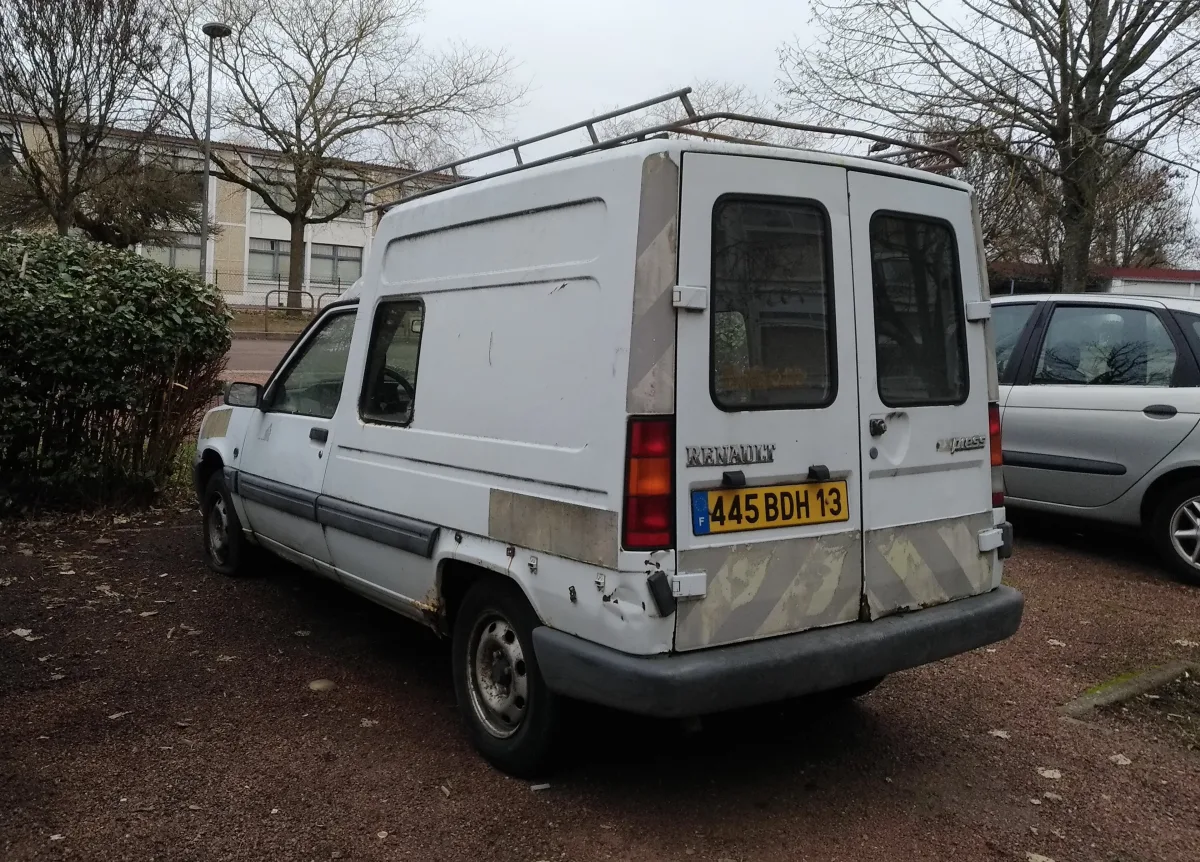
Renault Express: small van, generations and trims
Renault Express — a small Renault van with a nameplate used for two distinct generations: the original, introduced in 1985, and the new, compact van and people carrier Express launched in 2021. We look at both generations, engines, and what to check before buying.






Express in brief
The first Express (from 1985) was a compact city van based on the Renault 5. It was popular as an affordable commercial vehicle for small businesses, but today it's rarely seen in Lithuania, mostly with collectors.
Since 2021, the Express nameplate has been used for a new compact van with a passenger version, aimed at small businesses and families. It replaced the Dacia Dokker and is sold alongside the larger Kangoo.
Which generation to choose
The old Express is a very old vehicle, so wear and tear, corrosion, and finding parts are the main concerns. It's only worth considering as a hobby car or a very cheap workhorse.
The new Express is still quite young in the used market. It's a simple, affordable van with a large load space, making it a good alternative for those who don't need the very latest technology.
Engines and gearboxes
The old Express most commonly had small-capacity petrol (around 1.1–1.4 l) and diesel engines, with a manual gearbox almost always.
The new Express offers 1.5 Blue dCi diesel engines (in various power outputs) and a 1.3 TCe turbocharged petrol engine. Most cars come with a manual gearbox.
What to check when buying a used Express
In the older Express, the main concern is body corrosion, especially around the sills, wheel arches, and floors. Check the condition of the suspension components and look for records of previous repairs.
In the new Express diesel models, check the emissions control system (AdBlue and particulate filter), especially if the vehicle has been primarily used in the city.
Inspect the van body and cargo area for dents, dings, and damaged floors, as these vehicles are often put through their paces.


Trim levels
Trim names vary by market and year; we list the most commonly encountered.
Furgonas (senasis Express)
First generationA basic two-seater city van.
- Often comes with a basic cab
- Small cargo area
- Manual transmission
Essential
New ExpressBase trim level.
- Often comes with steel wheels
- Standard safety equipment
- Often — a simpler sound system
Comfort
New ExpressBetter equipped for daily use.
- Often — air conditioning
- Often — a larger multimedia screen
- More comfortable cabin
Extra
New ExpressHigher-spec for business and family.
- Often — additional safety features
- Often — parking sensors
- More comfortable interior
Comparison of trims
| Essential | Comfort | Extra | |
|---|---|---|---|
| Who it suits | For everyday work | For daily commercial use | More kit for those who want it |
| Engine | 1.5 Blue dCi, 1.3 TCe | 1.5 Blue dCi, 1.3 TCe | 1.5 Blue dCi, 1.3 TCe |
| Cab | Basic | More Comfortable | Best Equipped |
| Price in the used market (relatively) | € | €€ | €€€ |
The new Express is perfect for small businesses as it's simple and spacious. When buying used, the key is to check the real condition of the cargo area and service records.
Pros
- Large cargo area by dimensions
- Simple, straightforward technology
- Passenger Combi version for the family
- Relatively affordable
Cons
- Less luxurious interior
- Less comfort than the Kangoo
- The old Express – an old and easily rusting design
Frequently asked questions
What's the difference between the old and new Express?
These are completely different vehicles. The old one (from 1985) was a city van based on the Renault 5, while the new one (from 2021) is a compact van and passenger version.
Is the Express suitable for a family?
The passenger version of the new Express is suitable for families who value space and a low price, but the comfort is less than that of more luxurious models.
What engines are available in the new Express?
The most common are the 1.5 Blue dCi diesel (in several power levels) and the 1.3 TCe petrol engine. Check the specific details in the vehicle's documents.
Updated 2026-10-14 · Trim levels and equipment vary by market and model year — check the equipment of the specific car. · Translated automatically


