 English
 Lietuvių
 Latviešu
 Eesti
 Polski
 Русский
 Українська
 Deutsch
 Nederlands
 Čeština
 Slovenčina
 Svenska
 Norsk
 Dansk
 Suomi


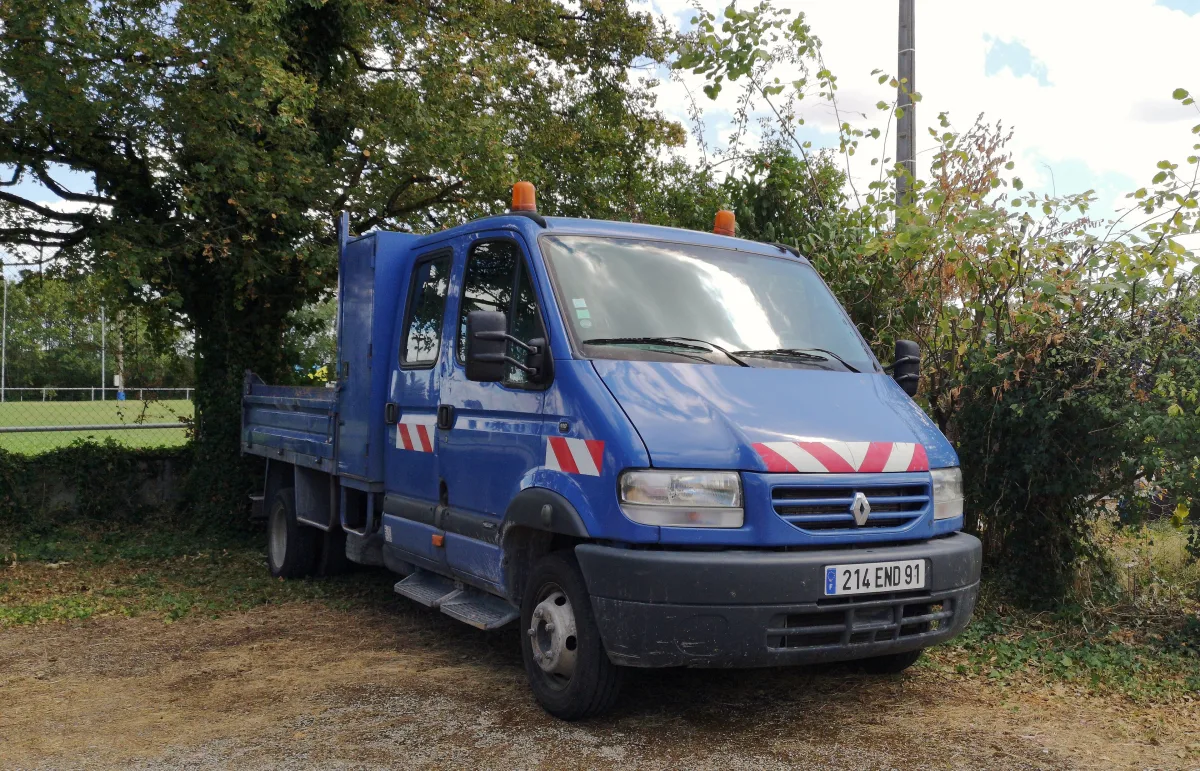
Renault Mascott: light commercial vehicle, engines and trims
Renault Mascott — a light commercial vehicle produced by Renault Trucks from 1999 to 2010, based on the Master. We look at what makes it unique, which engines and body styles are most popular, and what to check before buying a used Mascott.






Mascott in brief
Mascott — a light commercial vehicle based on the Renault Master van, adapted for heavier loads. It comes in various gross vehicle weights, and the cab is similar to the Master, making it feel familiar.
It's widely used in construction, municipal services, and transportation. As a result, some used vehicles have covered many miles, and their body condition varies greatly.
Versions and gross vehicle weight
The Mascott name often specifies power and weight, such as 120.35 or 150.45: the first number indicates approximate power, the second the gross vehicle weight (35 – 3.5 t, 45 – 4.5 t).
Several body styles are available: cab and chassis, double cab, flatbed, tipper, van. Versions with dual rear wheels are designed for heavier loads.
Engines and gearboxes
Mascott models are powered by diesel engines, with outputs ranging from around 100 to 160 HP. Later engines meet stricter emissions standards.
The gearbox is usually manual, with rear-wheel drive. Be cautious when comparing models: technical specs can vary between different year Mascott vehicles.
What to check when buying a used Mascott
Check the frame, body mounts, and cargo body. Most of these vehicles work hard, so look out for dents, corrosion, and deformations.
Test the engine when cold and after load: turbo, clutch, gearbox, and exhaust system often wear out with heavy use. Ask if the timing belt and oil have been changed on time.
If the vehicle was used for commercial purposes, check the tachograph requirements and service history.


Trim levels
The Mascott is sold as a chassis cab, so the most common body versions are listed, not trim levels.
Bortinis
All yearsA versatile platform with sides.
- Often — a metal platform
- Suitable for construction and transportation
- Can be fitted with a tent
Furgonas
All yearsEnclosed cargo body.
- Protects the cargo from weather conditions
- Often — side or rear doors
- Suitable for goods delivery
Savivartis
All yearsHydraulic tipping body.
- Suitable for farm work
- Requires hydraulic system check
- Often — dual-axle configuration
Dviguba kabina
All yearsCabin accommodates more people
- Often — 5–7 seats
- Shorter cargo bed
- Ideal for work crews
Cab comparison
| Bortinis | Furgonas | Savivartis | |
|---|---|---|---|
| Who it's for | For construction, hauling | For goods delivery | For farm work |
| Cab | Open | Enclosed | With hydraulics |
| Most important to check | Condition of the platform | Condition of the doors and floor | Operation of the hydraulics |
| Price in the used market (relatively) | €€ | €€ | €€€ |
Choose according to your needs: the pickup is the most versatile, the van is suitable for deliveries, and the SUV is for off-road work. In all cases, the most important thing is the technical condition and mileage check.
Pros
- Robust, simple technology
- Shared components with Master – plenty of parts
- Wide range of body styles
- Proven for daily work
Cons
- Noisy and firm cabin
- Many cars with high mileage
- Old tech, environmental restrictions
Frequently asked questions
How does the Mascott differ from the Master?
The Mascott is a larger gross weight van built on the Master platform, while the Master is a panel van. The Mascott typically has a sturdier chassis and sometimes dual rear wheels.
What does Mascott 120.35 or 150.45 mean?
The first number roughly indicates the engine power, the second the gross weight (35 – around 3.5 tonnes, 45 – around 4.5 tonnes).
Is the Mascott worth buying as a workhorse?
Yes, if the vehicle is in good condition and has a clear service history. However, due to heavy use, a thorough inspection is essential.
Updated 2026-10-14 · Trim levels and equipment vary by market and model year — check the equipment of the specific car. · Translated automatically


