 English
 Lietuvių
 Latviešu
 Eesti
 Polski
 Русский
 Українська
 Deutsch
 Nederlands
 Čeština
 Slovenčina
 Svenska
 Norsk
 Dansk
 Suomi


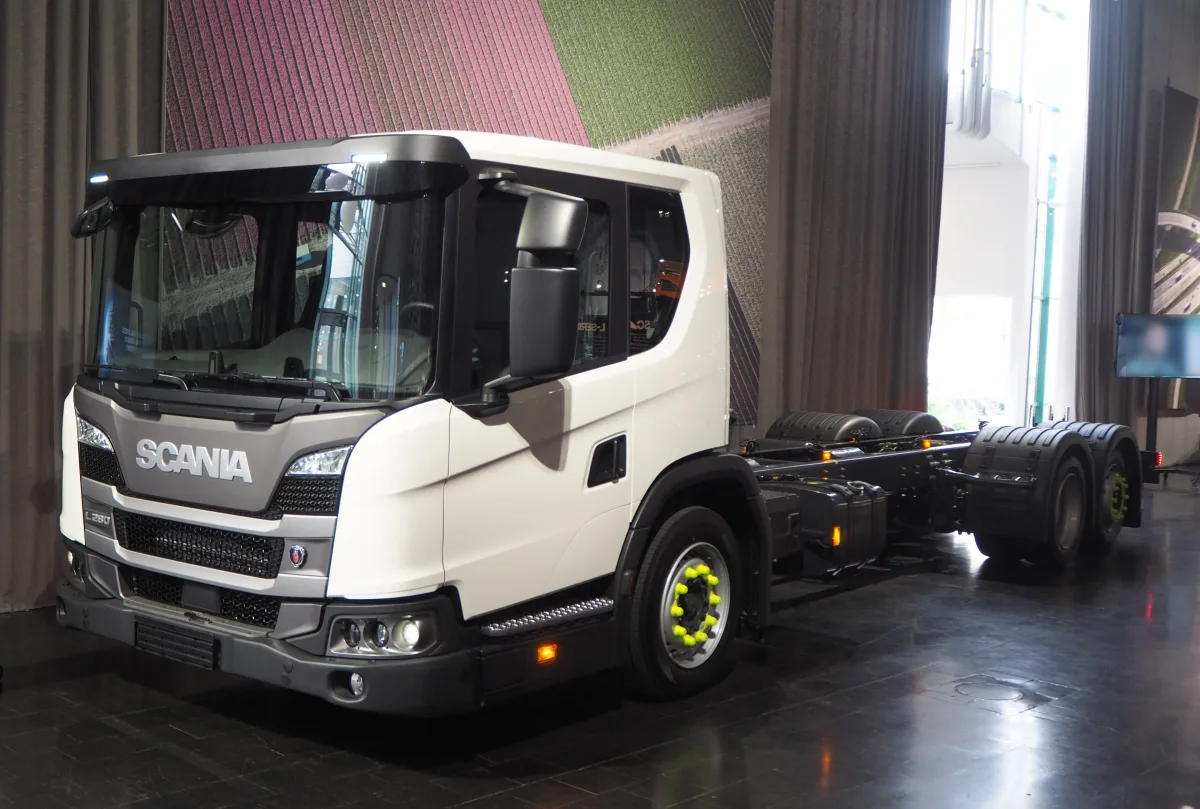
Scania L-series: low cab for city trucks and versions
Scania L-series — a truck with a low-entry cab designed for city deliveries and waste collection. We look at cab versions, engines, alternative fuel options, and what to check when buying a used L-series.






L-series in brief
Scania L-series — a truck built to work in the city: it has a low cab with easy access, good visibility, and maneuverability. Introduced in 2017, it's suited to waste collection, city deliveries, municipal services, and urban construction.
Thanks to the low cab, the driver can frequently get in and out, which is especially important in waste collection or delivery trucks where frequent stops are necessary.
Versions and purpose
L-series is produced as a chassis onto which a waste collection body, van, tipper, or other special body can be mounted. Therefore, in the used market, you need to evaluate not just the truck but also the equipment mounted on it.
There are several axle configurations and cab versions, including cabs with more seating for the crew. When choosing an L-series, it's important to verify what work it was used for and if the body meets your needs.
Engines and transmissions
Most commonly found are Scania diesel engines, around 9 litres in capacity, five-cylinder, with varying power outputs (roughly from 250 to 360 hp). There are also alternative versions — gas (CNG, biomethane) and electric, which are particularly relevant in cities with environmental restrictions.
Transmissions are either automated Scania Opticruise or automatic, with some versions offering a manual option. Waste collection trucks often use automatic transmissions as they're suited to frequent stopping and starting.
What to check when buying a used L-series
The most important thing is the condition of the cab and special equipment: the waste compaction mechanism, hydraulics, lifting platform, or tailgate system. Ask for service records, as they're more important than mileage alone.
Check the cab doors and entry points (they can wear out from heavy use), suspension, brakes, and chassis condition. In diesel-engined vehicles, check the AdBlue system and particulate filter.
For gas and electric versions, assess the condition of gas cylinders, their inspection dates, or battery condition, and check warranty or service terms.


Trim levels and versions
Trim levels and versions vary by market and year; below are the most commonly found versions.
Važiuoklė su kabina
L-seriesBase model for special bodies designed for municipal tasks.
- Open rear section
- Low-entry cab
- Body mounted separately
Atliekų surinkimo sunkvežimis
L-seriesWith waste compaction equipment.
- Often comes with an automatic transmission
- Special hydraulic units
- High mileage
Miesto furgonas
L-seriesClosed body for urban deliveries
- Low cab for easy access
- Often — rear lift gate
- Ideal for frequent stopping
Dujinė versija (CNG / biometanas)
L-seriesAn alternative to diesel in the city
- Gas cylinders
- Lower emissions
- Check the cylinder inspection dates
Elektrinė versija
Latest versionsDesigned for emission-free urban zones
- Battery in place of a diesel engine
- Quiet driving
- Still rare in the used market
Comparison of versions
| Atliekų surinkimo | Miesto furgonas | Dujinė versija | |
|---|---|---|---|
| Who it suits | For waste disposal | For goods delivery | For lower emissions |
| Fuel type | Diesel | Diesel | Gas (CNG/biomethane) |
| What to check in particular | The suspension system | The lifting platform | The gas cylinders |
| Usage intensity | Very high | High | High |
| Price in the used market (relatively) | € | €€ | €€ |
The L-series is best suited for city-based businesses that prioritize easy access and maneuverability. Opt for a version with well-maintained special equipment and a clear service history.
Pros
- Low cab and easy access
- Good visibility and maneuverability in the city
- Wide range of cab options
- There are gas and electric versions available
Cons
- Special cabs often show significant wear
- Supply of used models is limited
- Maintenance of alternative fuel versions is specific
Frequently asked questions
How does the L-series differ from other Scania series?
The L-series features a low cab with easy access, designed for city work, while other series (P, G, R, S) are suited for various purposes and long-haul journeys.
Is the L-series suitable for long-haul journeys?
It is primarily designed for city and regional work, so for long routes, other series cabs are usually chosen.
Is there an electric L-series version?
Yes, there is an electric version for city duties, but it's still rare in the used market.
Updated 2026-10-21 · Trim levels and equipment vary by market and model year — check the equipment of the specific car. · Translated automatically


