 English
 Lietuvių
 Latviešu
 Eesti
 Polski
 Русский
 Українська
 Deutsch
 Nederlands
 Čeština
 Slovenčina
 Svenska
 Norsk
 Dansk
 Suomi


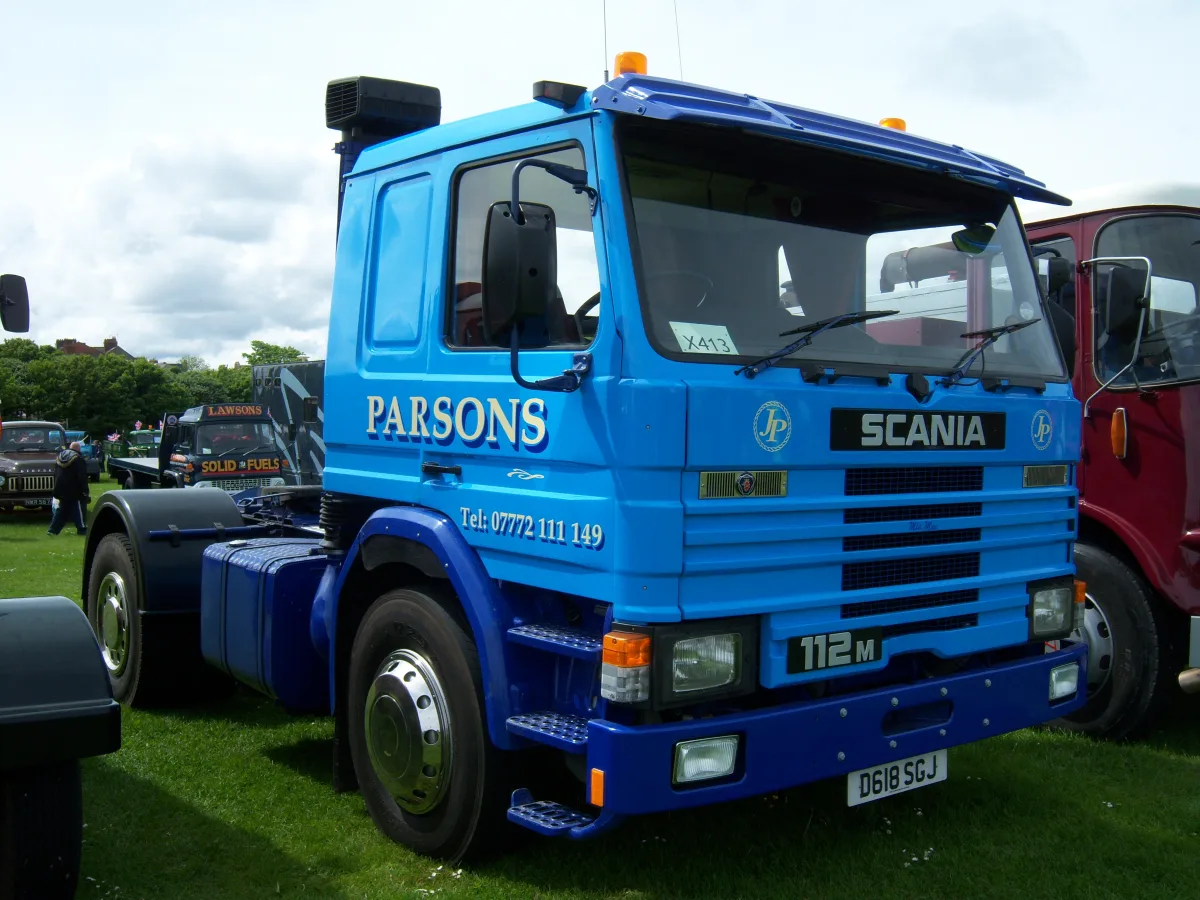
Scania 112: the history of the truck, engines, and what to check when buying
Scania 112 — a heavy-duty truck produced from 1980 to 1988, becoming one of the most famous models of the second series in Europe. In this article, we look at the versions, the 11-litre engine, typical uses, and what's important to check when buying such a classic in Lithuania.






Scania 112 in brief
The Scania 112 was one of the heavy-duty trucks of the second series. It was produced as a tractor unit, rigid truck, flatbed, or chassis cab, and also served as the basis for special bodies — fire trucks with ladders, cranes, tankers. As a result, you can still find it in a variety of uses today.
This model was known for its robust construction, reliable engine, and straightforward technology. Thanks to these qualities, many of these trucks are still in operation, and some have become collector's items.
Cabs and variants — what's the difference
The Scania 112 was offered with several cabs: from a short day cab to a high sleeper cab. The name usually includes a letter designation (e.g., 112M or 112H), indicating the type of cab. The differences in cabs are important for the driver — they affect the size and comfort of the sleeping area.
Various wheel configurations were available: 4x2 and 6x2 for tractor units, 6x4 and 8x4 for rigid trucks and construction equipment. Some trucks had an additional front or rear axle and pneumatic suspension.
From 1988, this model was gradually replaced by the third-series Scania 113, which maintained the overall construction logic but was modernised.
Engines and gearboxes
The main Scania 112 engine is an 11-litre inline six-cylinder turbodiesel. Power output varied by version, usually around 300 hp. The engine was designed before Euro emissions standards, so it lacks exhaust gas cleaning systems.
Gearboxes are manual, often with a splitter that doubles the number of gears. Early models don't have automated gearboxes, so driving requires skill and physical effort.
What to check when buying a used Scania 112
First, inspect the chassis and cab for corrosion. Older trucks often have rusty frames and cab mounts, so check the joints, crossmembers, fasteners, and cab suspension. Ensure the frame hasn't been repaired after an accident.
The engine should start without prolonged cranking, not smoke black or blue, and not make metallic noises. Ask when the oil, fuel filters, and coolant were last changed, and check the condition of the fuel pump and turbocharger.
Check how the brakes and air system work: pressure should build up quickly and hold steady. Verify the identification numbers in the documents, and for special-purpose trucks (cranes, tippers, tankers) request the relevant technical inspections and permits.


Versions
Names and equipment vary by market and year; we list the most common variants found in Europe.
Vilkikas 4x2 / 6x2
1980–1988Typical long-haul tractor unit for semi-trailers.
- Often comes with a high-sleep cab
- Manual gearbox with splitter
- Adapted for semi-trailer towing
Savivartis 6x4
1980–1988Version designed for construction and quarry work.
- Reinforced chassis
- Often — four-wheel drive
- Cab-over design
Bortinis ar platformos sunkvežimis
1980–1988For regional haulage.
- Often — fitted with a crane or manipulator
- Shorter or mid-range wheelbase
- Usually a day cab
Specialios paskirties važiuoklė
1980–1988Base model for fire trucks, tankers, cranes.
- Additional cab equipment
- Often low mileage but high hours of operation
- Special additional hydraulic fittings
Comparison of main variants
| Vilkikas | Savivartis | Bortinis | |
|---|---|---|---|
| Who it's suited to | For long-distance journeys | For construction and careers | Regional haulage truck |
| Wheel formula (most common) | 4x2 or 6x2 | 6x4 | 4x2 or 6x2 |
| Cab | Often sleeper | Often day cab | Often day cab |
| Price in the used market (relatively) | €€ | €€ | € |
For most buyers, the most relevant choice is a tractor unit, but what matters most is not the version, but the condition of the chassis and cab. Special-purpose vehicles are usually valued based on the fitted equipment.
Pros
- Robust, simple design
- Reliable around 11-litre diesel engine
- Many versions and potential uses
- Appeals to collectors and restorers
Cons
- Requires a lot of physical work — manual gearbox and precise driving
- High risk of corrosion to the frame and cabin
- Outdated technology, does not meet modern environmental standards
Frequently asked questions
Can the Scania 112 be used for commercial freight?
Theoretically yes, but it's outdated technology that may face local restrictions (e.g., environmental zones or taxes). Before buying, check if the vehicle meets your route requirements.
What's the difference between the Scania 112 and 113?
The 113 is a newer third-generation model based on the 112, with improved technology and a better cabin. The 112 is simpler and older, while the 113 is usually more comfortable and popular.
How important is it to pay attention to the special body?
Very important: cranes, tippers, or tankers have their own inspection and maintenance requirements, and their condition often determines the entire vehicle's value. Ask for the service book and valid inspection documents.
Updated 2026-10-21 · Trim levels and equipment vary by market and model year — check the equipment of the specific car. · Translated automatically


