 English
 Lietuvių
 Latviešu
 Eesti
 Polski
 Русский
 Українська
 Deutsch
 Nederlands
 Čeština
 Slovenčina
 Svenska
 Norsk
 Dansk
 Suomi


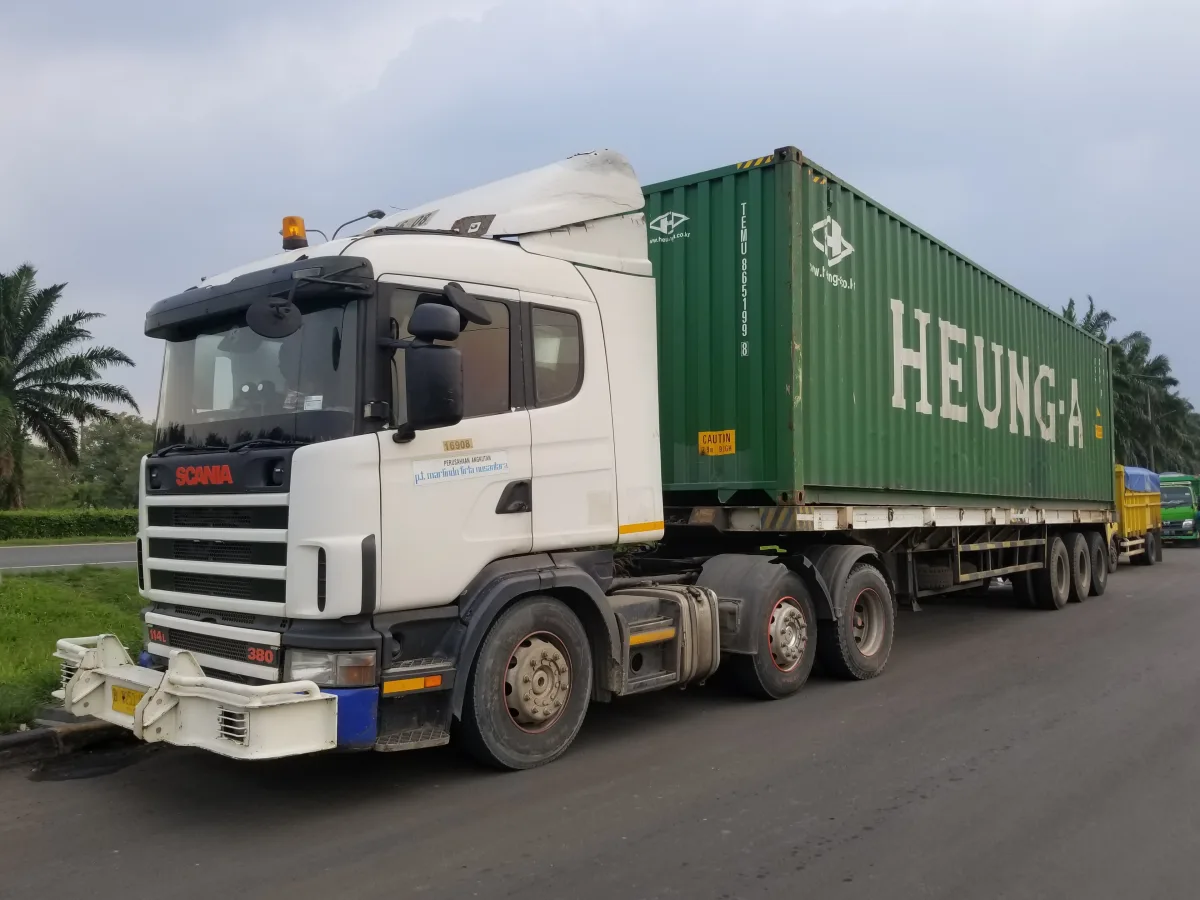
Scania 4-series: truck, models and what to check
Scania 4-series — the heavy-duty truck generation, produced from 1995 to 2004 (models 94, 114, 124, 144, 164). We look at the cabins, engines and what to check when buying a used 4-series.






4-series in brief
Scania 4-series — the truck generation introduced in 1995 and produced until around 2004. It replaced the 3-series and was later succeeded by the new R-series. Models are numbered according to engine capacity: 94 (around 9 litres), 114 (around 11 litres), 124 (around 12 litres), 144 (around 14 litres) and 164 (V8).
The 4-series was widely used for long-haul transport, construction and specialist equipment. It remains popular in the used market for its longevity, but most vehicles now have high mileage.
Cabs and trims
Cabs are designated by letters: P (low), G (mid), R (high sleeper) and T (top-of-the-range). After the cab letter, the model is specified, and at the end, the power, for example, R114L 380 means an R cab, 114 model (around 11-litre engine) and approximately 380 hp.
In the used market, you'll often find tractors (4x2 and 6x2), as well as rigid trucks and crane trucks. Since the vehicle is old, it's crucial to know the specific trim's history.
Engines and gearboxes
4-series engines are Scania diesels: inline six-cylinder (around 9, 11, 12 and 14 litres) and V8 around 16 litres (164 model). Power ranges from roughly 230 to 580 hp.
Transmissions are manual (Scania GR series) or automated Opticruise. Manual boxes are simpler and more reliable, but require more effort from the driver.
What to check when buying a used 4-series
As the 4-series is quite old, inspect the bodywork carefully — it can be extensive and not always documented. Ask about the engine's repair history, check the cab, transmission, suspension, and brakes.
Signs of cabin and chassis corrosion are common in older trucks: inspect the sills, floor, cabin mounts, and chassis. Check if the cabin lift mechanism works and the engine starts without prolonged cranking and doesn't smoke.
Check the Euro emissions class and whether it can be driven in low-emission zones. Spare parts availability for older Scania models is usually good, but check in advance for specific parts.


Trim levels and versions
Trim levels and versions vary by market and year; below are the most commonly found versions.
Scania 94
4-seriesLower-powered version with an approximately 9-litre engine.
- Often used for regional haulage
- Lower power
- Simpler trim level
Scania 114
4-seriesPopular version with an approximately 11-litre engine.
- Power around 340–420 hp
- Often used as a tractor unit
- Suitable for regional and long-distance trips
Scania 124
4-seriesMore power with an approximately 12-litre engine.
- Power output around 360–470 HP
- Often — a tow truck and a four-wheel drive
- Ideal for long-distance trips
Scania 144
4-seriesMore powerful version with an approximately 14-litre engine.
- Power output around 460–530 HP
- Often — for heavy loads
- Higher fuel consumption
Scania 164 (V8)
4-seriesV8 engine version for the heaviest loads.
- V8 engine
- The most powerful in the series
- Rarely found in the used market
Comparison of versions
| Scania 114 | Scania 124 | Scania 144 | |
|---|---|---|---|
| Who it's for | For regional and long-distance journeys | For long-distance journeys | For heavy loads |
| Engine size | Around 11 litres | Around 12 litres | Around 14 litres |
| Power (approx.) | 340–420 HP | 360–470 HP | 460–530 HP |
| What to check in particular | The condition of the cab and sleeper | The engine and gearbox | The engine and cooling system |
| Price in the used market (relatively) | € | € | €€ |
Most buyers will find the Scania 114 or 124 with a well-maintained engine and sound cabin to be a good fit. Before purchasing, be sure to thoroughly check the mileage, signs of corrosion, and the engine's repair history.
Pros
- Robust and long-lasting construction
- Available parts
- Wide range of engines and cabs
- Affordable price in the used market
Cons
- Most vehicles have high mileage
- Older Euro classes
- Corrosion can be an issue in older versions
Frequently asked questions
What does R114L 380 mean?
The letter R indicates the cab, 114 is the model with an approximately 11-litre engine, L denotes the chassis or version designation, and 380 is the approximate horsepower.
How does the 4-series differ from the 3-series?
The 4-series is a newer generation (from 1995) with a more modern cabin and technology, while the 3-series was produced from 1987 to 1997.
Can the 4-series be used in city zones?
This depends on the Euro class and local requirements, so before buying, check the rules for environmental zones.
Updated 2026-10-21 · Trim levels and equipment vary by market and model year — check the equipment of the specific car. · Translated automatically


