 English
 Lietuvių
 Latviešu
 Eesti
 Polski
 Русский
 Українська
 Deutsch
 Nederlands
 Čeština
 Slovenčina
 Svenska
 Norsk
 Dansk
 Suomi


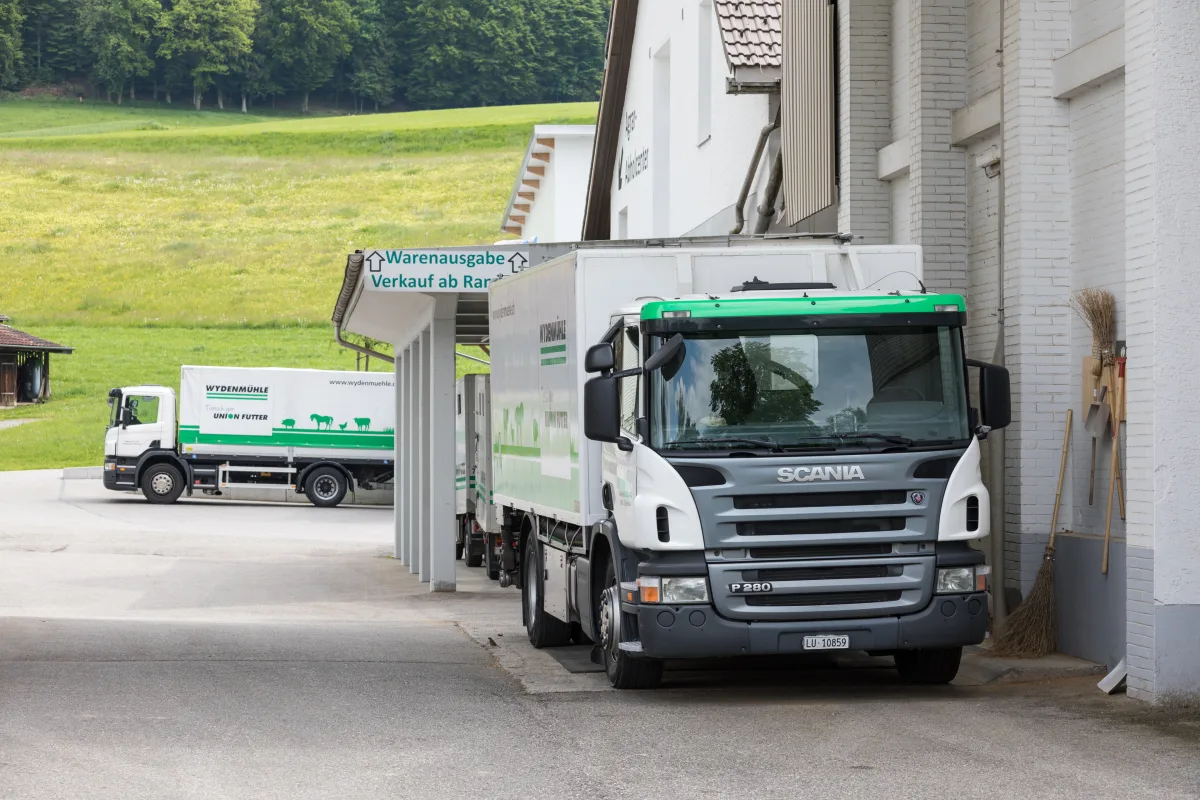
Scania P series: low cab for distribution and construction
The Scania P series features the lowest cabs in the Scania lineup, designed for city work, distribution, and construction. We look at how previous and new generations of the P series differ, which engines and axle configurations are most common, and what to check when buying a used truck that has often worked in tough conditions.






Scania P series in brief
The P cab is the lowest-mounted of all Scania cabs: you step in via just one or two steps, and the driver sits closer to the ground. This is crucial when working in the city, where you might get in and out dozens of times a day, as well as on construction sites and municipal services.
As a result, the P series is most commonly found as a distribution truck with a box body or refrigerated unit, a tipper, concrete mixer, refuse truck, loader crane, or fire brigade base. The cab can be a short day cab with a small sleeper area or a double cab for crew transport. The P cab is less suitable for long-haul trips—those are what the G, R, or S cabs are for.
Previous and new generation—what's the difference
The previous generation of the P series was produced from the mid-2000s until roughly 2016–2017. There are plenty of these used trucks on the market: they are simpler, cheaper, and easier to maintain, but they often have been working for many years in the city or on construction sites, so their condition can vary greatly.
The new-generation P cab debuted around 2017. It's roomier, with a larger front windscreen and better side visibility, which is particularly important in the city due to pedestrians and cyclists. The new generation comes with more driver assistance systems, and it also offers diesel, hybrid, and electric P-series trucks, although there aren't many used ones on the market yet.
Engines, transmissions, and axle configurations
The most common engines in distribution trucks are 9-litre five-cylinder diesels (around 230–360 hp), with some lighter models featuring a 7-litre six-cylinder engine. For heavy-duty tasks like concrete mixers and dump trucks, a 13-litre engine is often chosen—for example, the P 410 or P 450. City services also use gas (CNG or LNG) engines.
Older trucks are typically Euro 3–Euro 5, while newer ones from 2013–2014 are Euro 6 with AdBlue and a particulate filter. If a Euro 6 truck has been used for short urban trips, the filter can clog up faster, so it's important to check how the truck has been operated.
Transmissions come in manual or automated Opticruise, with some city trucks featuring traditional automatics. Common axle configurations include 4x2 and 6x2 for distribution (6x2 often with a liftable or steerable rear axle), 6x4 and 8x4 for dump trucks and concrete mixers, and less frequently, all-wheel drive.
What to check when buying a used Scania P
City and construction trucks often have low mileage but high engine hours, as they work long shifts in one place or power equipment. Ask for a diagnostic report with engine hours and compare it with the service history and tachograph data. Check the tachograph calibration date and type if the truck will be driven abroad.
Test the gearbox and clutch by moving with a load and uphill — frequent city driving wears out the clutch faster. If a retarder is fitted, check if it operates smoothly and has no leaks. Inspect the brakes, suspension, and steering mechanism — concrete mixers and dump trucks face heavy loads.
On the crane, inspect the frame for cracks, welding, and severe corrosion, especially under the cab and near the hydraulic mounting. Check the superstructure — lifting boom, cooling unit, dump truck hydraulics, or manipulator, as their repairs can be costly. In Euro 6 trucks, check the AdBlue system, NOx sensors, and ensure no AdBlue emulator is installed.


Cab and versions
P-series trucks are often custom-ordered for specific jobs, so the superstructure and equipment vary greatly; we list the most commonly found versions.
P dienos kabina
Both generationsShort, low cab for city and construction work.
- Easy to get in and out
- More space in the cab on the frame
- Often — distribution vans, dump trucks, refuse trucks
P kabina su miegamąja vieta
Both generationsLonger cab when you sometimes need to sleep on the road.
- Small sleeping area behind the seats
- Often — standard or high roof
- Ideal for regional haulage
P dviguba kabina
Both generationsCrew cab with a second row of seats for transporting a team.
- Often used by fire and municipal services
- Space for several workers
- Less common in the used market
P paskirstymo sunkvežimis 4x2 / 6x2
Both generationsThe most popular P variant with a van or refrigerated body.
- Often fitted with a 9-litre engine
- Often comes with a lifting rear tailgate
- 6x2 — often with a lifting or steering rear axle
P savivartis 6x4 / 8x4
Both generationsFor construction and roadwork
- Often fitted with a 13-litre engine
- Sturdier suspension and chassis
- Often comes with rear axle locking
Comparing Scania P versions by purpose
| Paskirstymo 4x2 / 6x2 | Savivartis 6x4 / 8x4 | Vilkikas 4x2 | |
|---|---|---|---|
| Who it's suited to | Delivery within the city and region | Construction and roadwork | Short hauls with a trailer |
| Most common engine | 9-litre | 13-litre | 9-litre or 13-litre |
| Cab (most common) | Day cab or sleeper | Day cab | Day cab or sleeper |
| What to look out for | Tipping body, refrigeration unit, fifth wheel | Chassis, hydraulics, suspension | Fifth wheel, bull bar, ride |
| Price in the used market (relatively) | € | €€€ | €€ |
The Scania P is ideal for city and construction work where easy access and a higher payload are crucial. For long-haul journeys, opt for the taller G or R cab.
Pros
- Low cab — easy to get in and out
- Excellent visibility in the city
- Plenty of axle and chassis configurations
- Reliable 9-litre and 13-litre engines
Cons
- High cab for longer journeys
- City and construction trucks often get very dirty
- Chassis repairs can cost more than the truck itself
Frequently asked questions
How does the Scania P differ from the G?
The P cab is mounted lower and is smaller, making it more convenient for frequent stops in the city or at construction sites. The G cab is taller and roomier, making it better suited for regional hauls where the driver spends more time in the cab.
Is the Scania P suitable as a tractor unit?
Yes, P tractor units are produced and used for short and local hauls. However, for long-haul journeys, the P cab is often too small, so for such work, the G, R or S are more commonly chosen.
Why is it important to check the engine hours, not just the mileage?
City and construction trucks spend a lot of time idling—waiting in queues, powering hydraulics or concrete mixers. So the mileage might be low, but the engine could be worn out like that of a much higher-mileage truck.
Is it worth buying a gas-powered Scania P?
A gas-powered truck can be useful if there's an appropriate gas station nearby. Before buying, make sure you can refuel regularly and check the expiration dates of the gas cylinders.
Updated 2026-10-09 · Trim levels and equipment vary by market and model year — check the equipment of the specific car. · Translated automatically


