 English
 Lietuvių
 Latviešu
 Eesti
 Polski
 Русский
 Українська
 Deutsch
 Nederlands
 Čeština
 Slovenčina
 Svenska
 Norsk
 Dansk
 Suomi


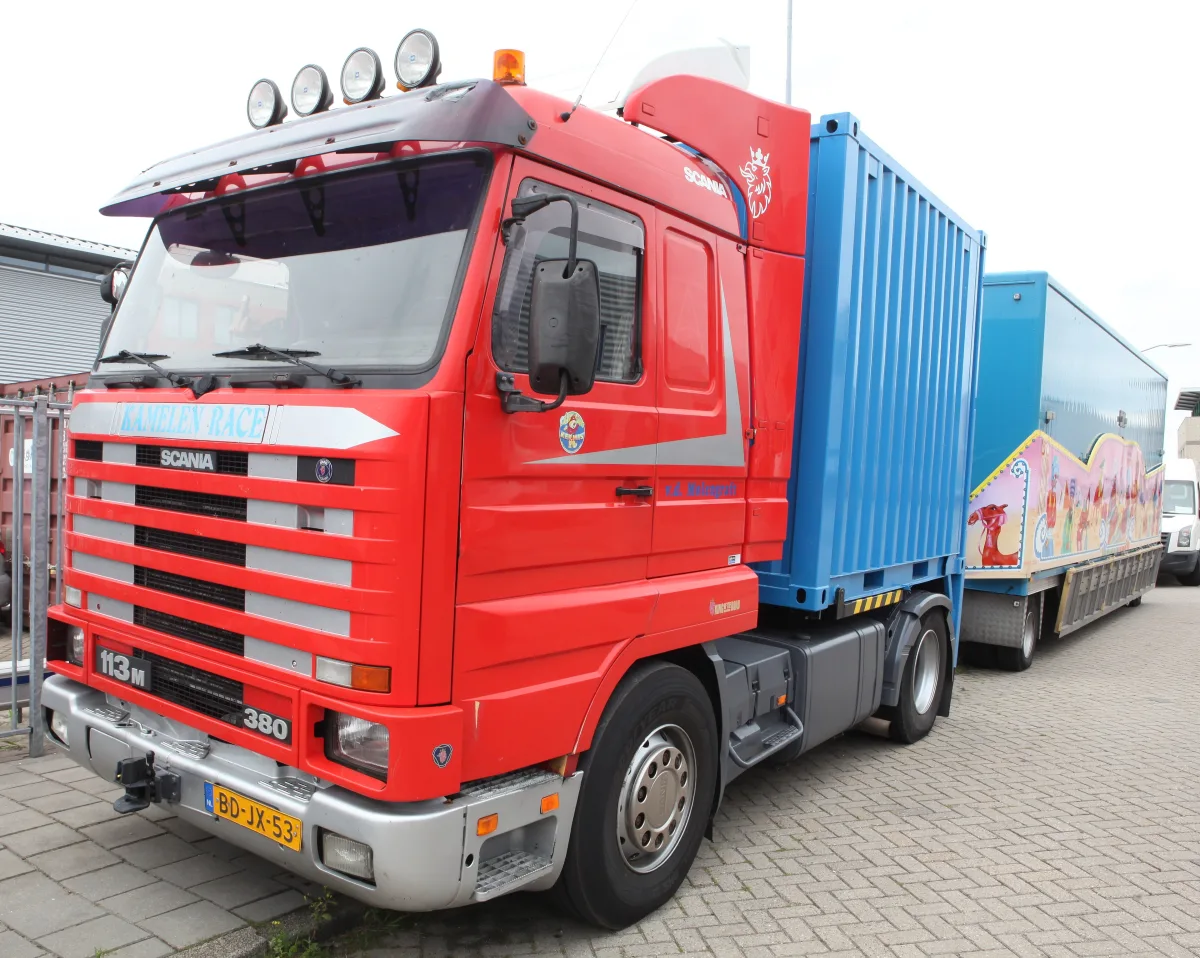
Scania 113: 3rd-gen truck, engines, and what to check when buying
Scania 113 — the 3rd-gen truck produced from 1988 to 1997, still common on European roads and in Lithuania. We look at the cab, 11-litre engine, purpose, and key points to check before buying.






Scania 113 in brief
The Scania 113 is a 3rd-gen truck that replaced the 112 model. It was produced as a tractor unit, rigid truck, or flatbed, and also served as the base for special bodies. The model became particularly popular among long-haul drivers for its reliability and straightforward engineering.
The number after 113 usually indicates horsepower (e.g., 113M 360 or 113H 400), while the letter denotes the cab type. This system makes it easy for buyers to understand which version they're dealing with.
Cabs and versions — what's the difference
The main cab variants are the mid-height M and the taller H, plus there were shorter day cabs. The taller cab offers more space for rest, making it more valued by long-haul drivers.
Axle configurations — 4x2 and 6x2 for tractor units, 6x4 and 8x4 for rigid trucks. More powerful versions often have a sturdier frame, and the 6x2 variant has a liftable or tag axle, which helps save on fuel and tyres.
Post-1990 improvements made the trucks more comfortable, and the latest examples were sold as a transitional model before the new Scania 4 series.
Engines and gearboxes
The main engine is an approximately 11-litre six-cylinder turbodiesel with an intercooler. Power outputs typically were 320, 360, 380, and 400 HP. Later examples complied with Euro 1 or Euro 2 standards, so always check the exact standard via the registration documents.
Gearboxes are manual with a splitter. Earlier models do not have automated boxes, and their gear shifting is purely manual, so the driver needs experience.
What to check when buying a used Scania 113
Inspect the frame and cabin for corrosion — especially the cabin steps, floor, and mounting points. Check if the cabin is securely attached and if the paint colour hasn't faded, which could indicate a previous accident.
The engine should start smoothly, not smoke, and not leak oil. Check the fuel injectors, turbocharger, cooling system, and electrical installation, which often has faulty connections in older trucks.
Check the braking system, air pressure retention, and suspension. Compare the frame and engine numbers with the documents, request the service history, and, if possible, take a test drive with a loaded trailer.


Versions
Names and equipment vary by market and year; we list the most common variants found in Europe.
113M
1988–1997Mid-height cabin — a versatile option.
- Mostly 320–400 HP engine power
- Suitable for both regional and long-haul trips
- Usually with a sleeper
113H
1988–1997High cabin — more space for the driver.
- Higher sleeper section
- Often — higher power (up to 400 hp)
- Typical for long-haul tractors
Savivartis 6x4 / 8x4
1988–1997Version designed for construction and quarry work
- Reinforced frame
- Often — two or three driven axles
- Day cab is most common
Bortinis / manipuliatoriaus sunkvežimis
1988–1997For regional freight and construction
- Often — a crane or manipulator
- Shorter wheelbase
- Compact cab
Specialios paskirties važiuoklė
1988–1997Base for tankers, fire trucks and other bodies
- Often — additional hydraulic equipment
- Reinforced chassis
- Additional permits required
Comparison of the main 113 variants
| 113M | 113H | Savivartis | |
|---|---|---|---|
| Who's it for? | Versatile use | Long-distance trips | Construction and quarry work |
| Cab | Mid-height | High | Mostly daily use |
| Engine power (most common) | 320–400 HP | 360–400 HP | 320–400 HP |
| Wheel configuration (most common) | 4x2 or 6x2 | 4x2 or 6x2 | 6x4 or 8x4 |
| Price in the used market (relatively) | €€ | €€ | €€ |
The 113M is usually suitable for daily driving, while the 113H with its more powerful engine is better for long-haul trips. The most important thing is the condition of the frame, cab, and engine, not the mileage.
Pros
- Simple and well-known technology
- A wide range of cab and engine options
- Good availability of spare parts
- Robust construction, suitable for heavy-duty work
Cons
- Old technology without modern driver assistance systems
- Rust on the frame and cab
- High operating costs compared to newer trucks
Frequently asked questions
What does the number after 113 in the name mean?
Usually, it's the engine power in horsepower — for example, 360 means around 360 HP. The letter (M or H) indicates the cab type.
Is the Scania 113 suitable for long-haul trips?
Yes, especially with the higher H cab and more powerful engine. However, it's old technology, so daily comfort and fuel consumption differ from modern trucks.
What Euro emission standard does the Scania 113 have?
That depends on the year of manufacture. Early models do not meet Euro standards, later ones are Euro 1 or Euro 2. The registration document provides the exact information.
Updated 2026-10-21 · Trim levels and equipment vary by market and model year — check the equipment of the specific car. · Translated automatically


