 English
 Lietuvių
 Latviešu
 Eesti
 Polski
 Русский
 Українська
 Deutsch
 Nederlands
 Čeština
 Slovenčina
 Svenska
 Norsk
 Dansk
 Suomi


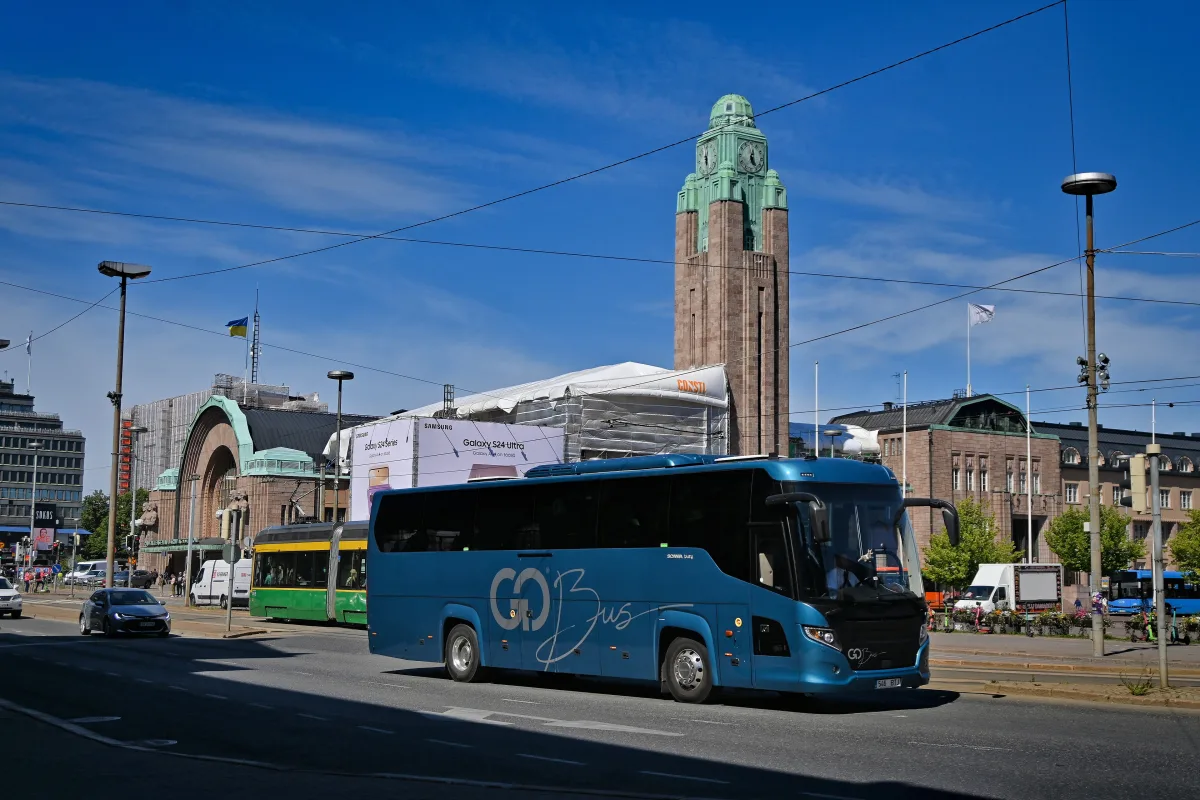
Scania Touring: the tourist coach, engines and what to check
Scania Touring — the tourist and long-distance coach produced since 2009, created by Scania in collaboration with Higer. We look at the versions, engines, seating capacity, and what to check when buying.






Scania Touring in brief
Scania Touring — the tourist and long-distance coach that offers Scania reliability and economical engines at an accessible price. It's used by operators for excursions, international routes, and regular services.
The coach is available with two or three axles, making it suitable for various passenger numbers. Key advantages include reliable engines, a comfortable interior, and a spacious luggage compartment.
Versions — what sets them apart
Scania Touring is produced in several length versions — from around 12 to over 14 metres. Seating capacity usually ranges from 49 to 57, depending on the length and layout of the interior.
There are versions with different heights (HD — the taller version with a larger luggage compartment) and varying interior specifications: from basic to high-end with a toilet and kitchenette.
Earlier models comply with Euro 5, newer ones with Euro 6 standards, so always check the specific standard in the documents.
Engines and gearboxes
Scania Touring is powered by Scania six or five-cylinder diesels with a displacement of around 9–13 litres. Power comes in several stages, ranging from approximately 280 to over 400 HP.
Transmissions come in manual, automated ('Opticruise') or automatic. Automated boxes are great for long hauls but require regular maintenance.
What to check when buying a used Scania Touring
First off — service history and tachograph data. Ask for the full service book and inspection documents. Check the air suspension, brakes and tyres.
The engine and gearbox should run smoothly, without vibration or judder. Check the AdBlue and SCR system, particulate filter, cooling system and air conditioning — climate control is vital on long journeys.
The body was designed by Higer, so check the availability of spare parts for the bodywork in advance. Inspect the interior, seats, doors, windows, signs of corrosion and electrical equipment; match the numbers with the documents.


Versions
Names and equipment vary by market and year; we list the most common variants found in Europe.
Touring 12 m
2009–The standard version for touring and long-distance travel.
- Two-axle variant
- Around 49–53 seats
- A wide range of trim levels
Touring HD
2009–The higher-spec version with a larger boot.
- More boot space
- Often — more comfortable seats
- Suitable for long-distance trips
Touring 13–14 m
2009–Longer version for more passengers
- More seating
- Often includes a toilet and kitchenette
- Often three axles
Touring Euro 6
2009–Newer versions with Euro 6 engines
- Updated engines
- Additional safety systems
- Often pricier in the used market
Comparison of base Touring versions
| 12 m | HD | 13–14 m | |
|---|---|---|---|
| Who it's for | For standard touring | For long-distance trips | For large groups of passengers |
| Axles | Two | Two or three | Two or three |
| Number of seats (usually) | Around 49–53 | Around 49–55 | Around 53–57 |
| Price in the used market (relatively) | Mid-range | Mid-range | High-end |
The 12m version suits most drivers, the HD for long-haul trips, and the longer version for more passengers. The key is the service history and technical condition.
Pros
- Reliable Scania engines
- Quite accessible price compared to premium class buses
- Comfortable interior and large boot
- Wide range of versions
Cons
- AdBlue and SCR system can be costly
- The availability of body parts may be less than that of engine parts
- Many used buses have high mileage
Frequently asked questions
Who manufactures the Scania Touring body?
The body is made by Higer, while the chassis and engine are by Scania. Therefore, the availability of body parts may differ from that of Scania engine parts.
How many seats does the Scania Touring have?
It depends on the length and layout of the interior, usually around 49–57 seats. The exact number is specified in the technical documents.
Is it worth buying a Touring with high mileage?
If there is a full service history and the bus is mechanically sound – yes. However, a high-mileage bus will require more maintenance, so haggle on the price.
Updated 2026-10-21 · Trim levels and equipment vary by market and model year — check the equipment of the specific car. · Translated automatically


