 English
 Lietuvių
 Latviešu
 Eesti
 Polski
 Русский
 Українська
 Deutsch
 Nederlands
 Čeština
 Slovenčina
 Svenska
 Norsk
 Dansk
 Suomi


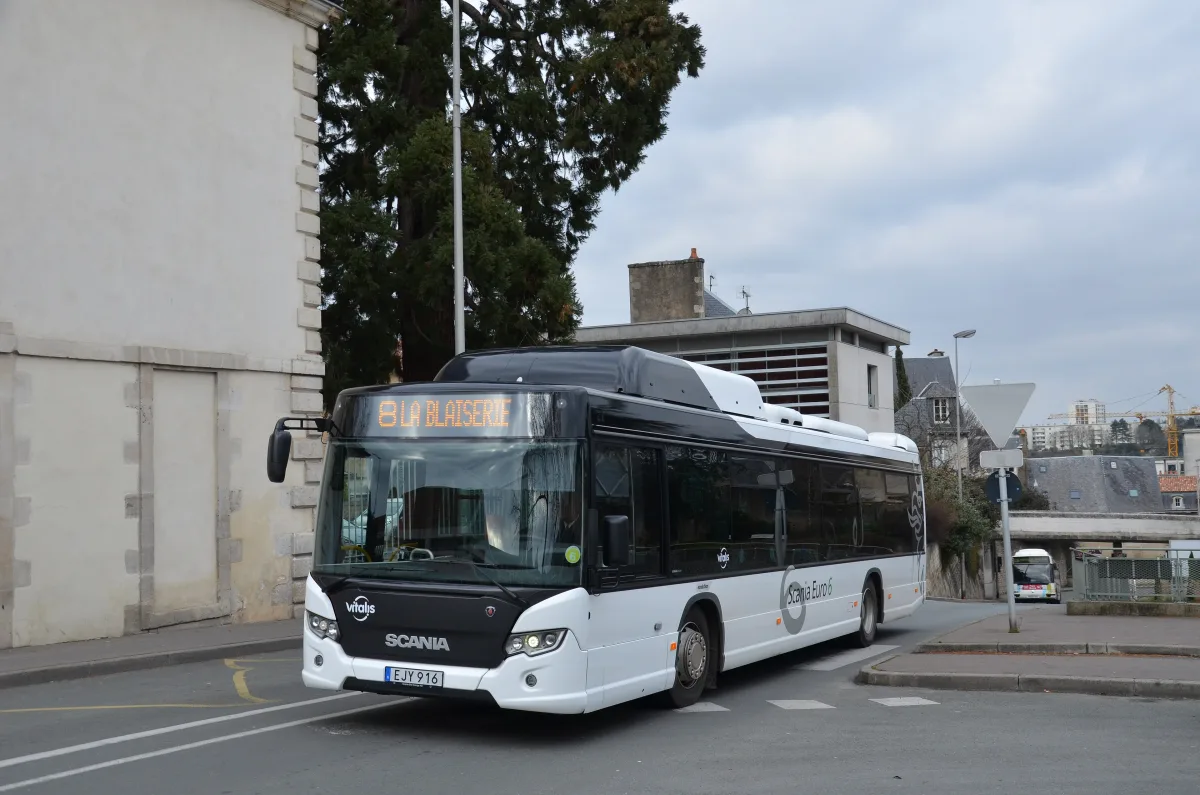
Scania Citywide: city bus, gas and hybrid versions, inspection
Scania Citywide — produced since 2011, this city and suburban bus is offered with diesel, gas, and hybrid engines. We review the versions, seating capacity, engines, and what to check when buying used.






Citywide in brief
Scania Citywide — the city and suburban bus that Scania introduced as an economical and reliable choice for public transport. It comes in standard length (around 12 m) and articulated (around 18 m) variants, with low-floor height and wide doors.
Key advantages of this bus include Scania reliability, relatively low fuel consumption, and a wide range of engines, including gas and hybrid options.
Versions — what sets them apart
Citywide is produced in several versions: LF (fully low-floor), LE (low-entry, suburban), LE Suburban (suburban with more seating), and articulated LFA and LEA. The low-floor version is best suited for the city, while LE is ideal for suburban routes.
Seating capacity depends on length and layout: a 12 m bus typically has around ten seats, with spacious standing areas designed for high passenger flow.
You'll find both gas (CNG or biomethane) and hybrid versions, as well as newer electric models. Euro 5 and Euro 6 compliant examples differ, so check the specific standard in the documents.
Engines and transmissions
Citywide is powered by Scania diesels with an approximate capacity of 9 litres (five-cylinder), as well as gas engines. Power ranges from around 250 to 320 hp, depending on the version.
Transmissions are automatic (usually ZF). In the hybrid version, the diesel engine works in tandem with an electric motor, whose condition is crucial.
What to check when buying a used Citywide
First off — service history and mileage data. City buses run daily, so ask for a full service book, inspection documents, and information on repairs. Check the air suspension, brakes, and tyres.
The engine and transmission should run smoothly, without vibration or judder. Check the AdBlue and SCR system, particulate filter, cooling system, and air conditioning. Test the automatic doors and ramp — these often fail due to constant use.
Inspect the interior: seats, stowage, floor covering, and windows. Check the body for corrosion and painted parts, and the electrical equipment for blown fuses. Match the numbers with the documents.


Versions
Names and equipment vary by market and year; we list the most common variants found in Europe.
Citywide LF
2011–A fully low-floor city version.
- Low floor height
- Wide doors
- Usually three doors
Citywide LE
2011–Low-entry version for suburban routes.
- Higher rear section
- More seating
- Usually two doors
Citywide LFA / LEA
2011–Joint versions for higher passenger flow
- Around 18 m in length
- More space
- Designed for intensive routes
Citywide CNG / hibridas
2011–Lower-emission versions for city driving
- Petrol or hybrid engine
- Lower emissions
- Requires specialist maintenance
Comparison of base Citywide versions
| LF | LE | CNG | |
|---|---|---|---|
| Who it's for | For city routes | For suburban routes | For routes with lower emissions |
| Entry-level | Base | Low on the front | Depends on the version |
| Engine | Diesel | Diesel | Petrol |
| Price in the used market (relatively) | Mid-range | Mid-range | Mid-range |
For city driving, opt for the LF, for suburban commuting go with the LE, while the petrol or hybrid version suits those prioritising lower emissions. Most importantly, check the service history.
Pros
- Reliable, economical engines
- Wide range of versions and engines
- Low ground clearance (LF)
- Petrol and hybrid versions
Cons
- Petrol and hybrid systems require specialist maintenance
- AdBlue and SCR systems can be costly to run
- City driving often wears out brakes and doors
Frequently asked questions
How does the LF differ from the LE?
The LF is a fully low-floor bus for city routes, while the LE is a low-entry version with a higher rear section and more seating, suited for suburban areas.
Is it worth buying a gas-powered Citywide?
If you have access to gas refilling and want lower emissions, then yes. However, the gas system requires additional maintenance and checks.
How many seats does the Citywide have?
It depends on the length and layout. A 12m bus has ten seats and a wide standing area; the exact number is specified in the technical documents.
Updated 2026-10-21 · Trim levels and equipment vary by market and model year — check the equipment of the specific car. · Translated automatically


