 English
 Lietuvių
 Latviešu
 Eesti
 Polski
 Русский
 Українська
 Deutsch
 Nederlands
 Čeština
 Slovenčina
 Svenska
 Norsk
 Dansk
 Suomi


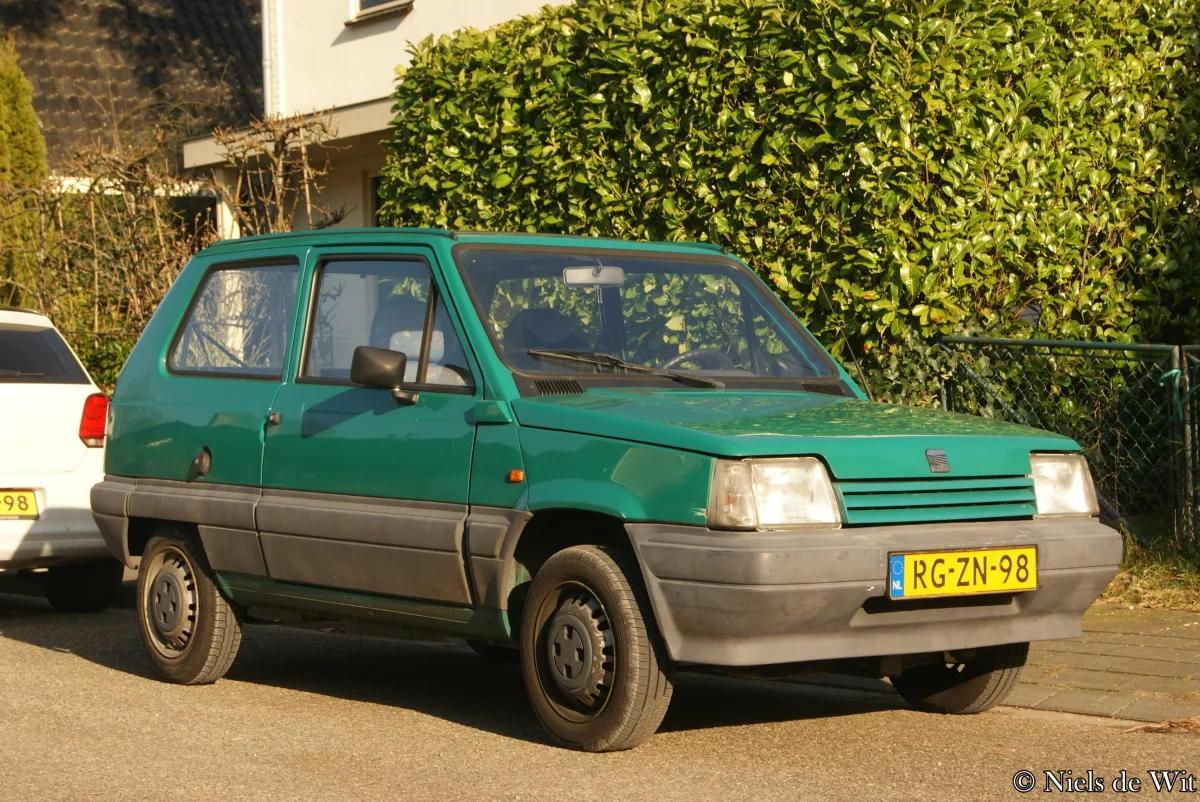
Seat Marbella: engines, trims and what to know when buying used
Seat Marbella — a compact city hatchback produced from 1986 to 1998 and based on the Fiat Panda. Here, we look at what makes this model special, which engines it came with, and what to consider if you're after a Marbella as a collector's item or an affordable city runabout.






Marbella at a glance
Marbella — a 3-door compact hatchback that Seat produced in Spain under Fiat Panda licence. The car is of simple construction, light and very compact, yet surprisingly spacious inside for four adults.
Today, the Marbella is a rarity in Lithuania. It's usually of interest as a cheap nostalgic car or for collectors, rather than as a daily family runabout.
Which trim to choose
Throughout its production run, the Marbella remained essentially the same: minor details, trim and some engine options changed. Early cars are more basic, while later ones often feature better trim.
When choosing, focus not on the year of production, but on the condition of the specific car: body corrosion, interior condition and whether original parts have been preserved.
Engines and gearboxes
The Marbella came with small-capacity petrol engines — typically around 0.8–1.0 litres, with power outputs in the low teens of horsepower. They're more than adequate for city driving, but the car feels strained on the motorway.
Gearbox — manual, simple and reliable. Don't expect automatic versions for this model.
What to check when buying a used Marbella
The main thing — corrosion: check the sills, wheel arches, floor and front end under the bonnet. The body of an older small car can be the most serious and expensive problem.
Ask if there are spare parts: body parts, lights and interior trim are harder to find than mechanical parts, some of which are interchangeable with the Fiat Panda. Test the clutch, gearbox and cold engine start.


Trim levels
Names and equipment vary by market and year; we list the versions most commonly found in Europe.
L
1986–1998The base trim with standard equipment.
- Often — steel wheels
- Basic interior trim
- Manual gearbox
GL
1986–1998Better-equipped version with more comfortable trim.
- Often — more comfortable interior trim
- Often — additional exterior trim
- Manual gearbox
Comparison of Marbella versions
| L | GL | |
|---|---|---|
| Who it suits | For the budget-conscious city driver | For those who want better trim |
| Wheels (usually) | Steel | Steel or standard alloy |
| Interior | Basic | Better trim |
| Price in the used market (relatively) | € | € |
The Marbella is sought after not for its features, but for its condition: it's better to choose a well-maintained car, even if it's a more basic version.
Pros
- Very compact, city-friendly
- Simple, easily serviceable design
- Low running costs
- A rare model that sparks collector interest
Cons
- Modest power and lacklustre motorway performance
- Corrosion is a common issue with older cars
- Some body and interior parts can be tricky to find
Frequently asked questions
Is the Marbella suitable for daily use?
In the city, yes, if the car is well-maintained. For long journeys and motorways, it's too slow and lacks comfort, and due to its age, it will likely need frequent repairs.
What's the connection between the Marbella and the Fiat Panda?
The Marbella was produced under licence from the Fiat Panda, so many mechanical solutions and parts are shared with the Panda.
Is the Marbella worth buying as a collector's item?
Well-preserved and unmodified cars appeal to enthusiasts, as the model is rare. However, check the bodywork and documents, and consider the difficulty of finding parts when buying.
Updated 2026-10-19 · Trim levels and equipment vary by market and model year — check the equipment of the specific car. · Translated automatically


