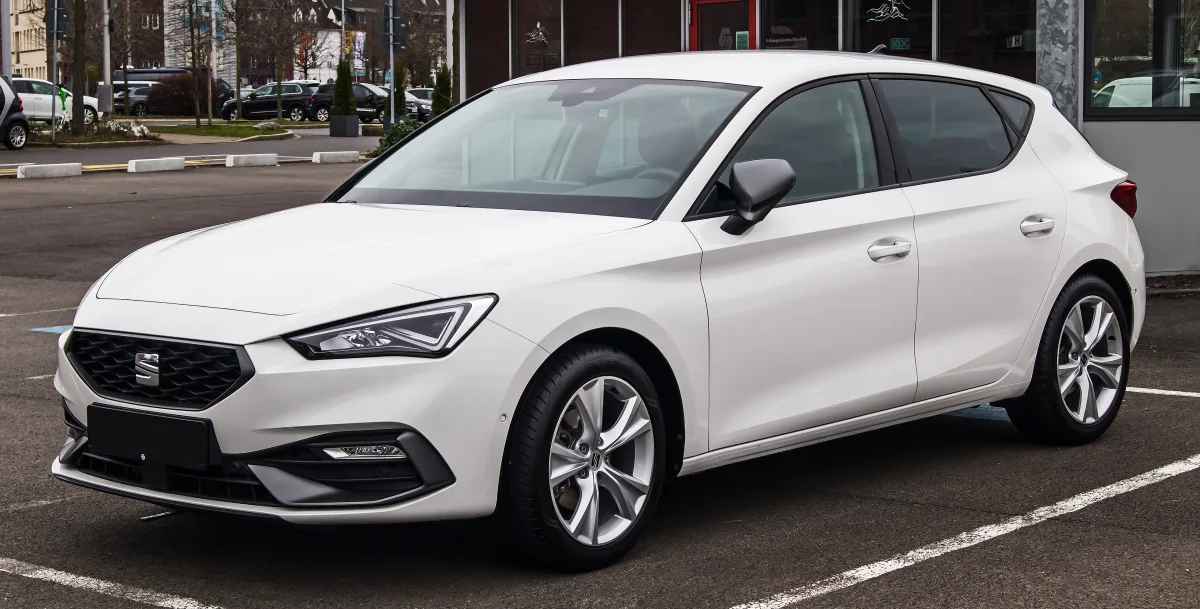
SEAT Leon: Generations III and IV, engines and trims
SEAT Leon — a compact hatchback and estate, technically close to the VW Golf, but often cheaper and with a more sporty character. We review the third (2012–2020) and fourth (from 2020) generations most commonly found on the used market, their engines, trim levels, and what to check when buying.
ADVERTISEMENT
Leon at a glance
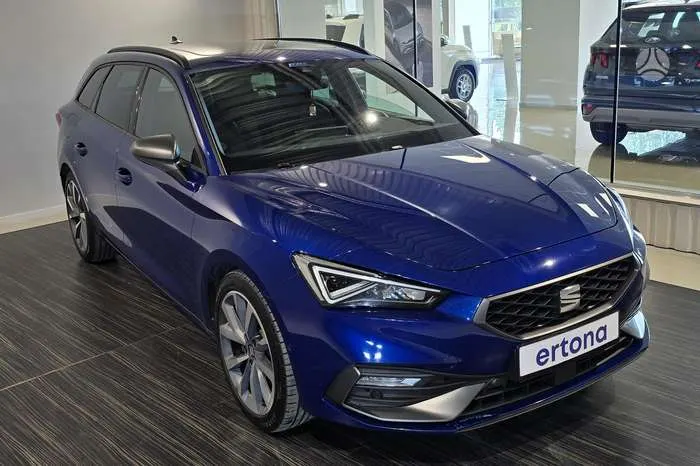
The Leon has been produced since 1999 and spans four generations. Generation III was offered as a 5-door, 3-door (SC) hatchback, and estate (ST); Generation IV as a 5-door hatchback and estate (Sportstourer). Up to 2020, the sporty version was called the Leon Cupra, later becoming a model under the standalone Cupra brand — the Cupra Leon.
The Leon uses the same platforms and engines as the Golf, Octavia, and Audi A3, but is often cheaper, features sportier styling, and has a stiffer suspension (especially FR versions). Because of this, it appeals to drivers who appreciate driving dynamics.
Generations III and IV — the differences
Generation III (2012–2020) is SEAT's first car on the MQB platform: lighter, of higher quality, and more modern than Generation II. It is the most popular generation on the used car market. The 2017 facelift brought a larger infotainment screen, more driver assistance systems, and the Xcellence trim; there was also a raised-ride-height estate, the X-Perience.
Generation IV (from 2020) features a more modern digital cabin, a larger screen, mild hybrids (eTSI), and the e-Hybrid plug-in hybrid. Like the Golf VIII, early cars received criticism for sluggish infotainment operation and touch-sensitive controls.
In 2024, Generation IV was updated: a larger infotainment screen, updated plug-in hybrids with a larger battery, and some engines replaced by newer units.
Engines and gearboxes
Generation III most commonly features 1.2 TSI (86–110 hp), 1.4 TSI (122–150 hp), later 1.0 TSI (115 hp), and from 2018 onwards, 1.5 TSI (130–150 hp) petrol engines, alongside 1.6 TDI (90–115 hp) and 2.0 TDI (150–184 hp) diesel engines. The FR version often came with the 1.8 TSI (180 hp) or 2.0 TDI (184 hp), while the Leon Cupra featured the 2.0 TSI (approx. 265–300 hp).
The backbone of Generation IV consists of the 1.0 TSI (90–110 hp), 1.5 TSI (130–150 hp), 1.0 and 1.5 eTSI mild hybrids with DSG, 2.0 TDI (115–150 hp), and the e-Hybrid plug-in hybrid. The most powerful versions belong to the Cupra Leon range.
Gearboxes are either manual or DSG. Smaller engines are typically paired with a 7-speed dry-clutch DSG, while more powerful and diesel variants use a wet-clutch DSG. Weaker versions generally feature a simpler torsion beam rear suspension, while more powerful ones get a multi-link setup.
What to check when buying a used Leon
The DSG gearbox should shift smoothly: jerking when pulling away, thuds during gear changes, or vibrations often indicate clutch or mechatronic unit repairs. Ask whether the oil has been changed (for wet-clutch DSGs).
For diesel cars with high urban mileage, check the diesel particulate filter (DPF) and the EGR valve. When buying an older Generation II (up to 2012) Leon, keep in mind that its 1.2 and 1.4 TSI engines were notorious for timing chain stretch.
FR and Cupra versions have often been driven enthusiastically, so thoroughly check the brakes, tires, suspension, and clutch. On Generation IV cars, ask whether the infotainment software has been updated, and always verify mileage against service and MOT records.
ADVERTISEMENT
Trim levels
Names and equipment vary by market and year; we list the trim levels most commonly found in Europe.
Reference
Generation III and IV
Base trim — simple and the most affordable.
Typically steel wheels
Simpler infotainment system
Often features manual air conditioning
Style
Generation III and IV
The most popular choice — a great balance of price and comfort.
Alloy wheels
Often automatic climate control
Often parking sensors
Xcellence
Generation III (from 2017) and Generation IV
A more elegant version for comfort lovers.
Higher-class interior trim and chrome detailing
Often keyless entry and ignition
Often ambient cabin lighting
FR
Generation III and IV
A sporty version — the most popular among driving enthusiasts.
Sporty bumpers and larger wheels
Sport seats and stiffer suspension
Often drive mode selection
X-Perience
Generation III (ST)
An estate with increased ground clearance.
Raised ride height
Plastic body cladding
Often 4Drive all-wheel drive
Cupra
Generation III
The most powerful Generation III model featuring the 2.0 TSI engine.
Around 265–300 hp of power
Often adaptive suspension
Larger brakes and sports styling
Generation IV trim comparison
Reference
Style
Xcellence
FR
Who is it for?
For the lowest-budget car
For daily driving
For comfort and styling
For sporty driving
Wheels (typically)
16 in.
16–17 in.
17 in.
17–18 in.
Interior
Basic trim
More equipment
Elegant trim
Sport seats and steering wheel
Engine (typically)
1.0 TSI, 2.0 TDI
1.0–1.5 TSI, 2.0 TDI
1.5 TSI, 2.0 TDI, e-Hybrid
1.5 TSI, 2.0 TDI, e-Hybrid
Used market price (relative)
€
€€
€€€
€€€
For most buyers, the best choice is the Style with the 1.5 TSI or 2.0 TDI engine. The FR is worth choosing for its sporty look and drive, while the Xcellence appeals for its comfort equipment.
Pros
Sporty design and driving dynamics
Proven Volkswagen Group tech, same as the Golf
Often cheaper than an equivalently equipped Golf
Practical ST / Sportstourer estate
Cons
Stiffer FR suspension on poor roads
Dry-clutch DSGs can be expensive to repair
Infotainment and touch controls in early MK4 models
Frequently asked questions
How does the SEAT Leon differ from the VW Golf?
The Leon and Golf share the same platform and engines. The Leon features a sportier design and often a firmer setup, while usually being cheaper on the used market. The Golf typically holds its value slightly better.
Is the Leon FR worth getting?
The FR is one of the most popular Leon trims: sporty looks, extra kit, and generally punchier engines. However, its suspension is stiffer, making it less comfortable on rough roads — make sure to test drive one before buying.
What is the difference between the SEAT Leon and Cupra Leon?
Since 2020, Cupra has been a standalone brand. The Cupra Leon is a higher-performance, pricier version of the Leon with bespoke styling and more powerful engines, including the 2.0 TSI and plug-in hybrids.
Which Leon generation is best on the used market?
For most buyers, the sweet spot is the 2017–2020 Mk3: well-resolved and cheaper than the Mk4. If modern tech and hybrid variants are high on your priority list, go for the Mk4, preferably a later model year.
Updated 2026-10-09 · Trim levels and equipment vary by market and model year — check the equipment of the specific car. · Translated automatically
Comments
No comments about the Seat Leon yet. Share your experience.
We use necessary cookies to run the website. With your consent, we will also use analytics and advertising measurement cookies — to understand how the website is used and to measure our advertising results. Learn more
 English
 Lietuvių
 Latviešu
 Eesti
 Polski
 Русский
 Українська
 Deutsch
 Nederlands
 Čeština
 Slovenčina
 Svenska
 Norsk
 Dansk
 Suomi


 4