 English
 Lietuvių
 Latviešu
 Eesti
 Polski
 Русский
 Українська
 Deutsch
 Nederlands
 Čeština
 Slovenčina
 Svenska
 Norsk
 Dansk
 Suomi


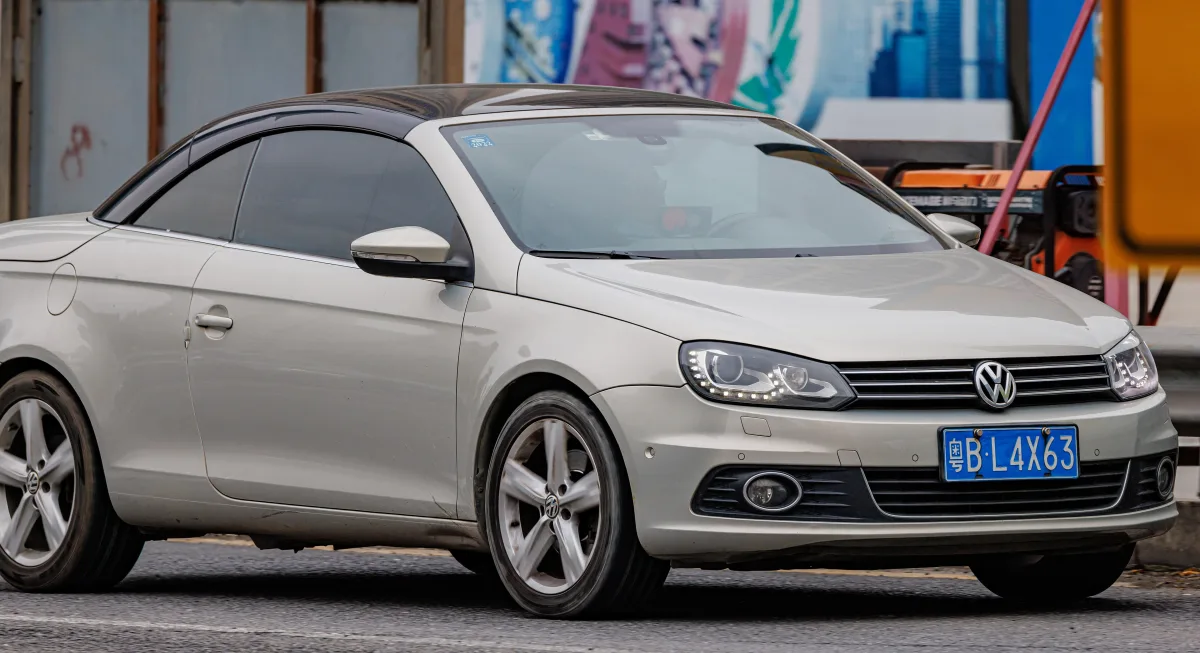
Volkswagen Eos: a coupe-cabriolet with a rigid roof, engines and checks
Volkswagen Eos — a coupe-cabriolet with a rigid, glass-panelled roof, produced from 2006 to 2015. We look at the engines, trims and what's most important to check before buying a used Eos.






Eos in brief
The Eos stands out with its complex retractable roof, made up of several parts, with an opening glass panel. Closed, it functions like a coupe, while open it allows you to enjoy the open-air experience.
This car is technically close to the Golf V and Passat B6, so the chassis is reliable and parts are easy to find. It's roomier than most cabriolets and has a decent boot, but with the roof retracted, its capacity is reduced.
Which version to choose
During its production run, the Eos was updated — around 2011 the front end and some trim details were changed. The updated versions have a more modern design.
The key thing isn't the year, but the condition of the roof and its mechanism. Before buying, it's worth testing the roof opening and closing several times.
Engines and gearboxes
Petrol engine options include the 1.4 TSI, 1.6 FSI, 2.0 FSI, 2.0 TFSI and 3.2 V6; diesels are the 2.0 TDI. Power ranges from around 115 to 250 hp.
Gearboxes are manual or 6-speed DSG. The more powerful TFSI and TDI models often come with DSG and drive enthusiastically.
What to check when buying a used Eos
The roof is the biggest risk area: check that it opens and closes smoothly, with no error messages. Also, check the seals and ensure there are no signs of moisture or leaks in the cabin.
Check the water drainage channels (clogged ones can cause dampness) and the roof hydraulic system. Repairing these parts can be expensive.
In early TSI and TFSI engines, pay attention to the condition of the timing chain, and test the DSG gearbox on the road.


Trim levels
Names and equipment vary by market and year; we list the most commonly found trims in Europe.
Eos (bazinė)
All yearsBase trim: standard equipment with few additional packages.
- Often — 16–17-inch wheels
- Base multimedia
- Often — air conditioning
Sport
All yearsSportier looks and equipment.
- Sportier wheels
- Often — sport seats
- Often — additional trim
Exclusive
All yearsHigher trim with more luxurious trim.
- Often — leather trim
- Often — larger wheels
- Often — extra comfort features
Individual
All yearsCustomised equipment options
- Often — special colours
- Often — additional trim
- Often — more comprehensive equipment
Comparing trims
| Bazinė | Sport | Exclusive | |
|---|---|---|---|
| Who it suits | Budget-friendly option | Sporty looks | For comfort |
| Wheels (usually) | 16–17 inch | 17–18 inch | 17–18 inch |
| Interior | Basic | Sporty | Luxurious |
| Engine | 1.4 TSI, 2.0 TDI | 2.0 TFSI, 2.0 TDI | 2.0 TFSI, 3.2 V6 |
| Price in the used market (relatively) | € | €€ | €€ |
For most buyers, the best choice is a well-maintained Eos with a 2.0 TDI or 2.0 TFSI. The key is not the trim level, but the condition of the roof.
Pros
- A convertible with a hard top – comfort and quiet
- Familiar Golf/Passat technology
- Quite spacious boot
- Practical all-year-round
Cons
- Complex roof – expensive repairs
- Risk of water ingress
- Early TSI and TFSI engine timing chain issues
Frequently asked questions
Is the Eos practical in winter?
Yes, the solid roof allows you to use the car year-round like a regular coupé. It's important that the roof and mechanisms are in good condition.
What commonly goes wrong with the Eos?
The roof mechanism, hydraulics, and water drainage are often discussed. Therefore, it's essential to check their operation before buying.
Which Eos engine is the best?
The 2.0 TDI is economical, the 2.0 TFSI is more lively. Most importantly, the chosen engine should be well-maintained.
Updated 2026-10-17 · Trim levels and equipment vary by market and model year — check the equipment of the specific car. · Translated automatically


