 English
 Lietuvių
 Latviešu
 Eesti
 Polski
 Русский
 Українська
 Deutsch
 Nederlands
 Čeština
 Slovenčina
 Svenska
 Norsk
 Dansk
 Suomi


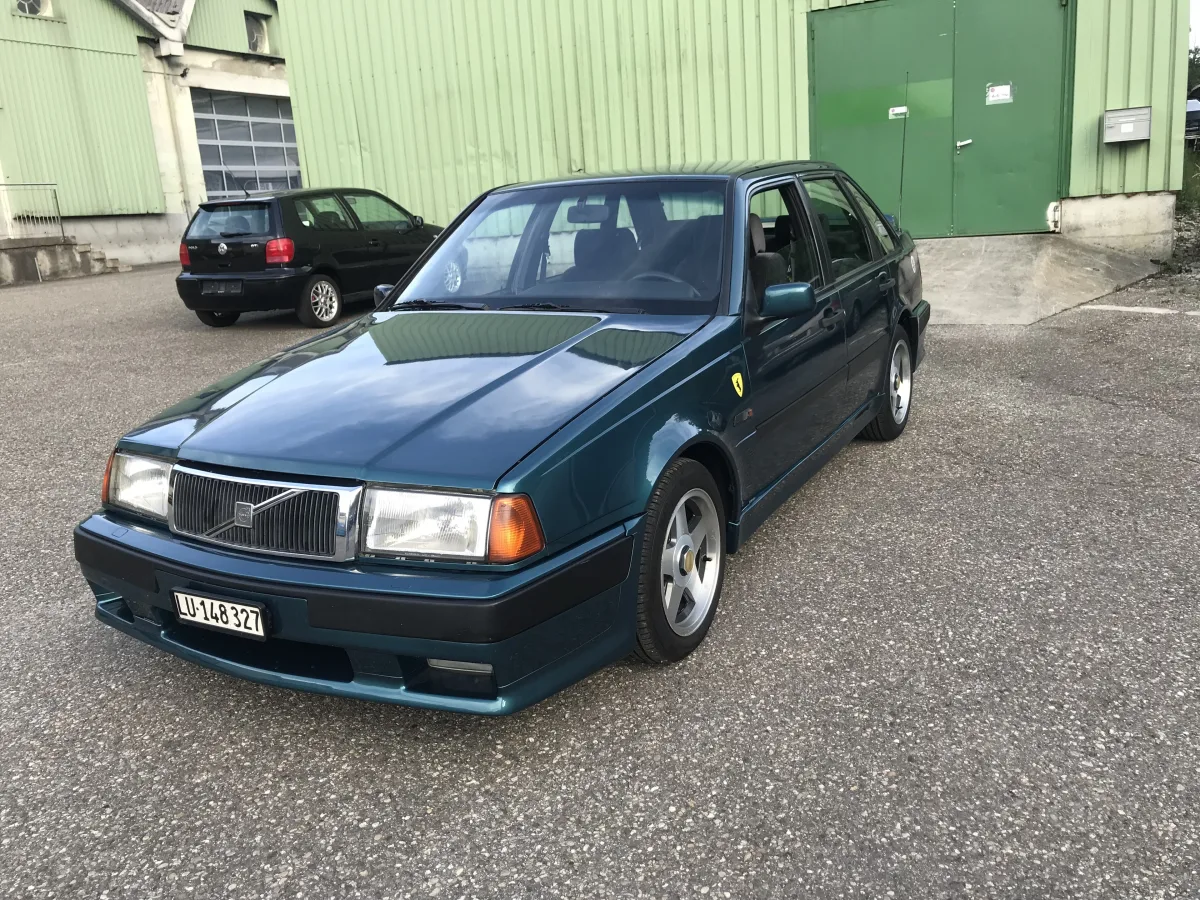
Volvo 440: 1987–1996 compact Volvo hatchback
The Volvo 440 is a compact-class hatchback introduced in 1987 and produced until 1996. This article covers its history, engines, trims, and what to check before buying this classic car.






Volvo 440 in brief
The Volvo 440 was a compact-class hatchback produced by Volvo in the Netherlands. The related 460 model is a sedan, while the 480 is a coupe.
This is one of the simplest and easiest-to-maintain Volvos from that era. Today, it's a rare classic, so popularity is limited, but it has a loyal following.
Which version to choose
During its production run, the model was refined several times: the front end was updated, the interior improved, and engines were changed. Later models usually come with more features and enhanced safety.
When choosing, the condition of the body, originality, and service history are more important than the year of manufacture. Some parts can be hard to find.
Engines and transmissions
The Volvo 440 was offered with petrol engines ranging from 1.6 to 2.0 litres, with some featuring a turbocharger. There was also a 1.9-litre diesel option.
Transmissions were manual or automatic. Automatic gearboxes should be thoroughly checked.
What to check when buying a used Volvo 440
First, inspect the body for corrosion: sills, arches, door bottoms, and the boot floor. For a car of this age, this is the primary risk.
Check the condition of the engine, gearbox, and suspension, and listen for any unusual noises. Ask for the service history.
Check if spare parts are available and if the car can be registered in Lithuania.


Trims
Names and equipment vary by market and year; we list the most common trims found in Europe.
GL
All versionsBase trim.
- Often — a basic interior
- Less equipment
- Common in early cars
GLE
All versionsMid-range trim with more comfort.
- Often — more comfortable seats
- Often — electric window controls
- More interior trim
GLT
All versionsSportier version.
- Often — a more powerful engine
- Sportier interior
- Less commonly seen
Turbo
All versionsThe most powerful version with a turbocharger.
- Turbocharger
- Often — larger wheels
- Rarely seen
Trim comparison
| GL | GLE | GLT | Turbo | |
|---|---|---|---|---|
| Who it's for | For everyday use | For daily driving | For enthusiasts | For dynamic driving |
| Engine | Smaller | Medium | Larger | Turbo |
| Interior | Basic | More Comfortable | Sportier | Sportier |
| Price in the used market (relatively) | € | € | €€ | €€ |
The Volvo 440 is a solid choice for a classic or second car. The key is the condition of the body and its originality.
Pros
- Simple, easy-to-understand construction
- Compact dimensions
- Distinctive classic look
- Not expensive to buy
Cons
- Very limited supply
- Risk of corrosion due to age
- Finding parts can take time
Frequently asked questions
What are the differences between the Volvo 440 and 460?
The 440 is a hatchback, while the 460 is a sedan with a separate boot. The technology is essentially the same.
Is the Volvo 440 suitable for daily use?
It can be, if the car is in good condition, but due to its age, it will require more maintenance than a newer car.
What should you be most wary of when buying?
Rust and a murky history. Inspect the underside of the body thoroughly and ask for documents.
Updated 2026-10-17 · Trim levels and equipment vary by market and model year — check the equipment of the specific car. · Translated automatically


