 English
 Lietuvių
 Latviešu
 Eesti
 Polski
 Русский
 Українська
 Deutsch
 Nederlands
 Čeština
 Slovenčina
 Svenska
 Norsk
 Dansk
 Suomi


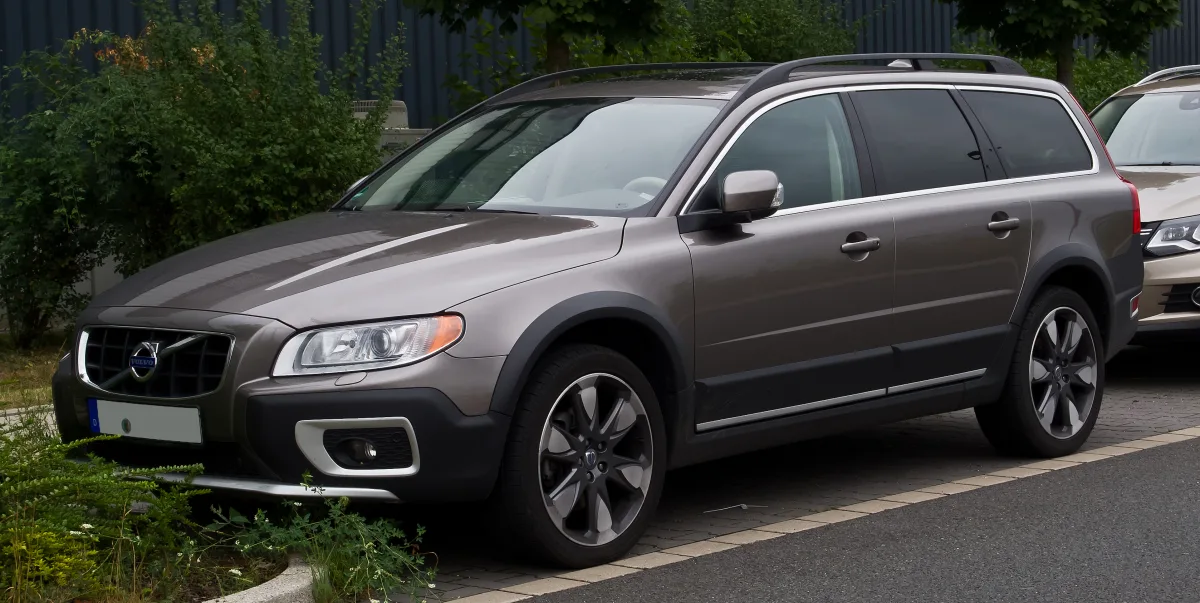
Volvo XC70: II and III generations, engines and trims
Volvo XC70 — a raised estate car with all-wheel drive, based on the V70 and built until 2016. In Lithuania, it's valued for its space, safety, and reliable winter driving, so we're looking at the II (2000–2007) and III (2007–2016) generations, their engines, trims, and what to check before buying.






XC70 in brief
The raised Volvo estate made its debut in 1997 as the V70 XC (Cross Country), with the XC70 nameplate introduced in 2002. In the used market, you'll mostly encounter two generations: II (2000–2007) and III (2007–2016). Both are based on the respective V70 generations but feature higher ground clearance, plastic body protection, and usually all-wheel drive.
The XC70 is praised for its spacious boot, comfortable seats, safety, and confident handling on snow or rough roads. However, it's not a true off-roader — it's suited to rougher roads, not extreme off-piste adventures. The XC70 was replaced by the V90 Cross Country in 2016, with the nameplate returning in 2025 to a brand-new plug-in hybrid model.
II and III generations — what's the difference
The II generation (2000–2007, initially called V70 XC) is the most affordable way to get an XC70. All cars from this generation come with all-wheel drive, and the most common engine is the 2.4-litre D5 diesel. However, most are now very old and high-mileage, so you often need to invest in the suspension, gearbox, and electronics.
Third generation (2007–2016) is larger, quieter, and safer, with a more modern interior and more driver-assistance systems. The 2013 facelift brought a new front end, improved interior, and an optional digital instrument cluster, while 2014 saw the introduction of the new-generation 2.0-litre four-cylinder Drive-E diesel.
For most buyers, the best choice is the third-gen XC70, ideally from the later years. Make sure the car has all-wheel drive (AWD): some later versions with 2.0-litre diesels were front-wheel drive only.
Engines and transmissions
In Lithuania, the most popular are the 2.4-litre five-cylinder diesels: in the second-gen, the D5 (around 163–185hp), and in the third-gen, the D5 (around 185–215hp) plus the less powerful 2.4D and D4. From 2014, the 2.0-litre four-cylinder Drive-E D4 diesel was also offered.
Petrol engines: in the second-gen, the 2.5T (around 210hp) is most common, while the third-gen features the six-cylinder 3.2 (around 240hp) and the 3.0-litre turbocharged T6 (around 285–304hp). They're smooth and powerful, but guzzle more fuel than diesels.
Transmissions come as manual or Geartronic automatics: in the second-gen, usually five-speed, in the third-gen, six-speed, and Drive-E engines paired with an eight-speed automatic. The Haldex clutch sends power to the rear wheels when needed.
What to check when buying a used XC70
D5 diesels are notorious for intake manifold rattle and EGR issues — power loss or dashboard error messages are often linked to these. If the car has done a lot of city driving, check the diesel particulate filter (DPF).
In the all-wheel-drive system, check the Haldex coupling operation and the differential's condition, listen for any whining noises, and check if the gear oil has been changed. All four wheels should have the same tyres. The automatic gearbox should shift smoothly, without judders or delays.
As the XC70 is often used on rough roads and country lanes, thoroughly inspect the suspension, underbody, and body protection. Assess the ride based on service records and maintenance history.


Trims
Names and equipment vary by market and year; we list the trims most commonly found in Europe.
Kinetic
Second and third generationsBase trim, which already includes essential comfort features.
- Light-alloy wheels
- Often — automatic climate control
- Often — cloth upholstery
Momentum
Second and third generationsThe most popular choice — a good balance of price and comfort.
- Often — parking sensors and cruise control
- Often — heated seats and a multi-function steering wheel
- Cloth, part-leather, or full-leather upholstery
Summum
Second and third generationsTop-of-the-range trim with the most luxurious equipment.
- Single cabin, electrically adjustable seats
- Often — xenon headlights that light up corners
- Often — navigation and a better sound system
Ocean Race
Third generationLimited-edition versions tailored for the Volvo Ocean Race sailing competition
- Unique colours and alloy wheels
- Special interior trim
- Often — a generous array of creature comforts
Comparison of third-gen trims
| Kinetic | Momentum | Summum | |
|---|---|---|---|
| Who it suits | The sensible buyer | For families and road trips | For comfort seekers |
| Alloy wheels (most often) | 17-inch | 17-inch | 17–18 col. |
| Interior | Upholstery | Fabric or leather | Leather, electrically adjustable seats |
| Front headlights | Halogen | Halogen, often xenon | Often xenon, cornering lights |
| Price in the used market (relatively) | € | €€ | €€€ |
For most buyers, the best choice is the Momentum with the D5 or D4 diesel: there are plenty of these cars on the market. It's worth looking at the Summum if a leather interior and more equipment are important, but age and condition are always more crucial than the trim level.
Pros
- Spacious boot and very comfortable seats
- Four-wheel drive and higher ground clearance for winter and rough roads
- High safety rating
- Long-lasting five-cylinder diesels
Cons
- Higher fuel consumption than the standard estate
- More expensive four-wheel drive maintenance (Haldex, transfer case)
- Most cars have already covered many miles
Frequently asked questions
What's the difference between the XC70 and V70?
The XC70 is essentially a lifted V70 with higher ground clearance, plastic body protection, and usually four-wheel drive. The interior and boot space are largely the same, but the XC70 uses a bit more fuel and tends to command a higher price in the used market.
Which XC70 engine is the most reliable?
The 2.4-litre D5 diesel is most commonly chosen — it's long-lasting, provided it's well-maintained and any turbo issues or EGR problems are addressed in a timely manner. The petrol 3.2 and T6 are smooth and powerful, but they consume significantly more fuel.
Is the XC70 suitable for off-roading?
The XC70 handles well on snow, gravel, and rough tracks, but it lacks low-range gears and a differential lock, so it's not really designed for serious off-roading. It's an estate car that can safely get you to a cottage or forest clearing, rather than a true off-roader.
Which XC70 generation should you choose?
For most buyers, the third generation is the best choice — it's safer, quieter, and often in better condition. The second generation is only worth considering if you find a particularly well-maintained example with a clear service history.
Updated 2026-10-09 · Trim levels and equipment vary by market and model year — check the equipment of the specific car. · Translated automatically


