 English
 Lietuvių
 Latviešu
 Eesti
 Polski
 Русский
 Українська
 Deutsch
 Nederlands
 Čeština
 Slovenčina
 Svenska
 Norsk
 Dansk
 Suomi


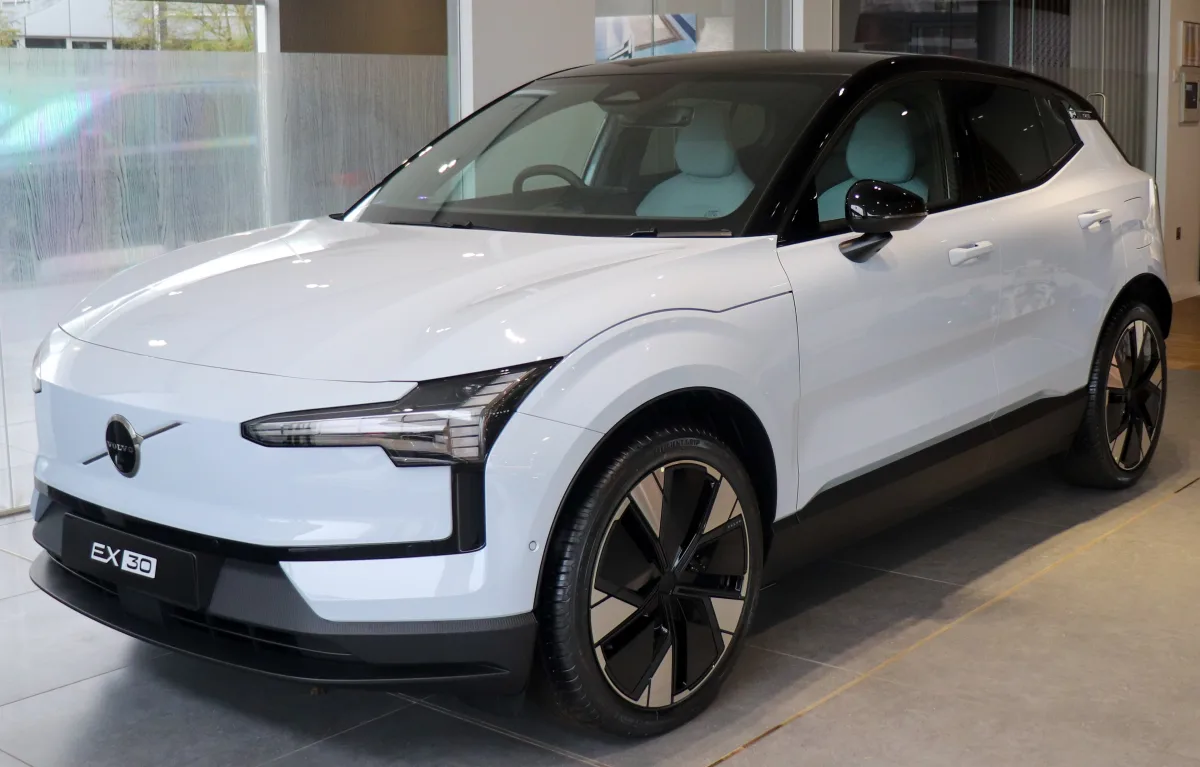
Volvo EX30: generations, batteries, range and charging
The Volvo EX30 is the smallest and most affordable electric SUV from Volvo, launched in 2023. We look at how the Single Motor, Extended Range, and Twin Motor Performance versions differ, how much range you can realistically expect in winter, how to charge the battery, and what to check when buying a used EX30.






EX30 in brief
The EX30 was launched in 2023, with the first cars reaching European customers at the end of 2023–early 2024. It's built on Geely Group's SEA platform for electric vehicles. Initially, cars were manufactured in China, with production later starting in Belgium at the Ghent plant.
This is a compact, city-friendly car: short, easy to manoeuvre, with a minimalist interior. Almost all functions are controlled via a single central screen — there's no separate instrument cluster behind the steering wheel. There's not much space in the rear seats or boot, so the EX30 is best suited for one or two people or as a second family car.
Versions and updates
The EX30 has only had one iteration so far, so it's not about generations but versions. The Single Motor and Single Motor Extended Range are rear-wheel drive with a single approximately 270hp electric motor. The Twin Motor Performance has two motors, all-wheel drive, and over 420hp — making it one of the fastest Volvo cars ever produced.
The EX30 Cross Country was later introduced, offering slightly higher ground clearance, protective body details, and two engine options. Over the first year, the software was updated remotely several times, adding new features and fixing early issues in the cars.
Battery, range, and charging
The Single Motor has a smaller, approximately 51 kWh LFP (lithium iron phosphate) battery, while the Extended Range and Twin Motor Performance have a larger, approximately 69 kWh NMC battery. According to the manufacturer's (WLTP) data, the smaller battery version offers around 340 km of range, while the larger battery provides around 450–480 km.
In reality, especially on the motorway, the range is often lower, and in winter, you might need to count on about 20–30% less than in summer. The smaller battery EX30 is best suited for city driving, while the Extended Range is worth considering for frequent intercity travel.
Charging is done via a CCS2 connector: typically with variable current up to 11 kW, and at fast-charging stations, the smaller battery can charge up to around 130 kW, while the larger battery can charge up to around 150 kW. A cold battery charges more slowly, so it's worth pre-heating it before fast charging in winter.
What to check when buying a used EX30
Request a battery health (SoH) report from Volvo service or a diagnostic specialist and compare the displayed range when the battery is charged to 100% with the new car's data. Ask how often fast charging has been used.
Ensure the latest software updates are installed, and test the central screen, cameras, driver-assistance systems, and smartphone app. Check if a charging cable is included, and test charging with both alternating and direct current.
Since the cars are still new, it's worth checking the remaining manufacturer's warranty. Inspect the tyres, brake discs (in an electric vehicle, these may rust as they are used less) and the vehicle history using the VIN code.


Trim levels and versions
Names and equipment vary by market and year; we list the most common EX30 trims found in Europe.
Core
From 2023Base trim with essential equipment.
- Central touchscreen with integrated Google services
- LED headlights
- Often — smallest alloy wheels
Plus
From 2023Most popular choice — more comfort equipment.
- Often — Harman Kardon sound system
- Often — panoramic sunroof
- More comfort equipment
Ultra
From 2023Top trim with the most driver-assistance systems.
- Often — 360° cameras
- More driver-assistance systems
- Largest wheels
Twin Motor Performance
From 2023Twin-engine version with all-wheel drive
- Over 420 hp
- All-wheel drive
- Larger, around 69 kWh battery
Cross Country
From 2025Higher ground clearance version for rougher roads
- Slightly higher ground clearance
- Safety body details
- Two engines and all-wheel drive
EX30 variants comparison
| Single Motor | Extended Range | Twin Motor Performance | Cross Country | |
|---|---|---|---|---|
| Who it's for | For the city | For daily driving and road trips | For swift driving | For rough roads |
| Battery (approx.) | 51 kWh LFP | 69 kWh | 69 kWh | 69 kWh |
| Front-wheel drive | Rear-wheel drive | Rear-wheel drive | All-wheel drive | All-wheel drive |
| Range (relatively) | Lowest | Highest | Large | Large |
| Price in the used market (relatively) | € | €€ | €€€ | €€€ |
For many buyers, the best choice is the Extended Range: a larger battery allows for relaxed driving both in and between cities. The Single Motor is ideal for those who mostly drive in the city, while the Twin Motor Performance is for those seeking acceleration and all-wheel drive.
Pros
- Compact and easy to manoeuvre in the city
- Very quick in the Twin Motor Performance version
- Modern software, updated over the air
- The smallest price gap among Volvo electric cars
Cons
- Limited space in the rear seats and boot
- Almost everything is controlled via the central screen
- Limited range for versions with smaller batteries
Frequently asked questions
How far does the EX30 really go in winter?
This depends on the version, speed, and temperature. In cold weather, you often need to count on about 20–30% less range than in summer, so the EX30 with a smaller battery is best suited for city driving and shorter trips in winter.
What's the difference between LFP and NMC batteries?
The smaller Single Motor battery is LFP — it's less sensitive to frequent charging to 100%, but charges more slowly in the cold. The larger NMC battery has greater capacity, so you can travel further; it's usually recommended to charge it to around 80–90% daily.
Is the EX30 suitable for a family?
As the main car for a larger family — usually not: there's not much space in the rear seats and boot. It's great for one or two people or as a second family car.
Updated 2026-10-10 · Trim levels and equipment vary by market and model year — check the equipment of the specific car. · Translated automatically


