 English
 Lietuvių
 Latviešu
 Eesti
 Polski
 Русский
 Українська
 Deutsch
 Nederlands
 Čeština
 Slovenčina
 Svenska
 Norsk
 Dansk
 Suomi


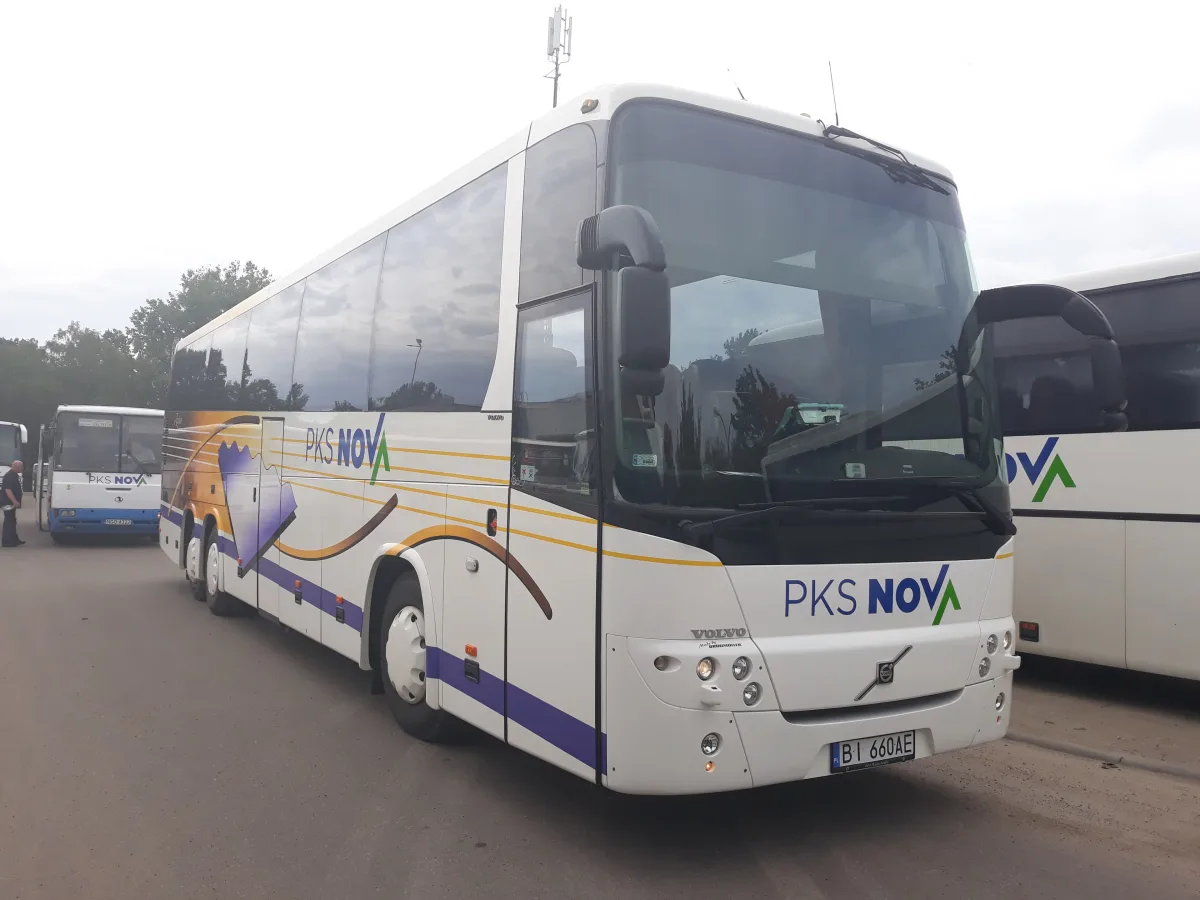
Volvo 9900: the top-of-the-range coach, generations and what to check
Volvo 9900 (from 2001) — the top-of-the-range tourist and long-distance coach, built in Poland. We look at generations, engines and what to check when buying used.






9900 in brief
9900 — Volvo's flagship, designed for luxurious tours and long-distance journeys. It boasts a comfortable interior, ample luggage space and advanced safety features.
The 9900 is sought-after in the used market for its comfort and reliable Volvo engines. Price varies greatly depending on the generation, mileage and body condition.
Generations — what's the difference
Earlier generations of the 9900 (from 2001) have older Euro standards and simpler electronics. They're cheaper, but their condition needs to be checked very carefully.
Later generations feature a more modern interior, updated design and stricter emissions standards (Euro 5, Euro 6). These generations are most commonly found in the used market.
The 9900 is offered in various lengths and with two or three axles. Before buying, make sure you know the exact version and number of seats.
Engines and gearboxes
The 9900 is powered by Volvo diesel engines, typically around 11–13 litres in capacity, meeting Euro 3–Euro 6 standards depending on the year. Newer versions use AdBlue and a particulate filter.
Gearboxes — usually the automated Volvo I-Shift or other automated systems. Before buying, test the gearbox and clutch.
What to check when buying a used 9900
Request the full service history and tachograph data. Inspect the body — for dents, wheel arches, door sills, and the boot area.
Start the engine cold and listen for any unusual noises, smoke, or leaks. In Euro 5/6 versions, check the AdBlue and DPF systems.
Check the air suspension, brakes, retarder, air conditioning, seats, and emergency exits. Pay attention to the interior trim and in-car electronics.


Versions
Names and equipment vary by market and year; we list broadly described versions, but check the exact specification in the documents of the specific bus.
9900 (ankstesnė)
from 2001The top-of-the-range model from the previous generation.
- Simpler electronics
- Older Euro emission standards
- Often — high mileage
9900 Euro 5
various yearsMid-range generation with improved equipment.
- Euro 5 / EEV engine
- Often — I-Shift gearbox
- Comfortable interior
9900 Euro 6
newer yearsLatest generation with top-tier equipment.
- AdBlue and DPF
- More safety systems
- Cutting-edge electronics
9900 (ilgesnė / trijų ašių)
various yearsGreater capacity for long journeys.
- More seating
- Larger boot space
- Check exact versions
Generation comparison
| Ankstesnė | Euro 5 | Euro 6 | |
|---|---|---|---|
| Who it's for | For the budget-conscious luxury car | For comfortable journeys | For modern long-distance travel |
| Environmental impact | Older | Euro 5 | Euro 6 |
| Interior trim | More basic | Good | Most modern |
| Price in the used market (relatively) | €€ | €€€ | €€€€ |
9900 is ideal for drivers who need a top-class tourer. Choose once based on budget and check the technical condition and service history.
Pros
- Comfortable interior
- Reliable Volvo engines
- Large boot
- Advanced safety features
Cons
- High maintenance costs
- Euro 5/6 system maintenance
- Most examples have high mileage
Frequently asked questions
How does the 9900 differ from the 9700?
The 9900 is a higher-class, more luxurious model, while the 9700 is a more basic touring version.
What engines does the 9900 have?
Mostly Volvo diesel engines, compliant with Euro 3–Euro 6 standards.
Where is the 9900 built?
Built in Poland.
Updated 2026-10-21 · Trim levels and equipment vary by market and model year — check the equipment of the specific car. · Translated automatically


