 English
 Lietuvių
 Latviešu
 Eesti
 Polski
 Русский
 Українська
 Deutsch
 Nederlands
 Čeština
 Slovenčina
 Svenska
 Norsk
 Dansk
 Suomi


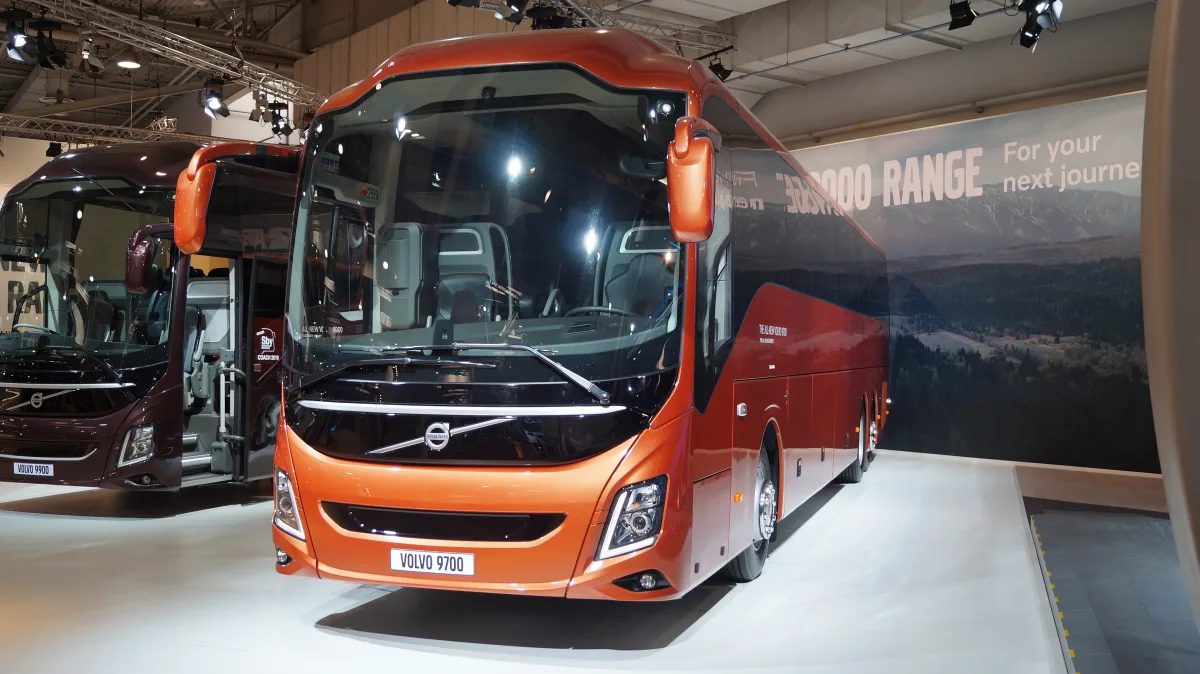
Volvo 9700: coach and tour bus versions, engines, and buying tips
The Volvo 9700 has been in production since 2001 as a premium tour and long-distance coach. We look at the versions, seating capacities, engines, and what to check when buying used.






Volvo 9700 at a glance
The Volvo 9700 is a tour and long-distance coach used by operators for international routes, excursions, and regular services. It comes with two or three axles, making it suitable for various passenger numbers.
Key advantages of this coach include a spacious interior, comfortable seats, economical engines, and a large luggage compartment. These features make the model popular with both operators and passengers.
Generations and versions — what's the difference
The first generation of the 9700 debuted in 2001 and was produced for over a decade. Later, the model underwent significant updates: a redesigned exterior, improved aerodynamics, newer engines, and safety systems. Both generations can be found in the used market.
The coach is available in several lengths — from around 12 to over 14 metres. Seating capacity typically ranges from 50 to 60, depending on the length and interior layout.
Interior specifications vary: the base version has simpler seats, while higher-end versions offer more legroom, a kitchenette, a toilet, and multimedia features.
Engines and transmissions
The Volvo 9700 is powered by Volvo's six-cylinder diesel engines, with capacities ranging roughly from 9 to 13 litres. Newer versions use D11 and D13 series engines that meet Euro 6 standards. Earlier models comply with Euro 3–5 standards, so always check the exact standard in the documents.
Transmissions are either automated 'I-Shift' or automatic. Automated gearboxes are convenient for long hauls but require regular maintenance to avoid issues with the clutch or control block.
What to check when buying a used Volvo 9700
First and foremost, check the technical condition and service history. Buses often rack up high mileage, so request full service records, tachograph data, and inspection documents. Check the air suspension, brakes, and tyre wear.
The engine and transmission should run smoothly, without vibrations or rattles. Check the AdBlue and SCR system, particulate filter, cooling system, and air conditioning — climate control is crucial on long journeys.
Inspect the interior: seats, upholstery, luggage compartment, steps, and windows. Check the body for corrosion and repainted parts, and the electrical equipment for faulty connections. Match the numbers with the documents.


Versions
Names and equipment vary by market and year; we list the most common variants found in Europe.
9700 S
2001–Standard height version.
- Lower body height
- Suitable for standard routes
- Often comes with a simpler specification
9700 H
2001–Higher version with a larger luggage compartment.
- More space under the passenger compartment
- Often — increased legroom
- Ideal for long journeys
9700 HD
2001–Top-tier trim for enhanced comfort
- The ultimate in cabin refinement
- More boot space
- Often — additional comfort features
9700 su trimis ašimis
2001–Longer version for more passengers
- More seating
- Often — toilet and kitchenette
- Ideal for long journeys
Comparison of the 9700 base models
| 9700 S | 9700 H | 9700 HD | |
|---|---|---|---|
| Who it's for | For everyday use | For long journeys | For luxury travel |
| Boot space | Standard | Larger | Largest |
| Seating capacity (usually) | Around 50–55 | Around 50–60 | Around 50–60 |
| Price in the used market (relatively) | Mid-range | Mid-range | High-end |
Most drivers will be fine with the H version, but those seeking maximum comfort should look at the HD. The key things are the technical condition and service history.
Pros
- Spacious, comfortable interior
- Economical engines
- Generous boot space
- Strong presence in the used market
Cons
- AdBlue and SCR systems can be costly
- Many used coaches have high mileage
- Repairing an automated gearbox can be expensive
Frequently asked questions
How does the 9700 differ from the 9900?
The 9900 is the higher-class model, offering more luxury and additional features. The 9700 is a fairly versatile choice, suitable for both touring and long-distance travel.
How many seats does the Volvo 9700 have?
It depends on the length and layout of the interior, but typically around 50–60 seats. The exact number is specified in the technical documents of the specific coach.
Is it worth buying a 9700 with high mileage?
If it has a full service history and is mechanically sound — yes. However, a high-mileage coach will require more maintenance, so negotiate on the price.
Updated 2026-10-21 · Trim levels and equipment vary by market and model year — check the equipment of the specific car. · Translated automatically


