 English
 Lietuvių
 Latviešu
 Eesti
 Polski
 Русский
 Українська
 Deutsch
 Nederlands
 Čeština
 Slovenčina
 Svenska
 Norsk
 Dansk
 Suomi


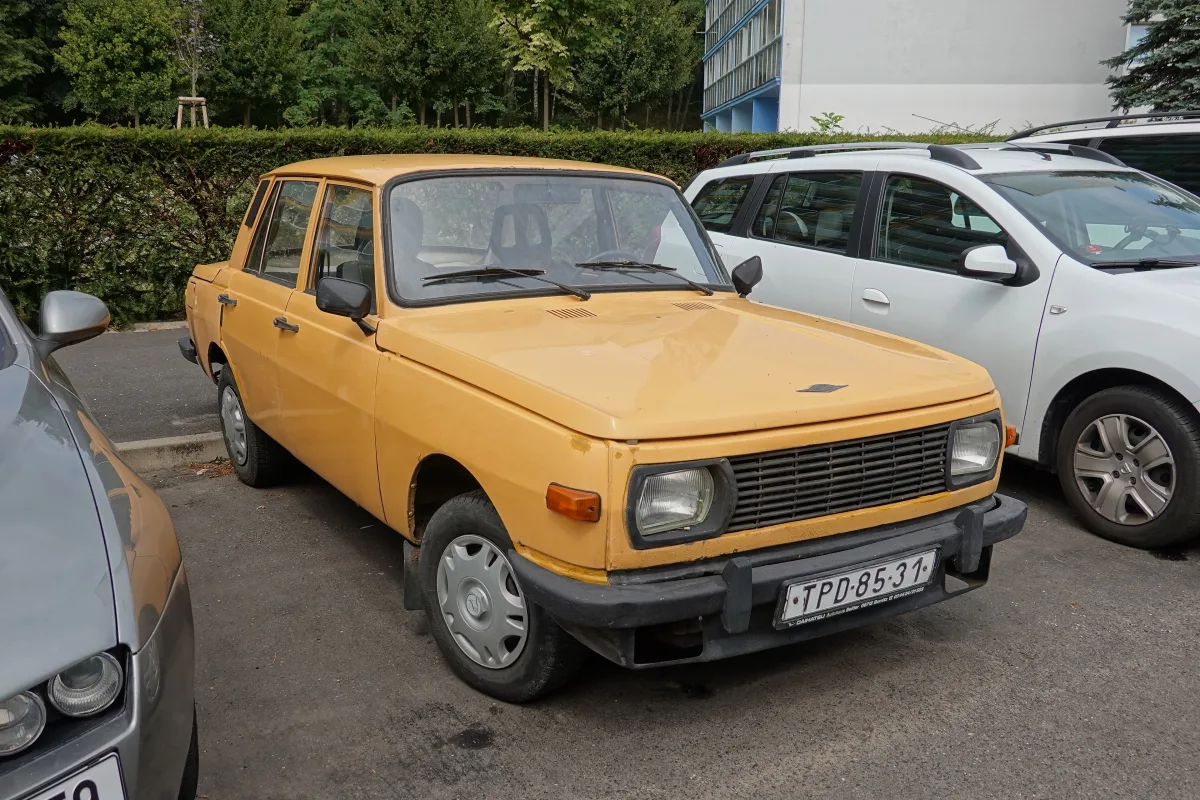
Wartburg 353: East German two-stroke, versions and what to check
Wartburg 353 — a four-door saloon and estate car produced in East Germany from 1966 to 1989. This is a classic car with a two-stroke, three-cylinder engine that you might still come across in Lithuania. In this article, we'll look at its versions, technology, and what buyers need to know.






Wartburg 353 in brief
The 353 was the main Wartburg model for over two decades. It offered generous interior space, a simple design, and a sturdy suspension, making it widely used in Eastern Bloc countries.
The model even made it to Lithuania, where it was spotted on the roads for a while. Today, it's rare and often considered a classic hobby car.
Which version to choose
There were saloon (Limousine), estate (Tourist) versions and others. The estate is more practical due to its larger boot, while the saloon is often seen as more classic.
Later versions (e.g., 353W) had an improved front end and several modifications. Before buying, check which version suits you best and that the car is up to scratch for its age.
Engine and gearbox
The Wartburg 353 had a three-cylinder two-stroke engine with a capacity of around 1.0 litres and about 50 hp. It had front-wheel drive and a four-speed manual gearbox.
The two-stroke engine needs proper maintenance and the right fuel-oil mix. Later versions came with a four-stroke 1.3-litre engine.
What to check when buying a used Wartburg 353
The most important thing is corrosion and the condition of the body. Check the sills, arches, floor, and suspension mounting points.
Check the engine condition (compression, amount of smoke), clutch, and gearbox. Some parts may be hard to find, but clubs and specialist suppliers can help.
Before buying, make sure the documents are in order and that the car can be registered in Lithuania.


Trim levels
Names and equipment vary by market and year; we list the versions most commonly found in Europe.
353 Limousine
1966–1989Four-door saloon.
- Three-cylinder two-stroke engine
- Four doors
- Simple construction
353 Tourist
1966–1989Estate with a larger boot.
- Large boot
- The same engine as the saloon
- More practical than the saloon
353W
Later yearsEnhanced version.
- Refreshed front end
- Slightly improved interior
- Often — modernised solutions
Comparing versions
| Sedanas | Tourist universalas | 353W | |
|---|---|---|---|
| Who it suits | For a classic look | For more practical use | For the later version |
| Body | Sedanas | Estate | Sedan or estate |
| Price in the used market (relatively) | € | € | € |
For most classic car enthusiasts, a well-maintained sedan or estate with a known history will do the trick. The key is the condition of the body and engine.
Pros
- Simple construction
- Spacious interior
- Distinctive East German heritage
- Unassuming classic car
Cons
- Maintaining a two-stroke engine
- Risk of rust
- Finding parts can be tricky
Frequently asked questions
What engine does the Wartburg 353 have?
A three-cylinder two-stroke engine with around 1.0-litre capacity and approximately 50 hp.
Does the Wartburg have front-wheel drive?
Yes, the 353 has front-wheel drive.
Is the Wartburg 353 suitable for daily use?
It's a classic car with modest safety and comfort, so it's usually kept as a hobby car.
Updated 2026-10-21 · Trim levels and equipment vary by market and model year — check the equipment of the specific car. · Translated automatically


