 English
 Lietuvių
 Latviešu
 Eesti
 Polski
 Русский
 Українська
 Deutsch
 Nederlands
 Čeština
 Slovenčina
 Svenska
 Norsk
 Dansk
 Suomi


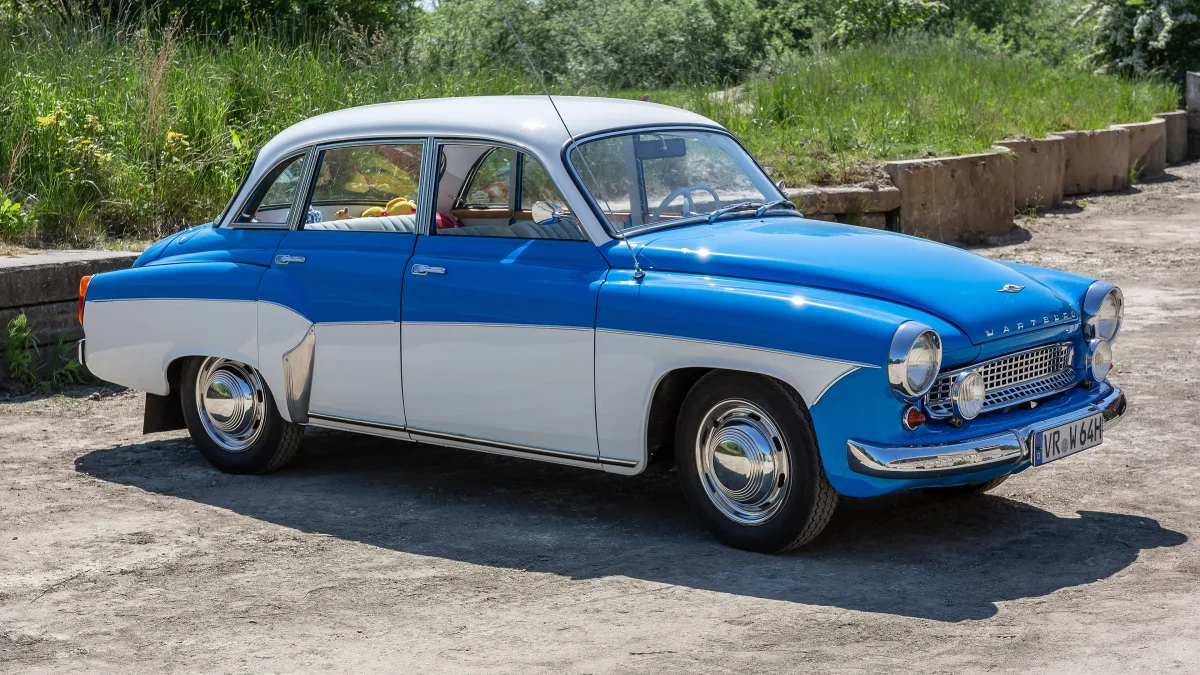
Wartburg 311: 1956–1965 East German classic and buying guide
Wartburg 311 — an East German (DDR) car with a two-stroke three-cylinder engine, produced in the mid-1950s and early 1970s. We explain the differences between body styles, its technology, and what to know if one of these cars appears in the collector's market.






311 in brief
The Wartburg 311 was produced from 1956 in Eisenach (DDR) until around 1965, when it was replaced by the newer 353. It was one of the main mid-size cars produced in the DDR — spacious, family-friendly, and quite modern for its time.
Today, the 311 is a respected retro classic, especially among collectors and enthusiasts of DDR-era cars. You might spot it at events and museums, but it rarely appears in classifieds.
Body styles
The main variant is a four-door saloon. There was also an estate (Kombi), a sportier coupé, and a convertible with a folding roof. Additionally, there were special-purpose variants, such as police or military cars.
Convertibles and coupés are the rarest and most expensive, as few were made. In classifieds, it's crucial to check if the body style matches the documents and if the car hasn't been converted from another version.
Engine and gearbox
The Wartburg 311 had a three-cylinder two-stroke petrol engine with a capacity of around 1.0 litre and approximately 40 hp. The two-stroke engine has a distinctive sound, and the fuel needs to be mixed with oil.
Gearbox — manual, four-speed, front-wheel drive. At the time, this setup was cutting-edge, but it falls short of modern driving standards — you'll need to drive carefully.
What to know if you're considering a 311
First, establish the car's provenance and whether it's original. Due to the variety of body styles, some cars have been adapted or restored from different parts, so it's essential to check the documents and consult a specialist.
Inspect the body — the steel from that era is prone to rust in the sills, floors, arches, and door bottoms. Check the engine (for two-strokes, ensure the correct oil and fuel mix), gearbox, brakes, and suspension.
Source parts through clubs and specialist suppliers — there's a good supply in Germany. Ensure the car can be legally registered in your country.


Variants
The Wartburg 311 didn't have modern trim levels — we outline the main body styles.
Limuzina
1956–1965The main four-door version.
- Four-door body
- Approximately 1.0-litre two-stroke engine
- Manual four-speed gearbox
Kombi (universalas)
1956–1965Estate body with a larger boot.
- Estate body
- More practical for hauling cargo
- Less commonly seen
Kupė ir kabrioletas
1956–1965Rarer sporty versions.
- Two-door body
- Convertible option
- Very rare and expensive
Comparison of variants
| Limuzina | Kombi | Kupė / kabrioletas | |
|---|---|---|---|
| Who it's for | For retro use and shows | For a more practical retro car | For collectors |
| Body | Four-door | Estate | Kupė / kabrioletas |
| Engine | Around 1.0-litre two-stroke | Around 1.0-litre two-stroke | Around 1.0-litre two-stroke |
| Price in the used market (relatively) | Mid-range | Mid-range | High-end |
The Wartburg 311 is a collector's item and a classic for enthusiasts of DDR-era cars. Before buying, check the provenance, documents, and quality of restoration.
Pros
- A standout classic from the DDR
- Spacious body and an attractive design
- Simple mechanics
- Active club community in Germany
Cons
- Two-stroke engine — thick smoke and oil mixing
- Prone to rust
- Rare in Lithuania, few specialists
Frequently asked questions
What engine does the Wartburg 311 have?
A three-cylinder, two-stroke petrol engine with around 1.0-litre displacement and approximately 40 HP.
How does the 311 differ from later Wartburgs?
The 311 is an earlier model, with the 353 and others coming later. The 311 has an older design and simpler technology.
Is the 311 suitable for daily use?
No. This is a collector's car, better suited for shows and occasional drives.
Updated 2026-10-21 · Trim levels and equipment vary by market and model year — check the equipment of the specific car. · Translated automatically


