 English
 Lietuvių
 Latviešu
 Eesti
 Polski
 Русский
 Українська
 Deutsch
 Nederlands
 Čeština
 Slovenčina
 Svenska
 Norsk
 Dansk
 Suomi


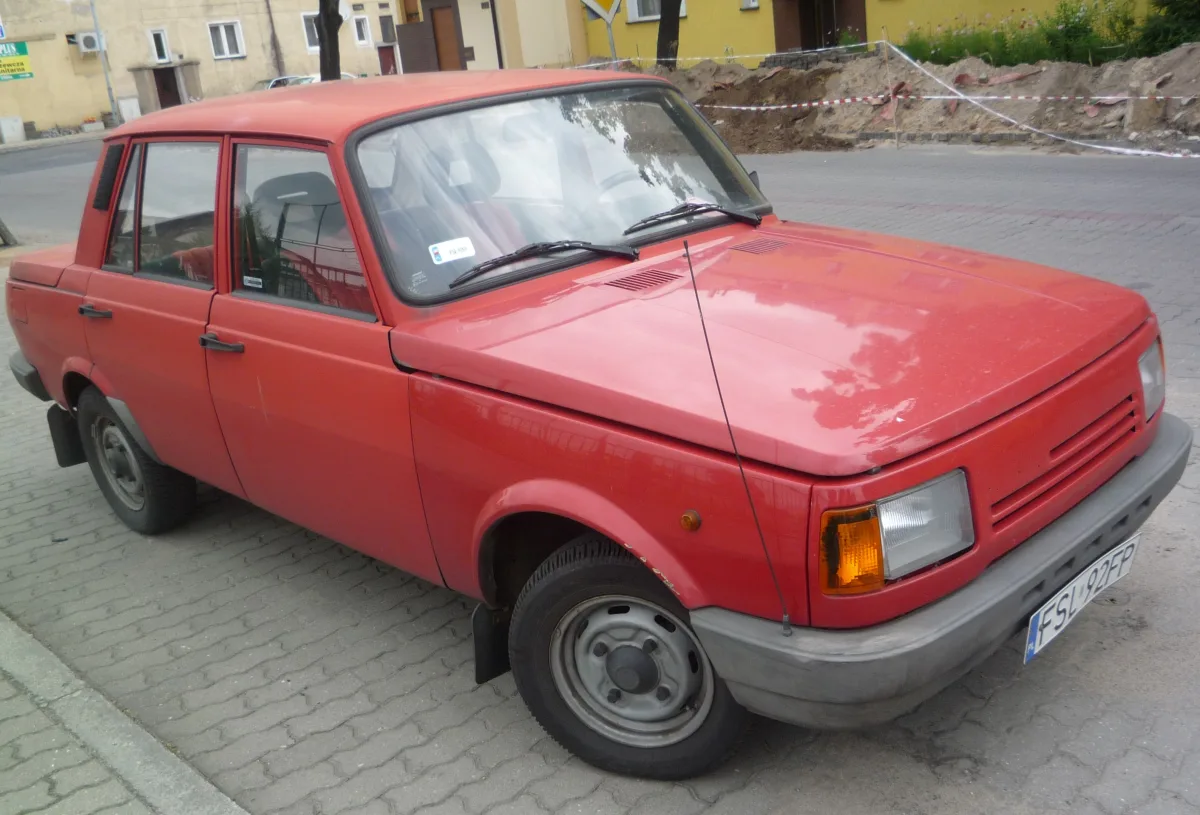
Wartburg 1.3: 1988–1991 East German car with a four-stroke engine
Wartburg 1.3 — the late Wartburg model, produced in Eisenach from 1988–1991 with a four-stroke 1.3-litre engine sourced from Volkswagen. We explain how it differs from earlier two-stroke Wartburgs, what body variants are available, and what to check when buying a retro car.






1.3 in brief
The Wartburg 1.3 was the final Wartburg model, built on the chassis of the earlier 353. The key change was the replacement of the two-stroke engine with a four-stroke 1.3-litre unit, sourced from Volkswagen Polo/Golf technology.
It was produced for a short period — 1988–1991, when the DDR collapsed. As a result, the 1.3 is considered a transitional model between the DDR and the Western automotive world, and today it's a retro classic.
How it differs from the 353
The appearance is essentially the same as the 353, but the 1.3 has a redesigned front, different grilles, and some more modern interior details. The main difference is the mechanics: the four-stroke engine is quieter, more economical, and produces less smoke.
The two-stroke Wartburg 353 belongs to a different era and a different type of buyer, while the 1.3 is often chosen by those who want a simple retro car without the quirks of a two-stroke engine.
Engine and gearbox
The Wartburg 1.3 has a four-cylinder, four-stroke petrol engine with a capacity of around 1.3 litres and an output of approximately 55 hp. It's a simple and reliable design, also used in Volkswagen models.
Manual gearbox, front-wheel drive. The car isn't fast, but it's adequate for relaxed driving and retro events.
What to know if you're considering the 1.3
First, inspect the bodywork — corrosion is the biggest issue, especially in the sills, arches, and door bottoms. Check if the car has been repainted and if there are any hidden repairs.
Check the engine, gearbox, and brakes. Many parts are shared with Volkswagen, so finding spares is easier than for the two-stroke Wartburg. Look for parts through clubs and specialist suppliers.
Before buying, ensure the paperwork is in order and the car can be registered in your country. If you're after a collector's item, assess the originality and quality of any restoration.


Variants
The Wartburg 1.3 didn't have modern trims — we list the main body styles.
Limuzina
1988–1991Four-door saloon.
- Four-door body
- 1.3-litre four-stroke engine
- Front-wheel drive
Tourist
1988–1991Estate with a larger boot.
- Estate body
- More practical for hauling stuff
- More commonly encountered than other versions
Trans
1988–1991A cargo, van-style variant.
- Designed for cargo
- The same basic technology
- Less commonly encountered
Comparing variants
| Limuzina | Tourist | Trans | |
|---|---|---|---|
| Who it's for | For personal retro use | For more practical use | For specific tasks |
| Body style | Sedan | Estate | Van |
| Engine | Around 1.3 litres, around 55 hp | Around 1.3 litres, around 55 hp | Around 1.3 litres, around 55 hp |
| Price in the used market (relatively) | € | € | € |
For most retro enthusiasts, the limousine or Tourist will do the trick — they're the simplest and easiest to find. When buying, opt for examples with good body condition and clean paperwork.
Pros
- The four-stroke VW engine is quieter and more economical than the two-stroke
- Simple manual gearbox
- Retro character
- Parts availability is better than for earlier Wartburgs
Cons
- Prone to rust
- Rare in Lithuania, few specialists
- Slow and unsuited to modern driving
Frequently asked questions
How does the 1.3 differ from the 353?
The main difference is the engine: the 1.3 has a four-stroke VW-derived unit, while the 353 has a two-stroke. The body is similar, but the 1.3 has a more modern front end and some different details.
What engine does the Wartburg 1.3 have?
A four-cylinder, four-stroke petrol unit, around 1.3 litres in capacity and roughly 55 hp, derived from Volkswagen technology.
Is the Wartburg 1.3 suitable for daily driving?
No. It's a retro car, better suited for shows and the occasional spin, rather than everyday use.
Updated 2026-10-21 · Trim levels and equipment vary by market and model year — check the equipment of the specific car. · Translated automatically


