 English
 Lietuvių
 Latviešu
 Eesti
 Polski
 Русский
 Українська
 Deutsch
 Nederlands
 Čeština
 Slovenčina
 Svenska
 Norsk
 Dansk
 Suomi


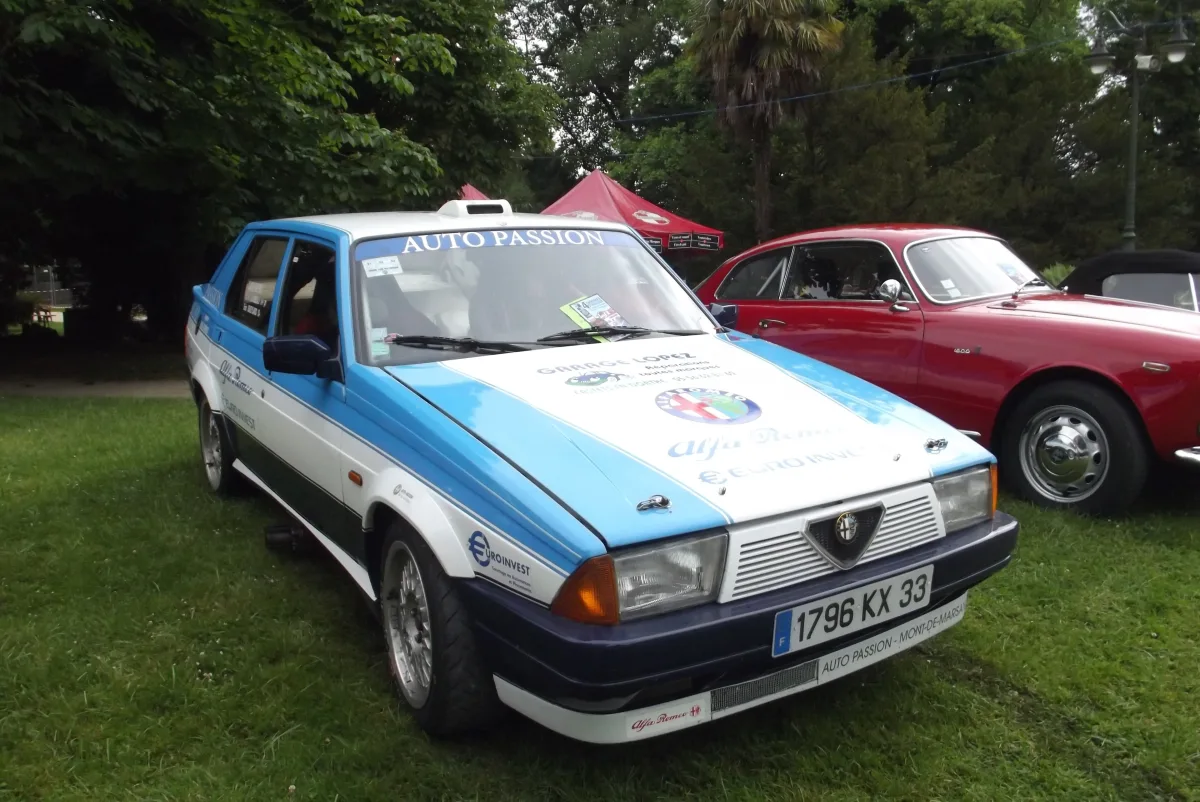
Alfa Romeo 75: rear-wheel drive, engines and trims
Alfa Romeo 75 (1985–1992) — a rear-wheel-drive saloon with an unusual transmission layout and a variety of engines, including Twin Spark and V6. We look at the trims and what to check before buying this classic car.






Alfa Romeo 75 in brief
The 75 was one of the last Alfa Romeo saloons with rear-wheel drive. It features a transaxle, where the gearbox is integrated with the rear axle, resulting in an even weight distribution and lively, precise handling.
This is a classic car that many choose for its character. It demands meticulous maintenance and finding a well-preserved example.
Which trim to choose
The most sought-after trims are the 2.0 Twin Spark (from 1987) and V6, as they offer the best balance of power and driving pleasure. Turbo and Turbo Evoluzione are rarer, making them harder to find.
Early 1.6 and 1.8-litre versions are simpler, while diesel versions are rarer.
Engines and gearboxes
Petrol engines include 1.6, 1.8 (including turbo), 2.0 Twin Spark, 2.5 V6, and 3.0 V6. There were also 2.0 and 2.4-litre turbodiesel engines.
Most cars come with a 5-speed manual gearbox, integrated with the rear axle.
What to check when buying a used Alfa Romeo 75
Corrosion is the biggest risk: inspect the sills, wheel arches, underbody, and mounting points of the front and rear suspension.
Check when the timing belt was last changed, if the electrical equipment is working, and if there are no oil leaks. The specific rear suspension and transmission require specialists, so it's essential to test drive it.


Trim levels
Names and equipment vary by market and year; we list the most commonly found trim levels in Europe.
Twin Spark
2.0-litreThe most popular version with the 2.0-litre Twin Spark engine.
- 2.0-litre Twin Spark engine
- Often — better interior trim
- Often — lightweight alloy wheels
V6 2.5
2.5 V6A well-balanced version with the V6 engine.
- 2.5-litre V6 engine
- Often — more luxurious interior
- Often — additional comfort equipment
3.0 V6 Quadrifoglio Verde
3.0 V6The sportiest version with the largest V6 engine.
- 3.0-litre V6 engine
- Often — sporty interior trim
- Often — lightweight alloy wheels
Turbo
1.8 TurboThe rarer turbo variant.
- 1.8-litre turbo engine
- Often — sportier looks
- Often — larger alloy wheels
Comparing versions
| Twin Spark | V6 2.5 | 3.0 V6 QV | |
|---|---|---|---|
| Who it suits | For daily driving | More power and comfort | For driving pleasure |
| Engine | 2.0-litre | 2.5-litre V6 | 3.0-litre V6 |
| Interior | Base | Comfort | Sport |
| Price in the used market (relatively) | €€ | €€ | €€€ |
For most buyers, the best choice is a well-maintained 2.0 Twin Spark or V6. The more powerful the version, the more important its service history becomes.
Pros
- Lively handling and rear-wheel drive
- Characterful engines, especially the V6
- Classic Italian design
- Good weight balance
Cons
- High risk of corrosion
- Harder to find qualified mechanics and parts
- Older cars often have minor issues
Frequently asked questions
Is the Alfa Romeo 75 reliable?
It's an old car, so a lot depends on its upkeep. The key is to find examples free of rust and with a clear history.
Which engine is the best?
Most opt for the 2.0 Twin Spark or the V6 for their power and character. Turbo versions are rarer and more complex.
How does the 75 differ from other Alfas?
It has rear-wheel drive and a transmission linked to the rear axle, so the driving experience is quite different from front-wheel-drive Alfas.
Updated 2026-10-09 · Trim levels and equipment vary by market and model year — check the equipment of the specific car. · Translated automatically


