 English
 Lietuvių
 Latviešu
 Eesti
 Polski
 Русский
 Українська
 Deutsch
 Nederlands
 Čeština
 Slovenčina
 Svenska
 Norsk
 Dansk
 Suomi


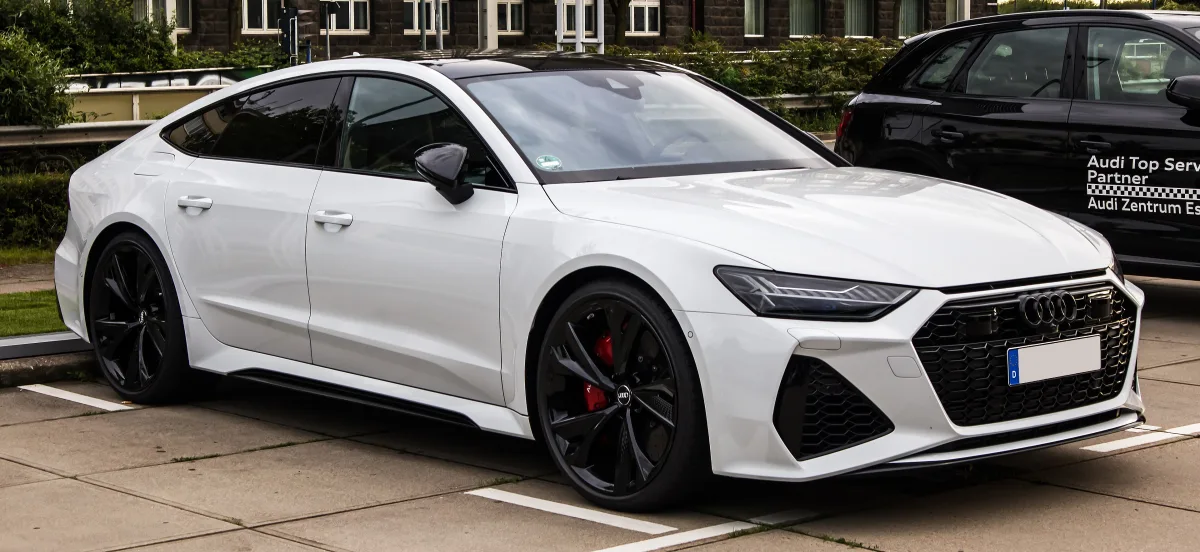
Audi RS7: C7 and C8 generations, engines and trims
The Audi RS7 Sportback is a four-door 'coupe'-style hatchback with a V8 biturbo engine and quattro all-wheel drive, produced since 2013. We look at two generations, the power differences between standard and performance versions, and what to check before buying used.






RS7 in brief
The RS7 Sportback is the sporty version of the A7: lower, wider, with a powerful 4.0-litre V8 petrol engine, eight-speed automatic transmission and quattro all-wheel drive. While the body resembles a coupe, the rear opens like a hatchback, making the boot practical, and the interior spacious enough for four adults.
This is the car for those who need supercar speed and daily practicality in one. As a result, used RS7s are found with high mileage, so the buyer's main concern should be the service history and the previous owner's treatment of the car.
Which generation to choose
The C7 generation (4G, 2013–2018) was the first RS7. The standard version had around 560 hp, and in 2015, the performance version appeared with around 605 hp. The interior is classic, with buttons, and the infotainment system looks dated by today's standards, but the technology has proven to be quite reliable.
The C8 generation (4K, from 2019) is significantly more modern: two large touchscreen displays, a digital instrument cluster, and more driver-assistance systems. The engine is also a 4.0 TFSI V8, but with a mild hybrid (48 V) and around 600 hp, with the performance version reaching around 630 hp.
If your budget is tight, the C7 is a more accessible route into the RS7 world, but remember that even an older car's maintenance and parts cost like those of a prestigious sports model.
Engines and transmissions
Both generations use a 4.0-litre V8 TFSI with twin turbos. In the C7 version, power is around 560 hp (performance around 605 hp), in the C8 version around 600 hp (performance around 630 hp). Some cylinders can be deactivated under light load to save fuel.
Both generations have an eight-speed automatic tiptronic transmission and quattro all-wheel drive. Sport differential and air suspension depend on the specific car, so check the trim via VIN and list.
What to check when buying a used RS7
Review the service history: oil changes, brake discs and pads, tyres. Large wheels (often 20–22 inches) and performance tyres wear out quickly, and ceramic brakes (if fitted) are very expensive, so have their condition assessed during an expert inspection.
Check the air suspension: ensure the car sits level and there are no faults on the dashboard. Also, make sure the engine isn't using too much oil — some 4.0 TFSI engines are known for this issue, so check the oil level and listen for any unusual noises.
It's recommended to perform a computer diagnostic and check if there has been any software modification (chip tuning) — this can affect both the engine and the gearbox's longevity.


Trims
Names and equipment vary by market and year; we list the trims most commonly found in Europe.
RS7 (C7)
C7 generation, 2013–2018The first-generation RS7 with around 560 HP V8 engine.
- Often — pneumatic suspension and sport seats
- Often — 20-inch wheels
- Classic interior with buttons
RS7 performance (C7)
C7 generation, from 2015The more powerful C7 version with around 605 HP.
- Around 605 HP of power
- Often — ceramic brakes or carbon parts
- Distinctive trim and wheels
RS7 (C8)
C8 generation, from 2019Modern-era RS7 with a mild hybrid and around 600 HP.
- Two touchscreens and a digital driver's display
- Often — Matrix LED or laser headlights
- Often — 21–22-inch wheels
RS7 performance (C8)
C8 generation, from 2023The most powerful RS7 with around 630 HP
- Around 630 HP of power
- Often — ceramic brakes
- Sportier interior and exterior styling
Trim comparison
| RS7 C7 | RS7 performance C7 | RS7 C8 | RS7 performance C8 | |
|---|---|---|---|---|
| Who it's for | Those seeking a more accessible V8 sports car | For those wanting more power for less than the C8 | Daily driving with modern tech | For maximum performance and the latest features |
| Wheels (most often) | 20th series | 20-21 series | 21-22 series | 21-22 series |
| Interior | Classic, buttons | Classic, sport trim | Two touchscreens | Two touchscreens, sport trim |
| Engine | 4.0 TFSI V8, around 560 hp | 4.0 TFSI V8, around 605 hp | 4.0 TFSI V8, around 600 hp | 4.0 TFSI V8, around 630 hp |
| Price in the used market (relatively) | €€€ | €€€ | €€€€ | €€€€ |
If you're after a more affordable purchase price, opt for the C7 with a full service history. If cutting-edge technology and comfort are your priorities, take a look at the C8, but be prepared for higher running costs.
Pros
- Massive power and rapid acceleration
- Everyday practicality – a hatchback boot and spacious interior
- Four-wheel drive ensures excellent grip
- Distinctive styling and prestige
Cons
- High maintenance costs and expensive parts
- Large alloy wheels and sporty tyres wear out quickly
- High fuel consumption
Frequently asked questions
What sets the RS7 apart from the S7?
The RS7 boasts a significantly more powerful 4.0-litre V8 biturbo engine than the S7, along with a more aggressive body kit and sportier suspension.
Is the RS7 suitable for daily use?
Yes, because the interior is spacious, the boot is large, and the four-wheel drive helps in poor conditions. However, you'll need to budget for higher running costs and more frequent tyre and brake changes.
Which RS7 generation should you choose?
If price is your main concern, go for the C7; if you want the latest technology and a modern interior, choose the C8. Both generations have the same engine type, but the C8 is more modern and features a mild hybrid.
Updated 2026-10-17 · Trim levels and equipment vary by market and model year — check the equipment of the specific car. · Translated automatically


