 English
 Lietuvių
 Latviešu
 Eesti
 Polski
 Русский
 Українська
 Deutsch
 Nederlands
 Čeština
 Slovenčina
 Svenska
 Norsk
 Dansk
 Suomi


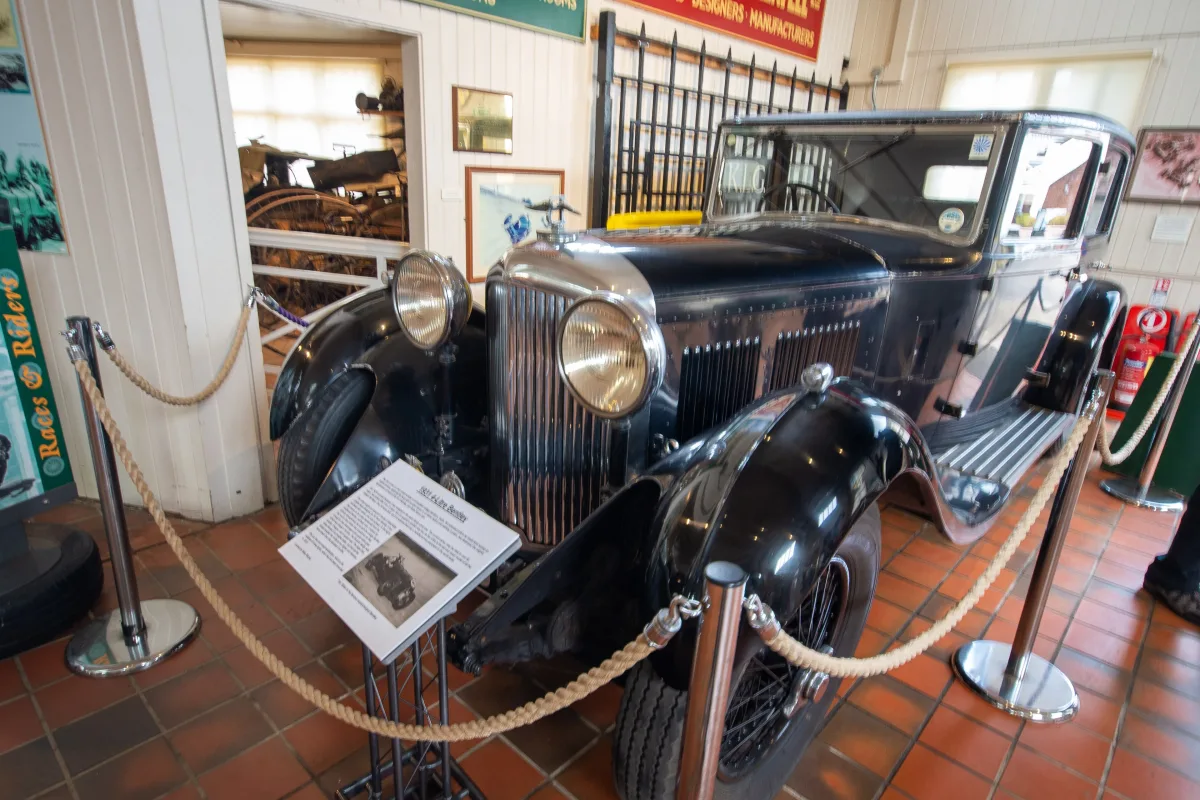
Bentley 4 Litre: briefly produced in 1931
Bentley 4 Litre — the 1931 Bentley model introduced as a more affordable alternative to the 8 Litre. Around 50 cars were made. We look at its origins, engine, and what to know when buying this rare classic.






4 Litre briefly
The 4 Litre was introduced in May 1931 as a cheaper, more compact alternative to the large 8 Litre. Its chassis was a shortened version of the 8 Litre's, and it was intended to cost around two-thirds the price of the 8 Litre.
Unfortunately, the model didn't solve Bentley's financial problems: the company soon went bankrupt and was acquired by Rolls-Royce. As a result, the 4 Litre's production run was very short.
What sets it apart
The cars were sold as chassis, with bodies built to order by independent coachbuilders, so each example differs in appearance.
Two wheelbase options were offered — 134 and 140 inches. The engine was considered too weak for the heavy chassis, so driving this car isn't as dynamic as other Bentleys.
Engine and tech
The engine is a 3.9-litre inline six-cylinder (85 mm bore, 115 mm stroke) producing around 120 hp at 4000 rpm. It's a modified Ricardo-designed engine.
This is an early design car, so don't expect modern driving comfort — it's valued for its history and rarity.
What to check when buying a Bentley 4 Litre
Due to the very small number (around 50) the most important things are provenance, the car’s chassis number, and documentation. Request the full history and verification from specialist Bentley clubs or experts.
Since bodies were built separately, check if the body is original to the car. Inspect the wooden body frame, engine, and running gear.
Before buying, consult with a classic Bentley specialist, as repairs and parts are expensive and hard to come by.


Trim levels
Bodies were built to order, so versions are specified by the car.
134 col. ratų bazė
1931 model yearShorter wheelbase variant.
- Shorter wheelbase
- 3.9-litre six-cylinder engine
- Body built to order
140 col. ratų bazė
1931 model yearLonger wheelbase variant.
- Longer wheelbase
- More interior space
- Body built to order
Uždari kėbulai
1931 model yearSaloons and other closed bodies.
- Often — a more comfortable interior
- Heavier body
- Very rare
Atviri kėbulai
1931 model yearTourer and other open bodies.
- Often — a sportier look
- Lighter body
- Highly prized by collectors
Comparing versions
| 134 col. | 140 col. | Atviras kėbulas | |
|---|---|---|---|
| Who it suits | For the collection | For the collection | Shows and rallies |
| Engine | 3.9 L, around 120 HP | 3.9 L, around 120 HP | 3.9 L, around 120 HP |
| Price in the used market (relatively) | €€€ | €€€ | €€€ |
Due to its extremely limited numbers, each 4 Litre is unique. The key is documented history and body matching the chassis.
Pros
- A rare Bentley model
- Classic British design
- A collector's item
- Each example is unique
Cons
- The engine struggles to move the heavy car
- Very high price and maintenance costs
- Extremely hard to find for sale
Frequently asked questions
How many Bentley 4 Litres were made?
Around 50 cars, all from 1931
How does the 4 Litre differ from the 4½ Litre?
The 4½ Litre is the earlier, far more popular model (1927–1931), while the 4 Litre was produced briefly, just in 1931.
Why was the 4 Litre produced for such a short time?
It didn't save Bentley's finances, and the company was sold to Rolls-Royce in 1931.
Updated 2026-10-21 · Trim levels and equipment vary by market and model year — check the equipment of the specific car. · Translated automatically


