 English
 Lietuvių
 Latviešu
 Eesti
 Polski
 Русский
 Українська
 Deutsch
 Nederlands
 Čeština
 Slovenčina
 Svenska
 Norsk
 Dansk
 Suomi


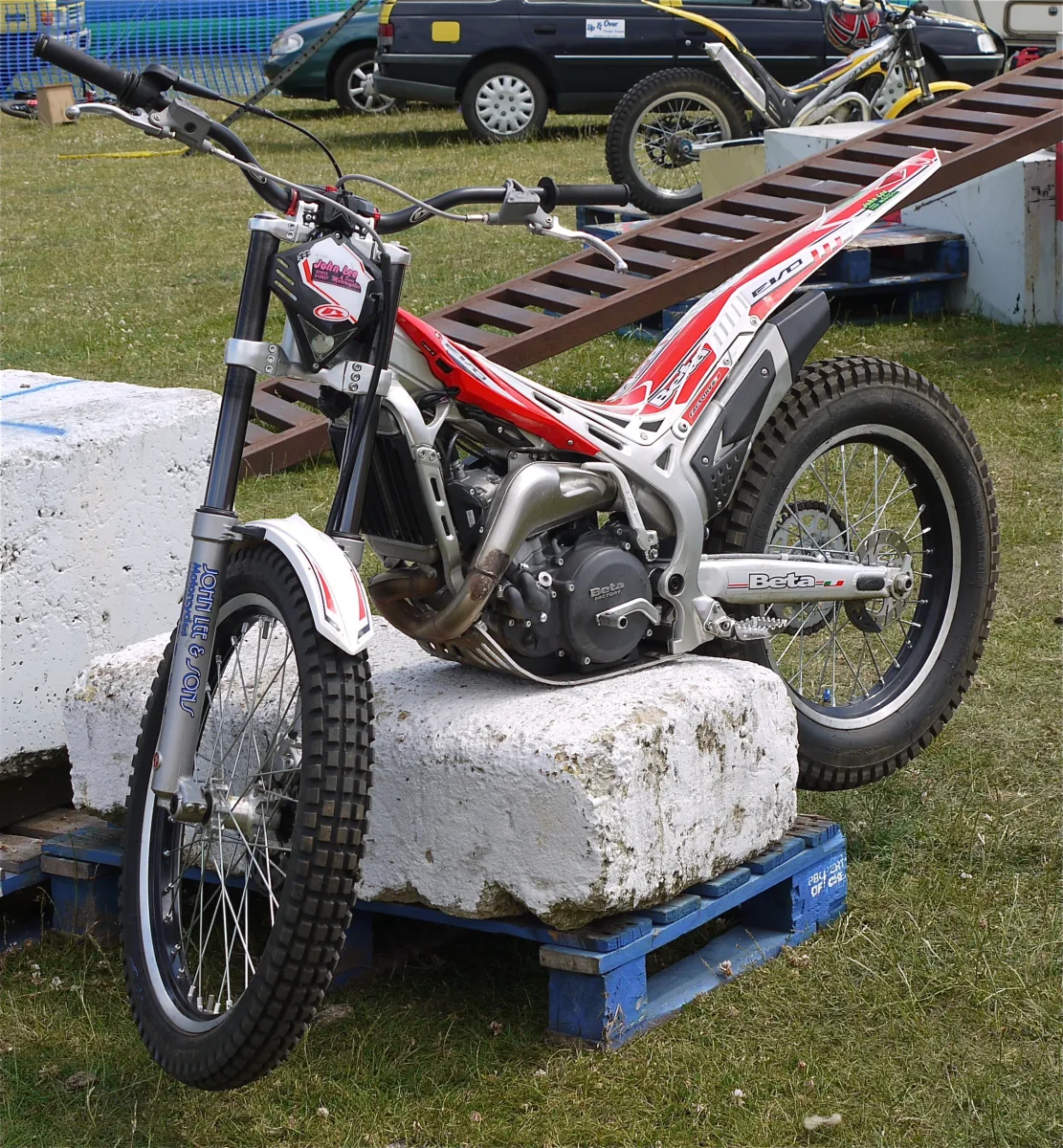
Beta Evo: trial motorcycles — generations and what to know when buying
Beta Evo — the Italian manufacturer Beta's trial motorcycle line, produced since 2009 with two-stroke and four-stroke engines. In this article, we review the generations, purpose, and what to check when buying used.






Evo in brief
Evo — the Beta trial motorcycle: extremely light, without a seat, with a low high-end suspension and very agile handling. It's designed not for speed, but for overcoming tough obstacles — rocks, logs, steep slopes.
This is a sports and fun motorcycle that isn't meant for road use. It's ideal for those who want to learn trial techniques or compete in this discipline.
Generations — what's the difference
Evo comes in several versions: Evo 80 (for juniors), Evo 2T (125, 200, 250, 300 cm³) and four-stroke Evo 4T (250, 300 cm³). Additionally, there are “Factory” versions with higher-spec equipment.
Smaller models are suitable for kids and teens, while 250–300 cm³ are for adults. Always check the exact version by the frame number.
Engines and gearbox
Evo two-stroke engines are simple, light, and lively, but require more maintenance. Four-strokes are smoother and less polluting, but heavier and more expensive to service.
The gearbox is manual, with several gears. A trial motorcycle has very short gears to allow for slow and precise riding.
What to check when buying a used Evo
Inspect the frame, forks, and wheels for dents and deformations — trial motorcycles constantly hit rocks. Check the brakes, chain, and sprockets.
In twins, check the cylinder and piston condition, and in fours, the engine's oil change history. Listen for smooth operation and no excessive noise.
Request the service history and find out how many hours the engine has run. Check the carburetor and air filter.


Trim levels
Specific trim levels vary by year, so we provide general versions.
Evo 2T
TwinsTwin-cylinder trial models (from 80 to 300 cm³).
- Lightweight construction
- Different displacements by age
- Simple engine
Evo 4T
FoursFour-cylinder trial models.
- Smoother power delivery
- Quieter engine
- Heavier than twins
Comparison of Evo engine types
| Evo 2T | Evo 4T | |
|---|---|---|
| Who's it for? | Active trials and learning | Smoother driving |
| Weight | Lighter | Heavier |
| Maintenance | More frequent | Less often, but more expensive |
| Price in the used market (relatively) | €€ | €€ |
For most beginners, the two-stroke Evo is the way to go: simpler and cheaper. Opt for the four-stroke if you value smoother power delivery.
Pros
- Very light and agile
- Ideal for trials
- Wide range of versions available
- Great handling and build quality
Cons
- Not designed for road use
- Requires regular maintenance
- Used examples often worn out
Frequently asked questions
Can the Evo be ridden on roads?
No, it's a trial bike, not suited to road use. It's designed for trails and sports tracks.
Is the Evo suitable for beginners?
Yes, especially the smaller-capacity versions. It's light and easy to handle, but trial technique requires practice.
Which engine to choose — two-stroke or four-stroke?
The two-stroke is lighter and simpler, the four-stroke smoother. Beginners usually find the two-stroke more suitable.
Updated 2026-10-21 · Trim levels and equipment vary by market and model year — check the equipment of the specific car. · Translated automatically


