 English
 Lietuvių
 Latviešu
 Eesti
 Polski
 Русский
 Українська
 Deutsch
 Nederlands
 Čeština
 Slovenčina
 Svenska
 Norsk
 Dansk
 Suomi


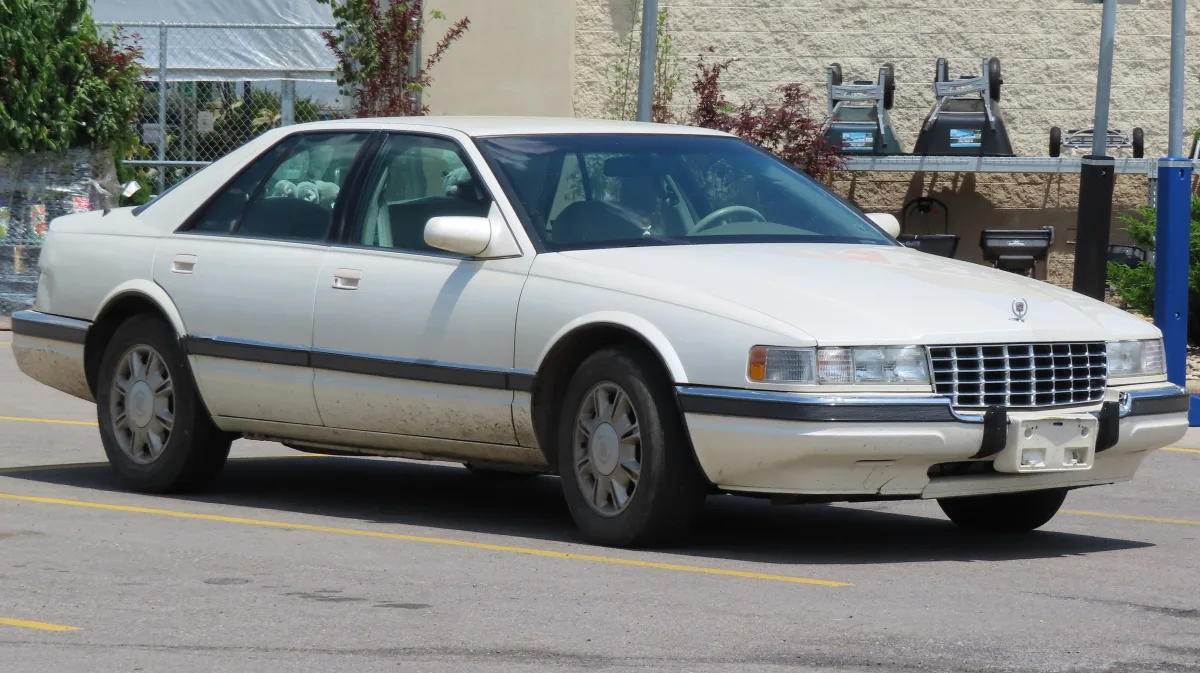
Cadillac Seville: generations, engines and what to know when buying used
The Cadillac Seville is a luxurious American sedan produced from 1975 to 2004, evolving through generations and technology from the more compact original model to the Northstar V8-powered versions of the 1990s. In this article, we'll look at the generations, engines, and what to check when buying such a car in Lithuania, where it often arrives from the USA.






Seville in brief
The Seville was introduced in 1975 as a smaller, more luxurious Cadillac model than the typical limousines of the brand. Over nearly three decades, the car changed: the body shape, running gear, engines, and equipment all evolved.
For most buyers, the later generations of the Seville are the most relevant, as they usually have more modern equipment and are easier to find in the used market. The earliest examples from the 1970s and 1980s often appeal to collectors and enthusiasts of classic American cars.
Which generation to choose
Early Seville models (late 1970s and 1980s) are classic cars whose value largely depends on originality, body condition, and service history. They require careful maintenance, and some parts may need to be sourced from specialists.
The 1990s Seville models already feature more modern electronics and a more comfortable ride. From 1993 onwards, the Northstar V8 engine is commonly found, and cars are sold with the SLS and STS badges: the SLS was the more comfort-oriented version, while the STS was the sportier, with a more powerful configuration and extra equipment.
The latest generation (1998–2004) is considered the most modern, but it's also the most complex: more electronics, more components that need to be understood when repairing.
Engines and transmissions
The Seville has almost always come with a V8 engine from the get-go. Early engines were large-displacement and quite thirsty, but later models saw more modern solutions.
Since 1993, the key engine became the aluminium Northstar V8 — it's more powerful and known for its smooth operation, but it's also more complex and expensive to repair. These cars come with an automatic transmission and front-wheel drive.
What to check when buying a used Seville
The Northstar V8 engines have a well-known issue with head bolt torque and intermediate shaft condition. When buying such a car, pay attention to the coolant level, leaks, whether the engine is consuming oil, and if any previous repairs have been done, if applicable.
Inspect the body and undercarriage for rust, especially on older examples. Test the automatic transmission when cold and hot — shifts should be smooth, without hesitation.
Many Sevilles in Lithuania were imported from the USA: check the car's history, mileage according to documents, and whether repairs were indeed carried out after accidents. Test all the electrical equipment (windows, seats, climate control).


Trim levels
Names and equipment vary by market and year; we list the versions most commonly found in Europe.
Seville
1975–1979The first-generation's main version was a more compact Cadillac.
- Often — V8 engine and automatic transmission
- Comfortable, luxuriously appointed interior
- Classic, not overly sporty driving experience
Elegante
Late 1970sMore luxurious first-generation version with distinctive styling.
- Often — more luxurious interior and trim
- Often — unique paintwork and details
- Rarer and more collectible
SLS
1990s and laterComfort-oriented version of later generations.
- Often — Northstar V8 engine
- A car focused on comfort
- Often — plenty of standard equipment
STS
1990s and laterSportier and better-equipped version of later generations.
- Often — more powerful configuration
- Often — a sportier drive
- Often — more electronic features
Comparing versions
| Seville (klasikinis) | SLS | STS | |
|---|---|---|---|
| Who it suits | For classic car enthusiasts | For comfortable driving | For more spirited driving |
| Engine | V8 (older models) | Northstar V8 | Northstar V8 |
| Price in the used market (relatively) | €€ | € | €€ |
For most buyers, the simplest choice is a well-maintained SLS or STS from later years, while the classic Seville is for those seeking a collector's car and are prepared to maintain it meticulously.
Pros
- Luxurious, spacious and quiet interior
- Comfortable for long journeys
- Lots of standard kit even in base models of later generations
- Often available at a reasonable price
Cons
- The Northstar V8 can be expensive to fix
- High fuel consumption
- Rarer parts and fewer specialists familiar with this model
Frequently asked questions
Is the Seville reliable?
It depends on the generation and maintenance. Later Northstar V8 engines can be expensive to repair, so a thorough service history and engine condition check are vital before buying.
What's the difference between the SLS and STS?
The SLS is geared towards comfort, while the STS is sportier, usually better equipped and with a more powerful setup. Exact differences depend on the year, so it's worth checking the spec of the individual car.
Is the Seville suitable for daily use?
Yes, if the car is in good condition, and high fuel consumption and repair costs aren't your top priorities.
Updated 2026-10-21 · Trim levels and equipment vary by market and model year — check the equipment of the specific car. · Translated automatically


