 English
 Lietuvių
 Latviešu
 Eesti
 Polski
 Русский
 Українська
 Deutsch
 Nederlands
 Čeština
 Slovenčina
 Svenska
 Norsk
 Dansk
 Suomi


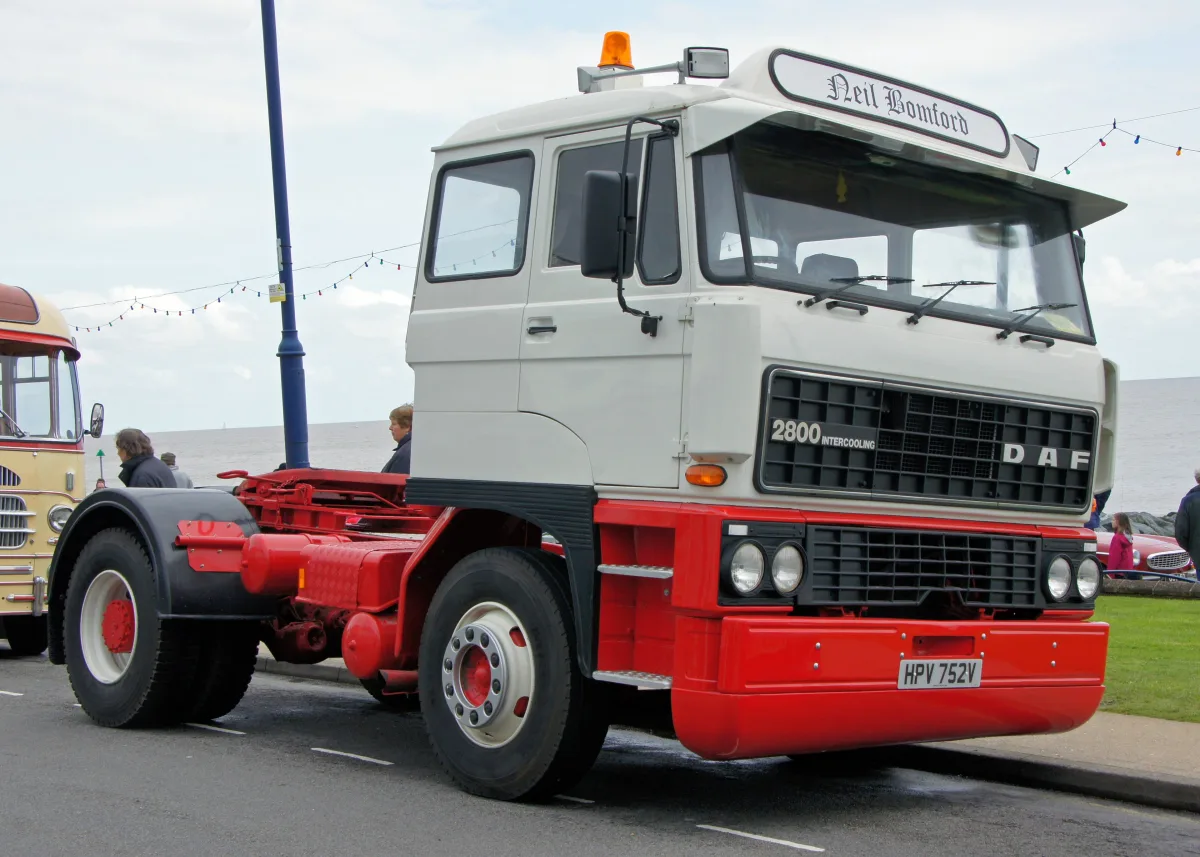
DAF 2800: 1973–1987 heavy-duty tractor unit, engines and what to check
DAF 2800 — the 1973–1987 Dutch heavy-duty truck that gained fame as a tractor unit for long-haul journeys. We look at the badging, versions, engine specifications, and what to check before buying such a classic.






DAF 2800 in brief
DAF 2800 — one of the first heavy-duty Dutch tractor units, becoming a symbol of DAF's recognition in the 1970s and 1980s. It was produced as a tractor unit for semi-trailers, a rigid truck, or a flatbed truck.
The number in the name, similar to other DAF models of the time, roughly indicates the engine power in horsepower. Due to its age, it is often a collector's item or a restoration project today.
Versions and badging — what's the difference
Early 2800s were produced with a basic cab, later updated versions with improved comfort followed. Some trucks have the 'Intercooling' badge, indicating a turbocharged engine with an intercooler.
Wheel configurations — mostly 4x2 and 6x2 for tractor units, 6x4 for heavier duties. Special-purpose chassis are also found.
Production ended in 1987, replaced by newer DAF models.
Engines and gearboxes
The DAF 2800 is powered by DAF's own six-cylinder turbodiesel. Developed long before Euro emissions standards, the engine lacks exhaust after-treatment systems, and its power depends on the version.
Gearboxes — manual with splitter. There are no automated gearboxes in this model, so driving requires significant skill and physical effort.
What to check when buying a used DAF 2800
Inspect the cab and chassis for corrosion: check the sills, floor, cab corners, and chassis joints. Older cabs can have serious corrosion, so inspect the underbody as well.
The engine should start without issues, not emit excessive smoke, and not leak oil. Check the turbocharger, cooling system, and fuel delivery components, and ask about the oil change history.
Test the gearbox, clutch, and brake and air systems, check the suspension and wheel bearings. Compare the chassis and engine numbers with the documents. Due to its age, a collectible example should ideally have restoration documents.


Versions
Names and equipment vary by market and year; we list the most common variants found in Europe.
2800 vilkikas
1973–1987Typical version for semi-trailers.
- Often comes with a basic sleeper cab
- Mostly 4x2 or 6x2
- Manual gearbox with splitter
2800 Intercooling
1973–1987More robust version with an intercooler.
- Turbocharger with intercooler
- Often a more powerful engine
- Designed for long-haul journeys
2800 savivartis
1973–1987For construction and careers.
- Often 6x4
- Reinforced frame
- Cab-over design
2800 specialios paskirties važiuoklė
1973–1987Base for special bodies and municipal equipment.
- Additional body equipment
- Often with low mileage
- Requires appropriate inspection
Comparison of the main 2800 versions
| Vilkikas | Intercooling | Savivartis | |
|---|---|---|---|
| Who it's for | For long-distance trips | For a more powerful engine choice | For construction |
| Cab | Sleeping area | Sleeping area | Daily |
| Wheel configuration (most common) | 4x2 or 6x2 | 4x2 or 6x2 | 6x4 |
| Price in the used market (relatively) | Mid-range | Mid-range | Budget |
These days, it's mostly a collector's item. The key is the condition of the cab, chassis, and engine, not the version, and a clear history boosts its value.
Pros
- A clear classic model
- Robust, simple construction
- A favourite among collectors
- Wide range of applications
Cons
- Very old technology with no modern aids
- Risk of corrosion to the cab and chassis
- Due to age, parts may be hard to find
Frequently asked questions
Is the DAF 2800 suitable for daily work?
Rarely: this is very old technology, so many examples are used as collectibles or on display. For daily work, you'll need to pay a lot of attention to maintenance.
What does 'Intercooling' mean?
This is an engine with a turbocharger and an intercooler, providing more power and better fuel efficiency than a standard engine.
Does the DAF 2800 meet Euro standards?
This model was created long before Euro standards existed, so it doesn't comply with them.
Updated 2026-10-21 · Trim levels and equipment vary by market and model year — check the equipment of the specific car. · Translated automatically


