 English
 Lietuvių
 Latviešu
 Eesti
 Polski
 Русский
 Українська
 Deutsch
 Nederlands
 Čeština
 Slovenčina
 Svenska
 Norsk
 Dansk
 Suomi


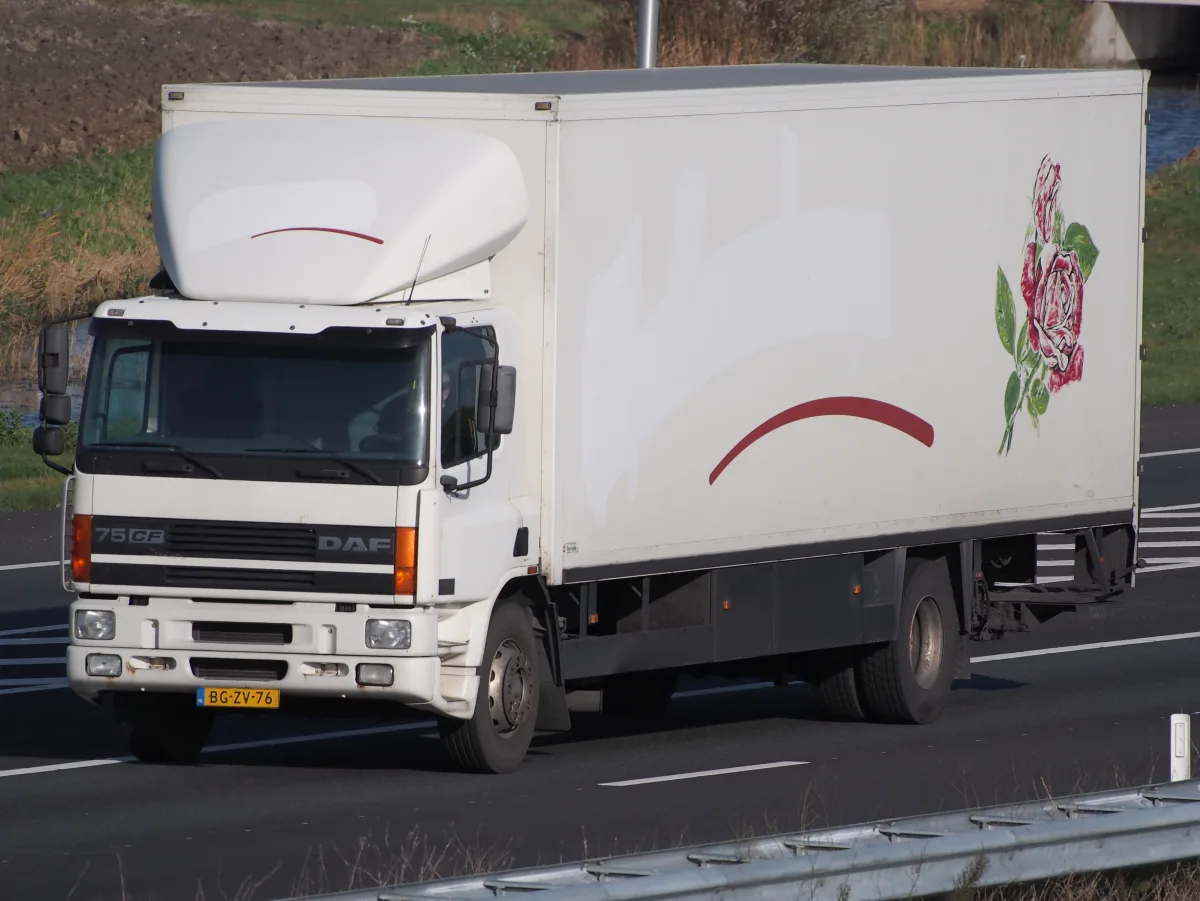
DAF 75: 1992–2001 truck, engines and what to check when buying
DAF 75 — 1992–2001 mid- and heavy-duty Dutch truck, later sold as the CF 75. We look at the versions, engine codes, cabs, and what to check when buying such a vehicle.






DAF 75 in brief
The DAF 75 was a popular choice for regional and national transport: you can find it as a flatbed or box truck, a tractor unit for semi-trailers, a rigid truck, or a special-purpose vehicle. The model slotted in between the smaller 65 series and the heavier 85 series trucks.
The numbers after the dot in the name (e.g., 75.240, 75.270, or 75.360) usually indicate the engine power in horsepower. This system allows you to understand the version at a glance.
Cabs and versions — what's the difference
The DAF 75 was offered with several types of cabs: day cab, sleeper cab, and the tall 'Space Cab' with more room for rest. The sleeper cab is better suited for long-haul trips, while the day cab is ideal for daily regional work.
Common wheel configurations include 4x2 and 6x2, as well as 6x4 for rigid trucks. Many vehicles feature an air-suspended rear axle, while box trucks designed for regional transport have a lower chassis.
When production ended, the 75 model was replaced by the modern CF series, which essentially took over this model's niche.
Engines and transmissions
This model's engines are six-cylinder turbodiesels with an intercooler (ATi — “Advanced Turbo intercooling”). Power ranged from around 240–360 hp. Earlier examples meet Euro 1, later ones Euro 2 standards; always check the exact standard via the documents.
Gearboxes are usually manual, with some vehicles featuring automatic or semi-automatic transmissions. Manual boxes are straightforward, but their gears and synchronizers wear with use.
What to check when buying a used DAF 75
Inspect the cab and chassis — the most common issue is corrosion: check the sills, cab corners, floors, and chassis crossmembers. Ensure the cab lift mechanism works and there are no leaks through the window seals.
The engine should start without prolonged cranking, not emit excessive smoke, and not leak oil. Check the turbocharger, intercooler, and cooling system — leaks are common in older trucks.
Test the braking and air systems, check the suspension and wheel bearings. Compare the chassis and engine numbers with the documents, and assess the condition of the van or body separately.


Versions
Names and equipment vary by market and year; we list the most common variants found in Europe.
75 vilkikas
1992–2001Version for semi-trailers, regional, and national haulage.
- Often with a sleeper cab
- Mostly 4x2 or 6x2
- Manual gearbox
75 furgonas / šaldytuvas
1992–2001Common city and regional freight variant.
- Often — refrigeration equipment or a closed body
- Rear air suspension
- Day cab or short sleeper cab
75 savivartis
1992–2001For construction and quarry work.
- Often 6x4
- Reinforced chassis
- Cab-over-engine design
75 specialios paskirties važiuoklė
1992–2001For fire services, municipal vehicles, and emergency services.
- Additional cab equipment
- Often with low mileage
- Requires appropriate inspection
Comparison of the main 75 versions
| Vilkikas | Furgonas | Savivartis | |
|---|---|---|---|
| Who it's for | Semi-trailer truck | For freight delivery | For construction |
| Wheel configuration (most common) | 4x2 or 6x2 | 4x2 | 6x4 |
| Cab | Sleeping | Day or sleeping | Day |
| Price in the used market (relatively) | € | € | € |
For many buyers, a van or truck with a well-maintained body will do the trick. As with any old truck, condition is key, not the version.
Pros
- Simple, well-known technology
- Clear naming convention — power is evident from the name
- Many versions: van, truck, flatbed
- Affordable in the used market
Cons
- An older model lacking modern driver-assistance systems
- Risk of corrosion to the cab and chassis
- Emissions restrictions in certain zones
Frequently asked questions
What do 75.270 and 75.360 mean?
The number after the decimal usually indicates the engine's power in horsepower. 75.270 is roughly 270 HP, 75.360 is around 360 HP.
How does the DAF 75 differ from the 85?
The 85 is a heavier class with more powerful engines and more long-haul versions, while the 75 is more suited to regional and national routes.
Does the DAF 75 meet Euro emissions standards?
It depends on the year of manufacture: earlier models comply with Euro 1, later ones with Euro 2. The registration document provides the exact details.
Updated 2026-10-21 · Trim levels and equipment vary by market and model year — check the equipment of the specific car. · Translated automatically


