 English
 Lietuvių
 Latviešu
 Eesti
 Polski
 Русский
 Українська
 Deutsch
 Nederlands
 Čeština
 Slovenčina
 Svenska
 Norsk
 Dansk
 Suomi


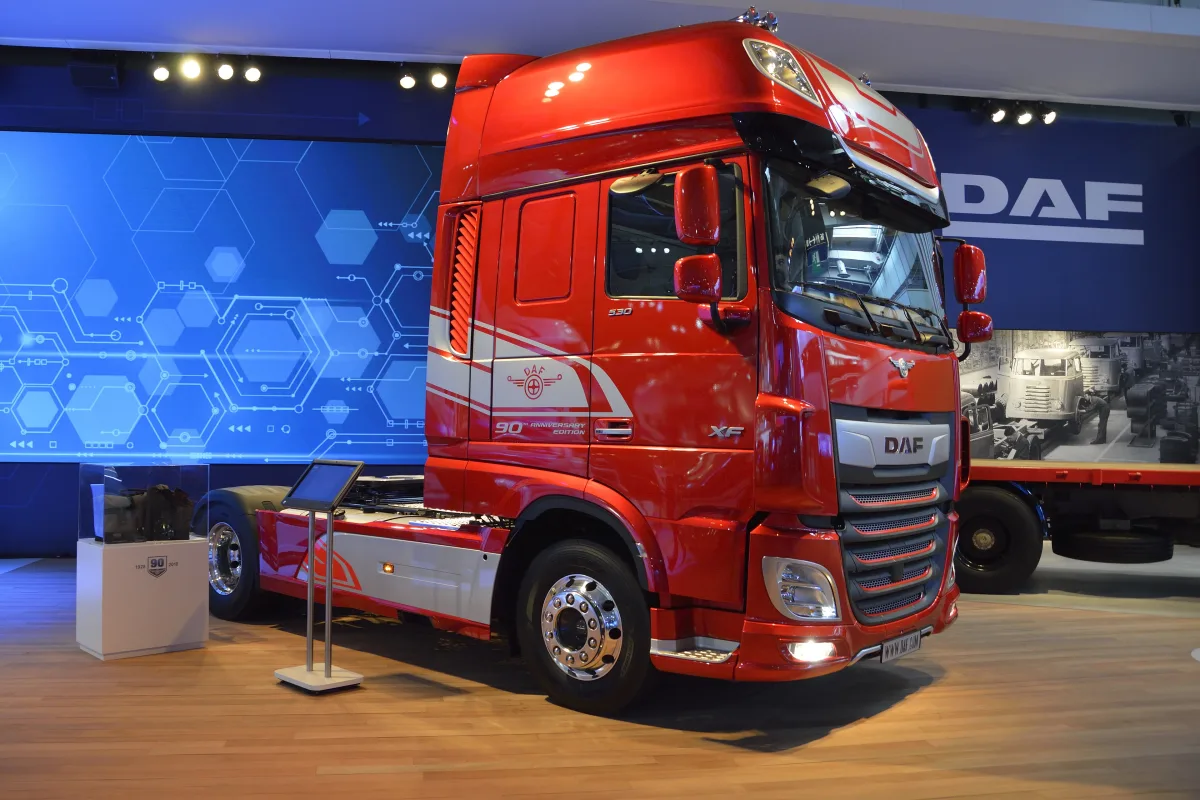
DAF XF: XF105, Euro 6 and new-generation trucks, engines and cabs
DAF XF is a long-haul truck from the Dutch manufacturer and one of the most common heavy goods vehicles on the Lithuanian used vehicle market. We review the differences between the XF105, Euro 6 XF and the new-generation XF, the engines and transmissions used, the available cabs, and what to check before buying a used XF.






XF in brief
The XF is the largest and most comfortable production DAF model, designed primarily for long-haul operations. The first-generation XF95 debuted in 1997, later succeeded by the XF105, and in 2013 by the Euro 6-compliant XF. A completely new generation was introduced in 2021, complemented by the even larger XG and XG+ models.
Most used XFs are 4x2 tractor units (designated FT by DAF), with 6x2 tractor units (e.g., FTG or FTS) and rigid chassis trucks being less common. The XF is praised for its spacious cab with a flat floor, economical PACCAR engines, and the ready availability of spare parts and service networks throughout Europe.
XF105, Euro 6 and new-generation XF — what are the differences
The XF105 (produced roughly from 2006 to 2013) is the cheapest way into an XF today. It is powered by the 12.9-litre PACCAR MX engine, meeting Euro 5 emission standards via an SCR system with AdBlue. Most of these trucks have very high mileages, so technical condition and maintenance history are paramount.
The Euro 6 XF (2013–2021, often called the XF106) looks similar to the XF105 from the outside, but features a different grille, more modern engines, and a more complex exhaust aftertreatment system. The 2017 facelift brought upgraded MX-11 and MX-13 engines and a new driveline, making them more fuel-efficient and highly sought after on the used market.
The new-generation XF (from 2021 onwards) features an entirely new, more aerodynamic and spacious cab with larger windows and more driver assistance systems. These trucks are still relatively new and expensive on the used market, but supply is growing every year.
Engines and transmissions
The XF105 is most commonly found with the 12.9-litre MX engine, producing around 410–510 hp (the most popular versions being the XF 105.410 and XF 105.460). The Euro 6 XF features either the 10.8-litre MX-11 or the 12.9-litre MX-13 engine; post-2017, the most popular choice is around 480 hp.
Transmissions are predominantly automated manuals: ZF AS-Tronic on the XF105 and early Euro 6 trucks, and ZF TraXon from 2017 onwards. Manual gearboxes can also be found in older models. Common equipment includes the ZF Intarder or DAF MX Engine Brake, which reduce service brake wear on descents and with heavy loads.
Exhaust emissions on the Euro 6 XF are managed by several systems: EGR, a diesel particulate filter (DPF), and an SCR catalyst with AdBlue. They are effective, but failures (NOx sensors, AdBlue pump or dosing unit) can be costly to fix.
What to check when buying a used XF
Long-haul trucks rack up massive mileages annually, so always cross-reference the odometer reading with engine operating hours, service records, and tachograph data. Diagnostic equipment can read fault codes, clutch wear, and transmission status—it's worth having this done at a trusted workshop before buying.
Test the transmission: gears should shift smoothly without long pauses or jerks. Check that the retarder and engine brake work properly and look out for any oil leaks. Inspect the chassis (cracks, welds, corrosion), fifth wheel, air suspension, and brakes.
Inside the cab, assess the wear on the driver's seat, bunk, and trim; check the cab suspension and check for rust around the windscreen and doors. Make sure the AdBlue system is working and hasn't been disabled or bypassed with an emulator—such a truck fails to meet emission standards and could face issues at the MOT inspection.


Cabs and versions
Cab names and equipment vary depending on the model year and initial order specification; we list the most common European versions below.
XF105 Space Cab
XF105Standard roof sleeper cab — the most affordable entry point to the XF.
- Flat cab floor
- Bunk area behind the seats
- Lower roofline than the Super Space Cab
XF105 Super Space Cab
XF105High-roof cab — the most popular choice for long-haul operations.
- Full standing height inside the cab
- Often features twin bunks
- Ample overhead storage lockers
Euro 6 XF Space Cab
Euro 6 generation (2013–2021)A newer, more efficient XF with a standard-height cab.
- Euro 6 emissions class
- Frequently equipped with ZF AS-Tronic or TraXon transmission
- Lower roofline than the Super Space Cab
Euro 6 XF Super Space Cab
Euro 6 generation (2013–2021)The most popular used XF configuration for long-distance transport.
- High roof with abundant storage
- Often fitted with a fridge and auxiliary night heater
- Often includes a retarder and adaptive cruise control
Naujos kartos XF
From 2021 onwardsAn all-new, more spacious cab featuring the latest driver assistance systems.
- More aerodynamic cab with larger glass area
- Optional camera mirror system replacing traditional exterior mirrors
- Updated MX-11 and MX-13 engines paired with the TraXon transmission
XF version comparison
| XF105 Super Space Cab | Euro 6 XF Space Cab | Euro 6 XF Super Space Cab | Naujos kartos XF | |
|---|---|---|---|---|
| Target use | Limited budget | Regional and international haulage | Long-distance transport | Latest tech and maximum comfort |
| Cab | High roof | Standard roof | High roof | Newer, more spacious cab |
| Engine (typically) | 12.9 l MX, Euro 5 | 10.8 l MX-11 or 12.9 l MX-13 | 12.9 l MX-13 | MX-11 or MX-13, Euro 6 |
| Axle configuration (typically) | 4x2 | 4x2 | 4x2, less commonly 6x2 | 4x2 |
| Used market price (relative) | € | €€ | €€ | €€€ |
For most operators, the most rational choice is a 2017–2021 Euro 6 XF with a Super Space Cab and a clear service history. The XF105 suits tighter budgets, while the new-generation XF is worth choosing when fuel economy and the latest equipment are top priorities.
Pros
- Spacious cab with a flat floor
- Economical PACCAR MX engines
- High availability and extensive service network
- Vast selection of spare parts
Cons
- Many trucks come with very high mileage
- Repairs for Euro 6 exhaust aftertreatment systems are expensive
- New-generation XF remains pricey on the used market
Frequently asked questions
What is the difference between Space Cab and Super Space Cab?
Both cabs feature a sleeper berth, but the Super Space Cab has a higher roof: you can stand up fully inside, it accommodates a second bunk more easily, and offers more storage lockers. The Super Space Cab is generally preferred for long-haul operations, while the Space Cab works well for shorter runs.
Which XF should you choose — XF105 or Euro 6?
If the truck is intended for international haulage, Euro 6 is usually the way to go: it's more fuel-efficient, and many countries levy higher road tolls on older emission classes. The XF105 is simpler and cheaper, but often more heavily worn.
Is a retarder essential?
No, but it's exceptionally useful when hauling heavy loads and tackling hilly routes: it reduces service brake wear and the risk of brake fade. If the truck is equipped with a retarder, verify that it operates correctly and is free of oil leaks.
How to verify the actual mileage of an XF?
Cross-reference the odometer reading with service records, MOT/inspection data, and engine operating hours accessible via diagnostic equipment. Significant discrepancies between mileage, engine hours, and cab wear should raise a red flag.
Updated 2026-10-09 · Trim levels and equipment vary by market and model year — check the equipment of the specific car. · Translated automatically


