 English
 Lietuvių
 Latviešu
 Eesti
 Polski
 Русский
 Українська
 Deutsch
 Nederlands
 Čeština
 Slovenčina
 Svenska
 Norsk
 Dansk
 Suomi


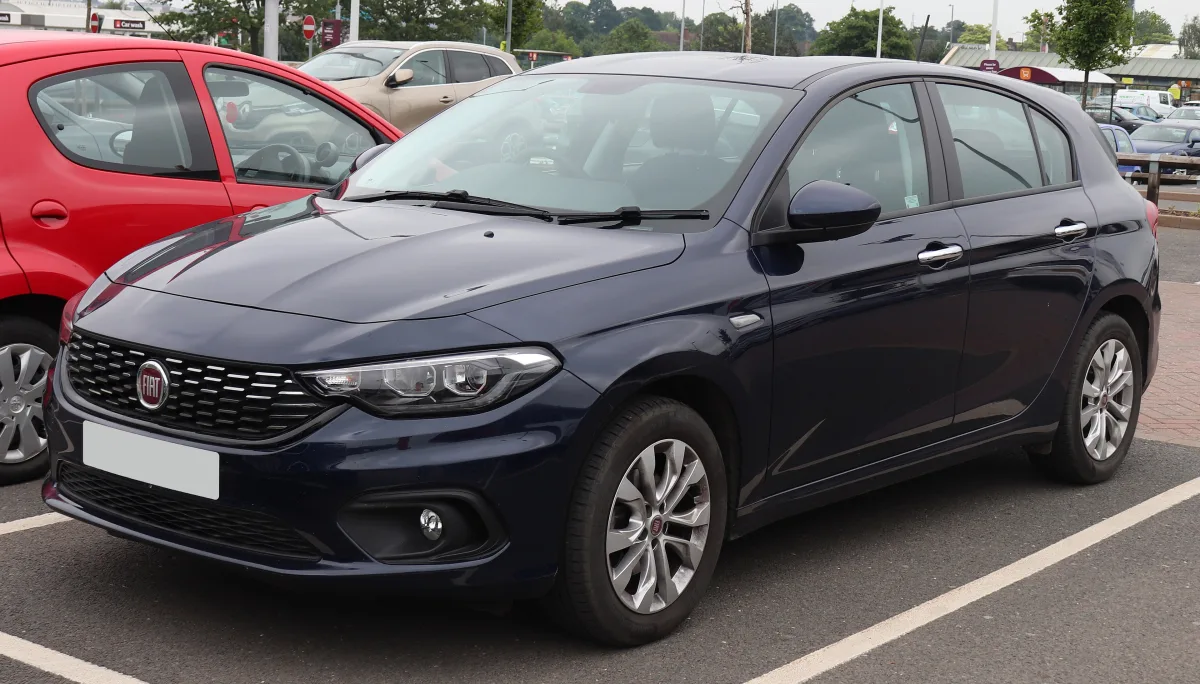
Fiat Tipo: generations, engines and trims
The Fiat Tipo is a straightforward and spacious compact car, favoured by those who prioritise value for money and practicality. We look at how the sedan, hatchback, and estate differ, which engines are most popular, how the trims vary, and what to check when buying used.






The Tipo in brief
The first Fiat Tipo was produced from 1988 to 1995 and won the European Car of the Year title in 1989. These days, such cars are a rarity, so the used market is mostly dominated by the newer Tipo.
The new Tipo was introduced in 2015 as a sedan, with the hatchback and Tipo Station Wagon estate following in 2016. It is manufactured in Turkey, where it is sold under the Fiat Egea name.
The Tipo is praised for its spacious interior, large boot, and straightforward technology. The interior is simpler than that of more expensive rivals, making it a popular choice for those seeking plenty of space for a modest price.
Which version to choose
Cars produced up to 2020 are most commonly found in the used market. There is a wide selection, and some were used in company fleets or for taxi services, so mileage can often be high.
Towards the end of 2020, the Tipo received a facelift with a new FIAT badge at the front, a more modern infotainment system, often LED headlights, and new engines. At the same time, the Tipo Cross was introduced — a raised version with protective body cladding.
For families, the estate is the most practical choice, while the sedan offers an exceptionally large boot, albeit with a smaller opening. The hatchback is the most convenient for city driving.
Engines and Gearboxes
Before the update, the most commonly found engines were the 1.4-litre petrol (around 95 hp), 1.4 T-Jet turbo (around 120 hp), and 1.6 E-torQ petrol engines, as well as the 1.3 and 1.6 Multijet diesels. In some markets, a factory-fitted LPG version was also offered.
After the update, the lineup is anchored by the 1.0-litre FireFly turbo petrol engine (around 100 hp) and the 1.6 Multijet diesel (around 130 hp), with a 1.5-litre mild hybrid version added later.
Gearboxes are usually manual. The 1.6 E-torQ engine is paired with a conventional 6-speed automatic gearbox, the 1.6 Multijet could come with a dual-clutch DCT, and the mild hybrid with a dual-clutch gearbox as well.
What to check when buying a used Tipo
For diesel cars, especially those that have done a lot of city driving, check the particulate filter (DPF), EGR valve, and dual-mass flywheel. Automatic or DCT gearboxes should shift smoothly, without judders or hesitation when moving off.
Since some cars have been used intensively, check the mileage against service records and inspect the steering wheel, seats, and gearstick for wear. On the suspension, listen for any clunks when driving over uneven roads.
Test the multimedia system, phone connectivity, and rear-view camera (if fitted). Inspect the body for repainted parts and uneven gaps, and for LPG-equipped cars, ask for the certification documents.


Trim Levels
Names and equipment vary by market and year; we list the most common trims found in Europe.
Pop
up to 2020The base trim is the most basic and affordable.
- Often comes with steel wheels
- Air conditioning
- Basic audio system
Easy
up to 2020The most popular choice offers a good balance of price and features.
- Often comes with alloy wheels
- Uconnect multimedia system with Bluetooth
- Often comes with cruise control
Lounge
up to 2020The best-equipped early version.
- Larger alloy wheels
- Often comes with a larger touchscreen and navigation
- Often comes with automatic climate control and a rear-view camera
Life
from 2020 onwardsThe base trim of the refreshed model.
- A more modern infotainment system
- Often — LED headlights
- Often — a digital instrument cluster
Cross
from 2020 onwardsA higher-spec version with crossover traits.
- Increased ground clearance
- Protective cladding on the body and roof spoiler
- Often — LED headlights and larger alloy wheels
Sport
from 2020 onwardsA sportier-looking version.
- Sporty bumpers and larger alloy wheels
- Black exterior trim details
- A sportier interior
Trim comparison (up to 2020)
| Pop | Easy | Lounge | |
|---|---|---|---|
| Who it's for | For a tight budget | For daily driving | For those wanting more features |
| Most common wheels | 15–16 inch | 16 inch | 16–17 inch |
| Infotainment | Basic audio system | Uconnect with Bluetooth | Often — larger screen, navigation |
| Interior | Basic trim | More comfort features | Often — climate control |
| Price in the used market (relatively) | € | €€ | €€€ |
Most buyers will be best served by the Easy or Lounge with the 1.4 T-Jet or 1.6 Multijet engine. If the budget allows, it's worth seeking out a refreshed Tipo from post-2020 with more modern equipment.
Pros
- Spacious interior and large boot
- Low price in the used market
- Uncomplicated technology
- Wide range of body styles — sedan, hatchback, estate
Cons
- Basic interior trim and firm plastics
- Some cars with high mileage from intensive use
- Weak base 1.4 l engine
Frequently asked questions
Which Fiat Tipo engine is the best?
For most buyers, the best choice is the 1.4 T-Jet or, post-refresh, the 1.0 FireFly petrol engine. For those who do a lot of urban driving, the 1.6 Multijet diesel is a sensible option, while the base 1.4 l engine is suited to relaxed driving.
How do the Tipo sedan, hatchback, and estate differ?
The technology and specs are similar, but the body styles differ. The estate is the most practical for families, the sedan has an enormous boot but a smaller opening, and the hatchback is the shortest and most convenient in the city.
Is the Fiat Tipo reliable?
The technology is straightforward and well-known, so it's usually not expensive to maintain. Reliability is most affected by previous upkeep and how the car has been used, so the most important thing is a clear service history.
Updated 2026-10-09 · Trim levels and equipment vary by market and model year — check the equipment of the specific car. · Translated automatically


