 English
 Lietuvių
 Latviešu
 Eesti
 Polski
 Русский
 Українська
 Deutsch
 Nederlands
 Čeština
 Slovenčina
 Svenska
 Norsk
 Dansk
 Suomi


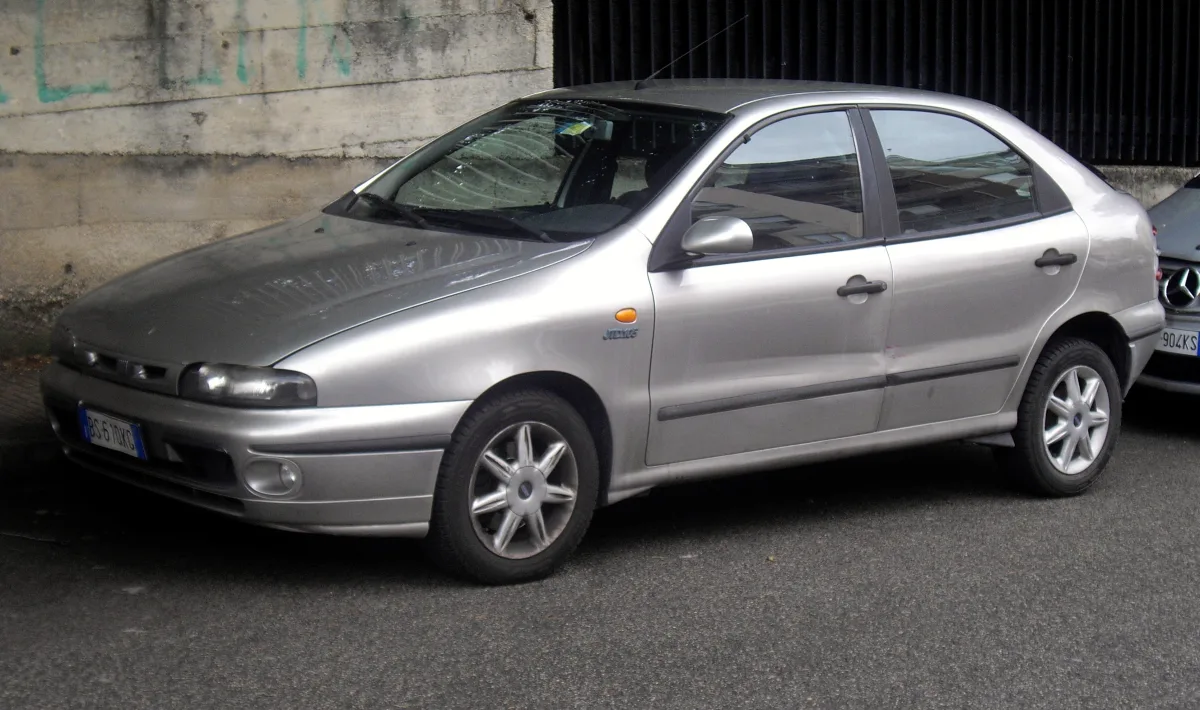
Fiat Brava: engines, trims and what to know when buying
The Fiat Brava is a five-door compact hatchback produced from 1995 to 2001 alongside the three-door Fiat Bravo. Today, it's an old and rare car, so in this article, we'll look at the engines, trims, and key points to check before buying.






Brava in brief
The Brava was a more practical version of the Bravo with five doors and a slightly larger boot. Technically, both models are almost identical: they share the same platform, engines, and similar interior architecture.
The Brava is rarely found on the used market. It's typically chosen by those looking for an affordable daily driver or who appreciate late-20th-century Italian hatchbacks, so you need to be particularly careful when buying.
Which version to choose
The Brava was produced in one generation, so the choice comes down to the engine and condition. This car is over 20 years old, so the most important thing is the body condition—no deep rust—and whether the engine has been well-maintained.
When hunting for the best option, it's worth considering cars with one or two previous owners, complete documentation, and good body condition. If buying as a daily driver, it's most practical to choose a simpler version with a manual gearbox.
Engines and gearboxes
Petrol engines range from 1.2 to 1.8 litres (around 80–115 hp). The diesel option is a 1.9-litre: early versions are TD, later ones are the more modern JTD.
Most cars come with a manual 5-speed gearbox. Automatics are rarer, and their condition should be checked thoroughly.
Basic petrol engines are usually the cheapest to maintain, while the diesel JTD is more economical, but spare parts can be pricier.
What to check when buying a used Bravo
First, inspect the body: look for dents, wheel arches, lower door edges, and the front bumper. Corrosion in an older car's body can be the most expensive problem.
Ensure the engine starts without issue, doesn't smoke, and there's no oil leakage. In diesels, listen for any unusual noises and check if there's a service book. Inspect the exhaust and gearbox.
Check the electrical equipment: windows, central locking, lighting, and the cooling fan. Minor electrical faults are common in older cars.


Trim levels
Names and equipment vary by market and year; we list the most commonly found names in Europe.
S
1995–2001 modelsBase trim with minimal equipment.
- Simple interior trim
- Often includes power steering
- Steel wheels
SX
1995–2001 modelsMid-range trim with more comfort features.
- Often includes electric windows
- Often — central locking
- Often — radio and more trim
ELX
1995–2001 modelsHigher comfort version.
- Often — air conditioning
- Often — alloy wheels
- Often — electrically adjustable mirrors
HLX
1995–2001 modelsOne of the top trims with maximum comfort.
- Often — climate control
- Often — more interior trim
- Often — additional safety and comfort features
Trim comparison
| S | SX | ELX | HLX | |
|---|---|---|---|---|
| Who it suits | Ideal for economical driving | For daily use | For comfort | Maximum comfort |
| Wheels (most often) | Steel | Steel or alloy | Alloy | Alloy |
| Interior | Basic | Better trim | More comfortable | Most luxurious |
| Engine | Often 1.2–1.4 | 1.4–1.6 | 1.6–1.8, 1.9 JTD | 1.6–1.8, 1.9 JTD |
| Price in the used market (relatively) | € | € | € | €€ |
In the case of an older model, the price mostly depends on its condition rather than the trim level. Opt for the car that's least worn out and has the best service history.
Pros
- Affordable to buy
- A five-door body is practical for everyday use
- Simple technology that most garages can service
- Distinctive Italian styling among older hatchbacks
Cons
- Older cars are prone to rust
- Limited parts availability, some may take a while to find
- Less advanced safety features compared to modern cars
Frequently asked questions
What's the difference between the Fiat Brava and Bravo?
The Brava has five doors, while the Bravo has three. Technically, they're very similar cars, using the same platforms and engines.
Is the Brava suitable as a daily driver?
A well-maintained Brava can be an affordable daily runabout, but expect the usual minor issues and repairs that come with an older car.
Which Brava engine is worth choosing?
If you don't drive much, a simple 1.4–1.6 petrol engine will do the job. If you're a high-mileage driver, opt for the 1.9 JTD, but make sure to check its condition first.
Updated 2026-10-17 · Trim levels and equipment vary by market and model year — check the equipment of the specific car. · Translated automatically


