 English
 Lietuvių
 Latviešu
 Eesti
 Polski
 Русский
 Українська
 Deutsch
 Nederlands
 Čeština
 Slovenčina
 Svenska
 Norsk
 Dansk
 Suomi


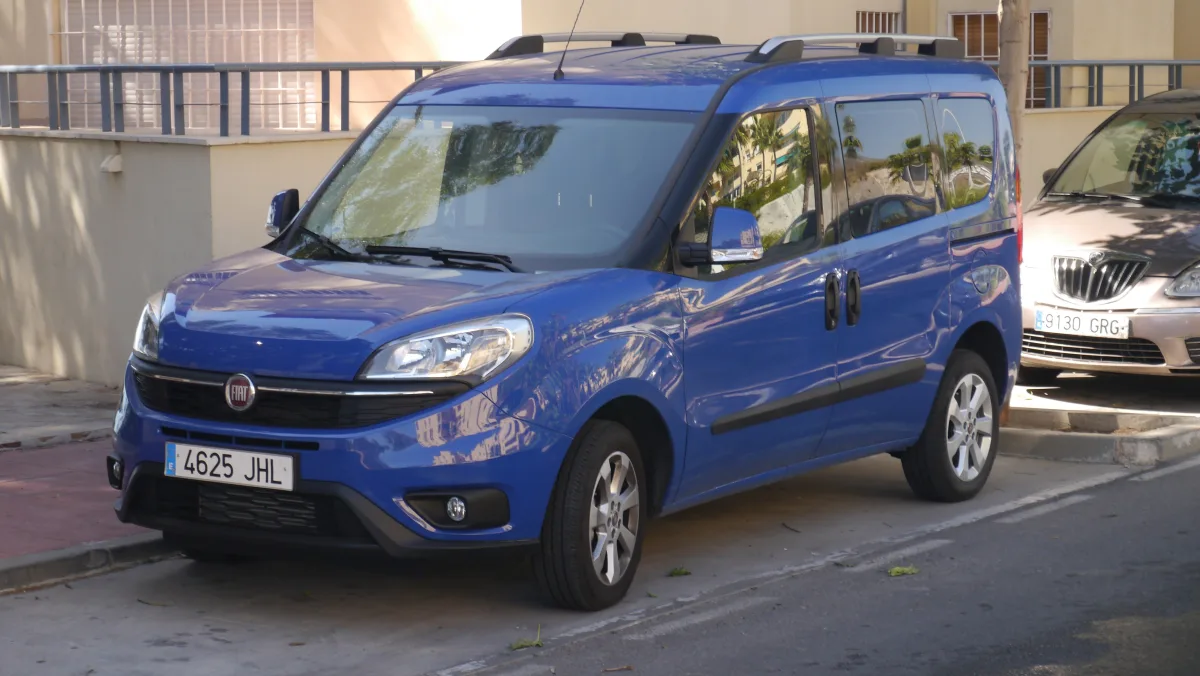
Fiat Doblò: I, II and III generations, engines and trims
The Fiat Doblò is a spacious and practical small van, produced since 2000 in both cargo and passenger variants. We look at all three generations, focusing mainly on the second generation (2010–2022), which is the most popular among used cars: its engines, trims, and what to check before buying.






Doblò in brief
The Doblò has been produced in three generations: I (2000–2010), II (2010–2022) and III (from 2022). It is offered as a cargo van, the Doblò Cargo, and as a passenger car with five or seven seats, with cargo versions available in longer wheelbases (Maxi) or with a higher roof.
The Doblò is valued for its generous space, wide sliding side doors, and economical Multijet diesels. It's a popular choice for small businesses and large families, but many of these vehicles were used for work, so mileage and wear are often higher than in regular cars.
Which generation to choose
The first generation (2000–2010, refreshed in 2005) is basic and cheap, but already quite old. Most of these cars have high mileage, so the condition of the body, suspension, and engine should be the primary concerns.
The second generation (2010–2022) is larger, quieter, and more comfortable, with passenger versions featuring an independent rear suspension, making for a smoother ride. The 2015 facelift brought a new front end, a more modern interior, and engines compliant with Euro 6 standards. This generation also underpinned the Opel Combo (2011–2018).
The third generation (from 2022) was developed alongside the Citroën Berlingo, Peugeot Rifter, and Opel Combo, so they share the same technology; an electric E-Doblò version is also available. For most buyers, the most sensible choice is the refreshed 2015–2022 second-generation Doblò.
Engines and gearboxes
In the second generation, the most popular engines were the Multijet diesels: 1.3 (around 90–95 hp), 1.6 (around 90–120 hp), and 2.0 (around 135 hp). Petrol options included the 1.4 (around 95 hp) and the turbocharged 1.4 T-Jet, which was also available with natural gas equipment (Natural Power).
In the first generation, you'll commonly find the 1.9 JTD (later 1.9 Multijet) and 1.3 Multijet diesels, along with 1.2 and 1.4 petrol engines. The third generation uses Stellantis group's 1.5 BlueHDi diesels, 1.2 PureTech petrol engine, and electric powertrain.
Gearboxes are usually manual with 5 or 6 speeds. The robotised Dualogic box is less common, and in the third generation, you'll also find an 8-speed automatic.
What to check when buying a used Doblò
In diesel cars, check the particulate filter (DPF), EGR valve, and turbo — short urban trips often clog the DPF. Working vehicles with a high payload and dual rear wheels will wear out faster, so pay attention to vibration when moving and the feel of the clutch pedal.
Open and close the sliding doors a few times — they should move smoothly, and the locks should operate without sticking. Check the suspension, especially the rear, if the vehicle has carried heavy loads, and inspect the cargo area for damage.
In Lithuania, it's crucial to check how the car is registered — as a passenger vehicle (M1) or a light commercial vehicle (N1), as this affects the number of seats and usage conditions. Assess the history by looking at service records and the vehicle's inspection history.


Trim levels
Passenger versions' trim levels vary by market and year; we list the most commonly found second-generation trims in Europe.
Cargo
First to third generationsCommercial version without rear seats, designed for work.
- Separate cargo section
- Often — one or two sliding doors
- Available with a longer wheelbase (Maxi) or higher roof
Active
Second generation up to 2015Base passenger trim.
- Simple interior trim
- Often — steel wheels
- Often — air conditioning
Dynamic
Second generation up to 2015Popular passenger version with more comfort features.
- Often — light-alloy wheels
- Often comes with air conditioning and electric windows
- Better interior trim
Easy
Second generation from 2015The base trim of the refreshed second generation
- Often — air conditioning
- Often comes with a multimedia system with Bluetooth
- Steel or alloy wheels
Lounge
Second generation from 2015The best-equipped passenger version
- Alloy wheels
- Often comes with automatic climate control
- Often comes with parking sensors and cruise control
Trekking
Second generationOff-road style version with protective body parts
- Plastic body protection and unique bumpers
- Alloy wheels
- Front-wheel drive
Comparison of refreshed second-generation versions
| Cargo | Easy | Lounge | Trekking | |
|---|---|---|---|---|
| Who's it for? | Work and cargo | For the family, the sensible buyer | For the family that values comfort | Style and country roads |
| Interior | Front seats only | Basic trim | Better trim, more features | Top-tier trim |
| Exterior | Basic, often unpainted bumpers | Standard | More painted and chrome details | Off-road style protection |
| Price in the used market (relatively) | € | € | €€ | €€ |
The best choice for families is the Easy or Lounge with the 1.6 Multijet diesel: it's spacious and economical. The Cargo is worth considering only for work, while the Trekking is ideal if you like the look of an off-roader.
Pros
- Very spacious interior and cargo area
- Wide sliding side doors
- Economical Multijet diesels
- Spare parts are not overly expensive
Cons
- Many of these cars have been used for work, so they have high mileage
- The interior trim and sound insulation are basic
- Driving in the city often clogs the diesel particulate filter (DPF)
Frequently asked questions
Which Doblò to choose?
For most buyers, the best choice is the refreshed 2015–2022 II generation Doblò: spacious, comfortable and still affordable. The first generation is only suitable if you need the cheapest workhorse, while the third generation is for those with a bigger budget and who value newer features.
Which Doblò engine is the best?
The most versatile is the 1.6 Multijet diesel: it's powerful enough for a loaded vehicle and economical. The 1.3 Multijet is suitable for lighter loads, while the petrol 1.4 is best for those who mostly drive short distances in the city.
What's the difference between the Doblò and the Doblò Cargo?
The Doblò Cargo is a cargo van with a separate cargo area and only front seats, while the passenger Doblò has rear seats, side windows, and a more comfortable interior. When buying, it's important to check how the vehicle is registered.
Is the Doblò suitable for a large family?
Yes — the passenger Doblò has a spacious boot, wide sliding doors, and some versions even have a third row of seats. It's a practical and affordable choice, although it's noisier on the road than a typical hatchback.
Updated 2026-10-09 · Trim levels and equipment vary by market and model year — check the equipment of the specific car. · Translated automatically


