 English
 Lietuvių
 Latviešu
 Eesti
 Polski
 Русский
 Українська
 Deutsch
 Nederlands
 Čeština
 Slovenčina
 Svenska
 Norsk
 Dansk
 Suomi


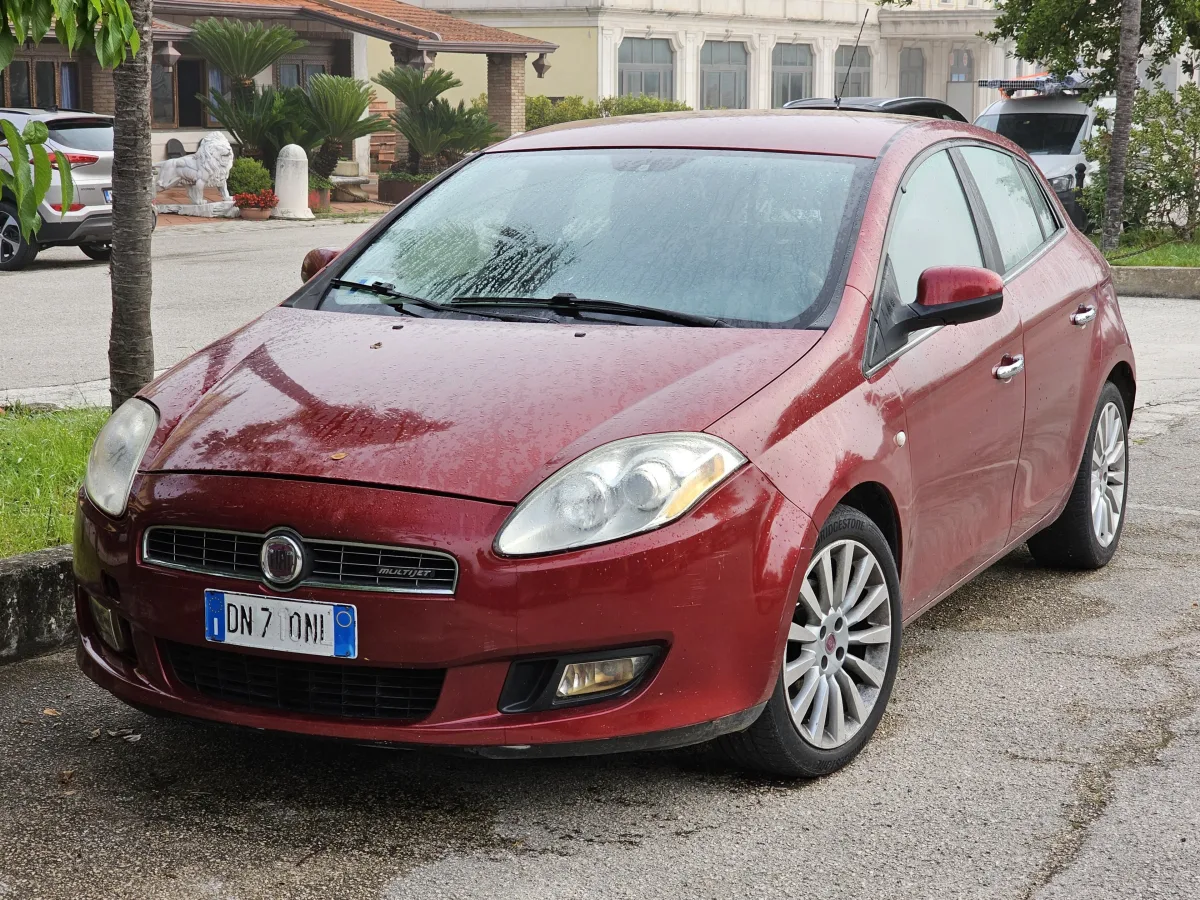
Fiat Bravo: 182 and 198 generations, engines and trims
The Fiat Bravo is a compact class hatchback whose name has been used for two generations: 182 (1995–2001) and 198 (2007–2014). The second generation is most commonly found in the used market, appreciated for its design and good equipment at a modest price. We’ll look at how the generations differ, which engines are the most popular, and what to check before buying.






Bravo in brief
The first Bravo (182) was produced as a three-door hatchback, with its five-door version called the Brava. The second Bravo (198) was introduced in 2007 as a five-door hatchback and replaced the Fiat Stilo; later, Fiat replaced it with the Tipo in this class.
The 198 generation Bravo is praised for its expressive Italian design, spacious interior, and often generous equipment. On the downside, the interior materials are simpler than those of German competitors, visibility through the rear window is limited, and the car quickly depreciates in the used market — which means a better deal for the buyer.
Which generation to choose
The 182 generation (1995–2001) is now rare and old, with most cars affected by rust. It’s worth seeking out only as a very cheap car or for enthusiasts — for example, the HGT version with a five-cylinder engine.
The 198 generation (2007–2014) is much more modern, safer, and more comfortable. During production, mainly engines and equipment changed: 1.6 MultiJet diesels appeared, and in 2010, the 1.4 MultiAir turbocharged petrol engine.
For many buyers, the best choice is a later 198 series Bravo with a 1.6 MultiJet or 1.4 T-Jet/MultiAir engine and a clear service history.
Engines and gearboxes
Petrol 198 series engines include the 1.4-litre non-turbo (around 90 hp), which is quite weak for this car, the 1.4 T-Jet turbo (around 120 and 150 hp), and from 2010 the 1.4 MultiAir turbo (around 140 hp).
Diesels include the early 1.9 MultiJet (around 120 and 150 hp), later replaced by the 1.6 MultiJet (around 90–120 hp), and the most powerful 2.0 MultiJet (around 165 hp). The 1.6 MultiJet is often the best choice for high-mileage drivers.
The most common gearbox is a 5- or 6-speed manual. Some engines come with the automated manual Dualogic box, so there aren’t many automatics in the Bravo range.
What to check when buying a used Bravo
Check the EGR valve and intake manifold gaskets on 1.9 MultiJet diesels, and the diesel particulate filter (DPF) on later 1.6 and 2.0 MultiJet engines. High-mileage diesels often need a new timing belt and water pump.
For turbocharged T-Jet and MultiAir engines, ask about oil change intervals: the MultiAir system needs the right oil changed on time, and the turbocharger shouldn’t whistle or rattle. The Dualogic box should shift smoothly without hesitation – repairs can be expensive.
Check all the electronics: the central locking, window lifts, instrument cluster, and Blue&Me system, as well as suspension components and the power steering. Verify the ride with service and maintenance records.


Trim levels
Names and equipment vary by market and year; we list the most commonly found 198 series trims in Europe.
Active
198The base trim is the simplest and most affordable.
- Often, steel wheels with hubcaps
- Often — manual air conditioning
- A more basic sound system
Dynamic
198The most popular choice — a good balance of price and equipment.
- Light-alloy wheels
- Often — automatic climate control
- Often — Blue&Me phone system and steering wheel controls
Emotion
198The top-of-the-range comfort trim.
- Larger light-alloy wheels
- Often — leather interior and parking sensors
- Often — glass sunroof
Sport
198Sporty-looking version, often with more powerful engines.
- Larger wheels and a sportier look
- Often — sport seats
- Often — tinted rear windows
198 model year trim comparison
| Active | Dynamic | Emotion | Sport | |
|---|---|---|---|---|
| Who it's for | For the tightest budgets | For daily driving | For comfort lovers | For a sporty look |
| Wheels (usually) | 15–16 in., steel | 16 in., alloy | 16–17 in., alloy | 17–18 col., facelift |
| Interior | Base | More comfort features | Often leather upholstery | Sport seats |
| Price in the used market (relatively) | Budget | Budget | Mid-range | Mid-range |
For most buyers, Dynamic is the best bet — it comes with essential comfort features, and the price isn't much different from the base model. Emotion is worth choosing for comfort, while Sport is for looks.
Pros
- Distinctive, timeless design
- Spacious interior and often generous equipment
- Competitive price in the used market
- Economical MultiJet diesels
Cons
- Simpler interior materials than rivals
- Poor rear visibility
- Issues with Dualogic gearboxes and diesel EGR and DPF systems
Frequently asked questions
Which Fiat Bravo engine is the best?
For those who do a lot of driving, the 1.6 MultiJet diesel is often the best choice, while for those who mostly drive in the city, the 1.4 T-Jet or MultiAir petrol engine is more suitable. The 1.4-litre engine without a turbo is economical and simple, but it's quite weak for this car.
Is it worth buying a Bravo with a Dualogic gearbox?
Only if the gearbox works smoothly and has a service history. Dualogic is an automated manual gearbox, so it shifts more slowly and with pauses, and gearbox repairs can be expensive. For many buyers, a manual gearbox is the simpler choice.
How does the Fiat Bravo differ from the Fiat Stilo?
The Bravo replaced the Stilo and uses some of its technology, but it has a new design, a more modern interior, and newer engines, such as the T-Jet and MultiAir. In the used market, the Bravo is often valued more for its looks and features.
Updated 2026-10-09 · Trim levels and equipment vary by market and model year — check the equipment of the specific car. · Translated automatically


