 English
 Lietuvių
 Latviešu
 Eesti
 Polski
 Русский
 Українська
 Deutsch
 Nederlands
 Čeština
 Slovenčina
 Svenska
 Norsk
 Dansk
 Suomi


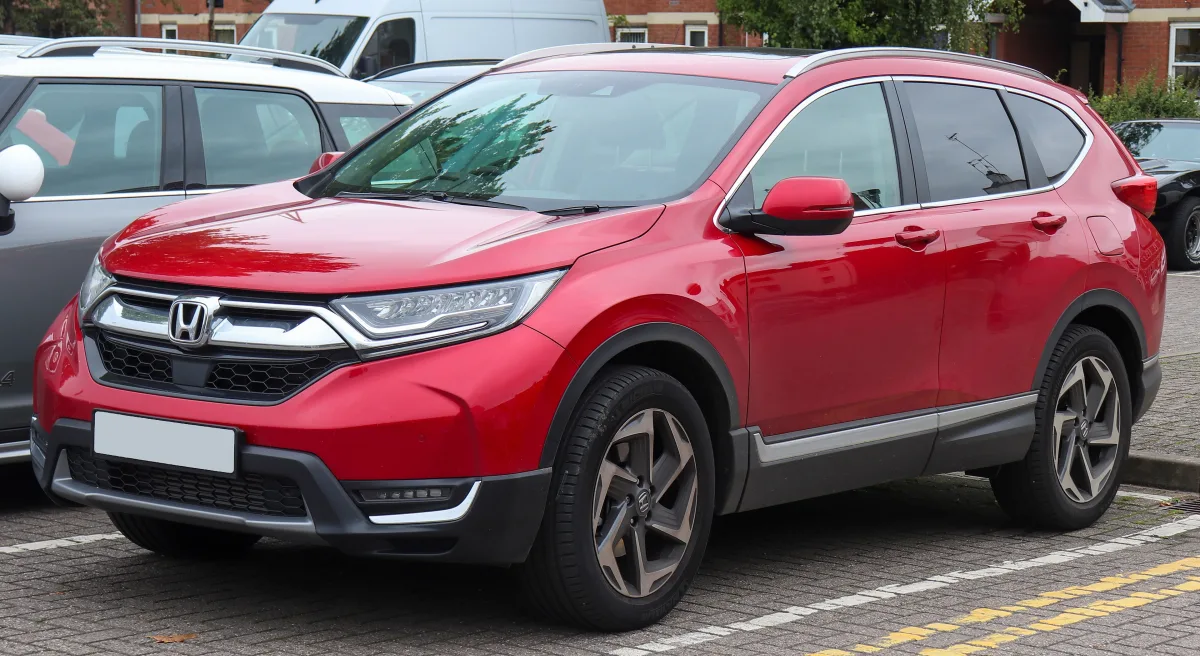
Honda CR-V: Generations III–VI, Engines and Trims
The Honda CR-V was one of the first compact SUVs, produced since 1995 and renowned for its reliability. We look at what sets the III, IV, V and VI generations apart, which engines and hybrids are most common, how the trims differ and what to check when buying a used CR-V.






CR-V in brief
The CR-V has been in production for six generations, all of which are five-door models with front-wheel drive or all-wheel drive. Honda's all-wheel-drive system typically powers the front wheels and engages the rear wheels only when needed, making the CR-V better suited to winter conditions and light off-roading than serious 4x4 adventures.
The CR-V is praised for its spacious interior, practical boot and reliable petrol engines. It holds its value well in the used market. From the V generation onwards, only petrol and hybrid engines have been offered in Europe — diesel options have been discontinued.
Which generation to choose
Generation III (2007–2012) — the first CR-V with smoother lines, with the spare wheel moved under the boot floor. Today, this is the most affordable option, but most cars are now quite old, so the technical condition is crucial.
Generation IV (2012–2018) — the most popular in the used market. It's roomier and more economical, and the 2015 facelift version got a new front end, quieter cabin and the 1.6 i-DTEC diesel with a 9-speed automatic gearbox.
The fifth generation (2018–2023) was offered in Europe with a 1.5 VTEC Turbo petrol engine or a hybrid, with the petrol version available with seven seats. The sixth generation (from 2023) is larger and more luxurious, with only hybrid (e:HEV) or plug-in hybrid (e:PHEV) options in Europe.
Engines and transmissions
The third generation commonly featured a 2.0 i-VTEC petrol (around 150 hp) and a 2.2 diesel — initially i-CTDi, then i-DTEC from 2010. The fourth generation included a 2.0 i-VTEC (155 hp) and a 2.2 i-DTEC (150 hp), with an economical 1.6 i-DTEC (120 hp) from 2013, and a 160 hp version with all-wheel drive after the 2015 update.
The fifth generation offered a 1.5 VTEC Turbo (around 173 hp with manual and 193 hp with CVT) and a 2.0 i-MMD hybrid (184 hp). The hybrid runs mostly on electric power, with the petrol engine often generating electricity, making it particularly economical in the city. The sixth generation offers a 2.0 e:HEV hybrid and a plug-in e:PHEV hybrid.
Transmissions: third and fourth generations had a 6-speed manual or mostly a 5-speed automatic, the fourth generation's 1.6 i-DTEC 160 hp had a 9-speed automatic, and the fifth generation's 1.5 VTEC Turbo had a manual or CVT. Hybrids don't have conventional transmissions — a single fixed gear is used.
What to check when buying a used CR-V
The fifth generation's 1.5 VTEC Turbo engine is known for oil dilution by fuel, which often occurs in cold climates and during short trips. Check the oil level and smell, ask if the manufacturer's software updates have been done, and choose a car with a regular oil change history.
For all-wheel-drive versions, ask if the rear differential oil has been changed: if it hasn't been changed for a long time, you might hear grinding or rattling noises when moving off. For diesel III and IV generation cars, check the DPF, EGR, and dual-mass flywheel, especially if the car has done a lot of city driving.
For hybrid cars, ask the service to check the battery condition. For all cars, check the ride according to the service and inspection records, check the air conditioning operation, and the body for painted parts and uneven gaps.


Trim levels
Names and equipment vary by market and year; we list the most commonly found trims in Europe. Cars imported from Great Britain have different names (S, SE, SR, EX).
Comfort
IV–V generationBase trim with essential equipment.
- Climate control
- Simpler infotainment system
- Often — light-alloy wheels
Elegance
IV–V generationPopular mid-range trim — a good balance of price and comfort.
- Light-alloy wheels
- Heated front seats
- Often — parking sensors and rear-view camera
Lifestyle
IV–V generationMore comfort and technology.
- Often — navigation
- Often — partial leather seats
- Often — electrically operated tailgate
Executive
IV–V generationTop-spec with all the bells and whistles
- Leather seats
- Often — panoramic roof
- Often — LED headlights and more driver assistance systems
Elegance ir Advance
6th generationLatest generation trims come packed with kit as standard
- Digital instrument cluster and large multimedia screen
- Honda SENSING driver assistance systems
- Advance — more luxurious trim with extra kit
Comparison of 5th generation trims
| Comfort | Elegance | Lifestyle | Executive | |
|---|---|---|---|---|
| Who it's for | For the tightest of budgets | For everyday family use | Those seeking more comfort | Fully equipped |
| Alloy wheels (most often) | 17 col. | 17–18 col. | 18 col. | 18 col. |
| Interior | Cloth | Cloth, heated seats | Often — partial leather | Leather, often panoramic roof |
| Price in the used market (relatively) | € | €€ | €€ | €€€ |
For most buyers, the best choice is the Elegance or Lifestyle. For those who drive mostly in the city, a hybrid is worth considering, but the 1.5 VTEC Turbo petrol engine should only be chosen if it has a good oil change history.
Pros
- Spacious interior and large boot
- Reliable petrol engines and hybrids
- Holds its value well
- Economical hybrid in the city
Cons
- Often pricier than competitors in the used market
- Oil dilution risk with the 1.5 VTEC Turbo
- No diesel engine available from the V generation onwards
Frequently asked questions
Which CR-V generation is best to buy used?
For many buyers, the best choice is the refreshed IV generation (2015–2018) or the V generation hybrid. The IV generation is simpler and cheaper, while the V generation hybrid is more modern and economical, especially for city driving.
Is the CR-V hybrid suitable for winter?
Yes, the hybrid performs well in winter, although fuel consumption increases in the cold, as the petrol engine works more to heat the cabin. The hybrid can also be found with all-wheel drive.
Is it true that oil dilution affects the 1.5 VTEC Turbo engine?
This issue is known and often occurs in cold climates when the engine doesn't warm up properly on short journeys. Honda has released software updates, but it's worth checking the oil level and choosing a car with regular oil changes when buying.
What's the difference between the CR-V with front-wheel drive and all-wheel drive?
The front-wheel-drive version is cheaper and slightly more economical. All-wheel drive is essential in winter, on slippery roads, and when towing a trailer, but it requires additional maintenance, such as changing the rear differential oil.
Updated 2026-10-09 · Trim levels and equipment vary by market and model year — check the equipment of the specific car. · Translated automatically


