 English
 Lietuvių
 Latviešu
 Eesti
 Polski
 Русский
 Українська
 Deutsch
 Nederlands
 Čeština
 Slovenčina
 Svenska
 Norsk
 Dansk
 Suomi


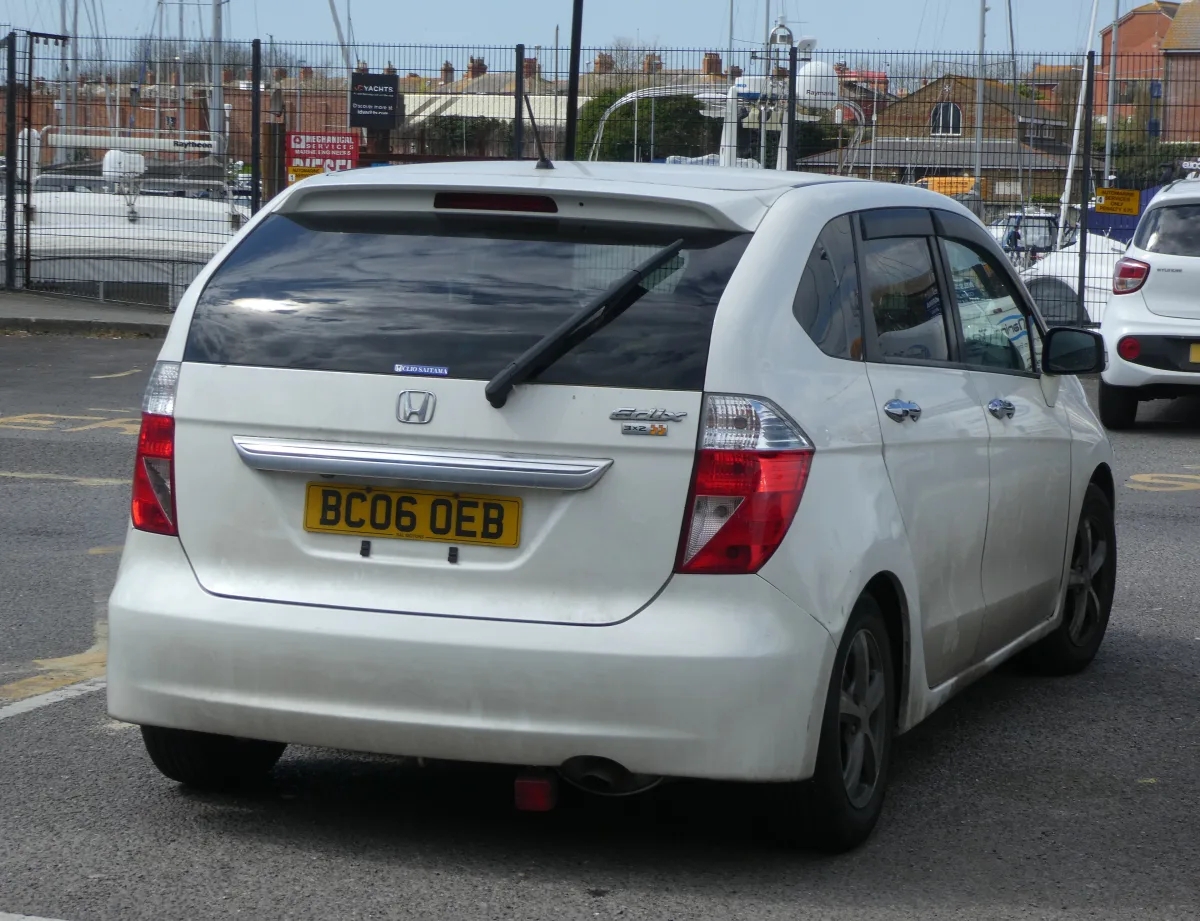
Honda FR-V: six-seater compact MPV, engines and trims
Honda FR-V — a compact six-seater MPV, produced from 2004 to 2009 with an unusual seating arrangement: three seats up front and three in the second row. We look at what sets the FR-V apart, which engines are most common, and what to check before buying a used one.






FR-V in brief
The FR-V stands out with two rows of three seats each: the driver sits next to two passengers up front, while the second row accommodates another three. This design allows for six seats in a compact body, similar in length to the Honda Civic.
This model is particularly suitable for families needing six seats but not requiring a large people carrier. It offers a different solution to conventional MPVs with three rows of seats.
Which version to choose
The FR-V was produced in one generation, which received a minor update in 2007. Therefore, the choice comes down to the engine, trim, and technical condition, rather than the generation.
In Japan and some markets, the same model is sold under the name Honda Edix. In Europe, look for an FR-V with a service history and no major body damage.
Engines and transmissions
Petrol engines include the 1.7, 1.8, and 2.0 i-VTEC (around 125–150 hp). The diesel option is the 2.2 i-CTDi (around 140 hp), praised for its economy and torque.
Transmissions are mostly manual, with an automatic option available for some petrol versions.
Petrol engines are simpler and cheaper to maintain, while the diesel is ideal for high-mileage drivers.
What to check when buying a used FR-V
The most important thing is the service history. Honda engines are generally considered long-lasting, but only if the oil is changed on time. In the diesel version, check the turbo and EGR valve.
Test the clutch and gearbox: shifts should be precise, with no grinding. The automatic box should operate smoothly, without hesitation.
Inspect the seats and sliding elements: the six-seat configuration should work as intended. Also, check the sills and rear wheel arches for any signs of corrosion.


Trim levels
Names and equipment vary by market and year; we list the most commonly found names in Europe.
Comfort
2004–2009 model yearsBase trim for daily use.
- Air conditioning
- Often — alloy wheels
- Base audio system
Executive
2004–2009 model yearsLuxury trim with more comfort features.
- Often — leather upholstery
- Often — automatic climate control
- Often — parking sensors
Sport
2004–2009 model yearsSportier look with a more powerful engine option.
- Often — sporty bumpers
- Often — larger alloy wheels
- Sporty interior trim
Trim comparison
| Comfort | Executive | Sport | |
|---|---|---|---|
| Who it suits | A budget family car | Maximum comfort | A sportier look |
| Wheels (most often) | 16 inch | 16–17 inch | 17 inch |
| Interior | Textile | Often leather | Sport trim |
| Engine | Often 1.7 or 1.8 | 1.8, 2.0, 2.2 i-CTDi | 2.0 or 2.2 i-CTDi |
| Price in the used market (relatively) | Budget | Mid-range | Mid-range |
For most families, the Comfort or Executive with a 1.8 petrol engine is ideal if you don't drive much, and the 2.2 i-CTDi if you do. Price mostly depends on condition.
Pros
- Six seats in a compact body
- Long-lasting and reliable engines
- Good visibility and easy parking
- Economical diesel 2.2 i-CTDi
Cons
- The unusual seating layout isn't comfortable for everyone
- Limited supply in the used market
- The boot is small with all six seats in place
Frequently asked questions
How does the FR-V differ from a standard hatchback?
The FR-V has two rows of three seats, making it a six-seater in a compact body. Traditional hatchbacks usually have five seats or three rows.
Is the FR-V reliable?
Honda has a good reputation, and a well-maintained FR-V can last a long time. The key is the service history and the condition of the body.
Which engine should you choose?
If you don't drive much, the 1.8 i-VTEC petrol is suitable. For those who drive more, the 2.2 i-CTDi is a better choice, but check the turbo and EGR.
Updated 2026-10-17 · Trim levels and equipment vary by market and model year — check the equipment of the specific car. · Translated automatically


