 English
 Lietuvių
 Latviešu
 Eesti
 Polski
 Русский
 Українська
 Deutsch
 Nederlands
 Čeština
 Slovenčina
 Svenska
 Norsk
 Dansk
 Suomi


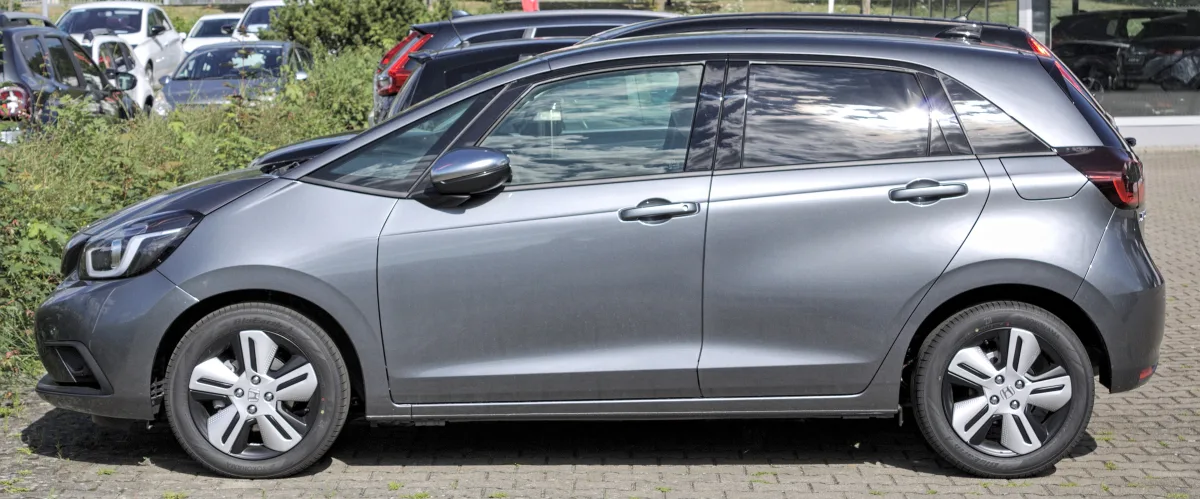
Honda Jazz: II, III and IV generations, engines and trims
The Honda Jazz is a small yet remarkably spacious hatchback renowned for its reliability and practical interior. We explore how the II, III and IV generations differ, which engines are most common, how the trims vary and what to check when buying a used Jazz.






Jazz in brief
The Jazz (known as the Fit in some markets) has been in production since 2001. Four generations have been sold in Europe: I (2001–2008), II (2008–2015), III (2015–2020) and IV (from 2020).
The Jazz's standout feature is its fuel tank located under the front seats. This makes the cabin and boot spacious, and the rear seatbacks can be folded up (Magic Seats) to carry tall items. The Jazz is often chosen by those who prioritise reliability, so the used market offers well-maintained cars with low mileage.
Which generation to choose
The II generation (2008–2015) is spacious and straightforward. Most commonly found with 1.2 or 1.4 i-VTEC engines; a hybrid version was also available from 2011. A reliable choice for a smaller budget, but these cars are getting on in years.
The III generation (2015–2020) is even more spacious, with a more modern interior and a touchscreen in higher trims. In Europe, it was only available as a petrol — there was no hybrid in this generation. It's a popular and reliable choice in the used market.
Fourth generation (from 2020) sold in Europe only as an e:HEV hybrid. It stands out with its large glass area, comfortable seats, and smooth ride, while the Crosstar version offers higher ground clearance and protective body parts. The 2023 refreshed version got a more powerful gearbox and a sportier Advance Sport trim.
Engines and transmissions
In the second generation, there were 1.2 i-VTEC (around 90 HP) and 1.4 i-VTEC (around 100 HP) petrol engines. Alongside the manual gearbox, a robotized i-Shift was offered, and after the update, a CVT variator.
In the third generation, the most common engine was the 1.3 i-VTEC (around 102 HP) with a 6-speed manual gearbox or CVT variator. From 2018, there was also a 1.5 i-VTEC (around 130 HP) in the sportier Dynamic version.
The fourth generation e:HEV system consists of a 1.5-litre petrol engine and two electric motors. Usually, the electric motor drives the car, while the petrol engine acts as a generator; at higher speeds, it can directly drive the wheels. Combined power is around 109 HP, and after the 2023 update, around 122 HP. No need to charge from a nest.
What to check when buying a used Jazz
The Jazz is considered one of the most reliable small cars, but automatic transmissions require attention. The second-generation i-Shift robotized box shifts slowly and with hesitation — that's normal for it, but clutch and gear control issues are expensive. The CVT fluid needs to be changed on time; there should be no hesitation or shuddering during a test drive.
Check that the air conditioning works — older Jazz models can have issues with the compressor. Inspect the brakes and suspension, and in older cars, check the underbody and wheel arches for rust.
For the fourth-generation hybrid, request a diagnostic check for any issues with the hybrid system and battery; service history is particularly useful here. For all cars, check the mileage against the service records and MOT history.


Trim levels
Names and equipment vary by market and year; we list the most common trims found in Europe.
Comfort
Third and fourth generationsBase trim with essential equipment.
- Air conditioning
- Often — steel wheels
- Fourth generation — Honda SENSING safety systems
Elegance
Third and fourth generationsMost popular trim — a good balance of price and equipment.
- Light-alloy wheels
- Often — touchscreen infotainment system with Apple CarPlay and Android Auto
- Often — automatic climate control and parking sensors
Dynamic
Third generation, from 2018The sportiest version of the third generation.
- 1.5 i-VTEC, around 130 hp
- Sporty bumpers and rear spoiler
- Sportier interior trim
Executive
Fourth generationThe best-equipped fourth-gen version.
- 16-inch lightweight alloy wheels
- Often — LED headlights and navigation
- More comfort features
Crosstar
Fourth generationCrossover-style version with higher ground clearance.
- Increased ground clearance and protective body details
- Roof rails, often — two-tone body
- Water-repellent interior trim
Advance Sport
Fourth generation post-2023 refreshSporty-looking version with plenty of kit.
- Sporty bumpers and dark exterior details
- Often — bigger wheels
- Generous comfort and safety kit
Fourth-gen spec comparison
| Comfort | Elegance | Executive | Crosstar | |
|---|---|---|---|---|
| Who it's for | Cheapest on a budget | For most buyers | Most kit | Poorer roads and looks |
| Interior | Basic, cloth trim | Touchscreen | More comfort features | Water-repellent upholstery |
| Headlights | Standard | Standard | Standard | Enhanced |
| Price in the used market (relatively) | € | €€ | €€€ | €€€ |
For most buyers, the best choice is the fourth-gen Elegance: economical, reliable, and well-equipped. The Crosstar is worth considering if you do a lot of off-roading or prefer the crossover look.
Pros
- Exceptionally spacious interior and Magic Seats
- Renowned for reliability
- Very low hybrid fuel consumption in the city
- Holds its value well
Cons
- Often more expensive than competitors in the used market
- Weak petrol engines struggle in urban traffic
- The second-gen i-Shift gearbox is slow and jerky
Frequently asked questions
Is the Honda Jazz hybrid reliable?
The fourth-gen e:HEV system is considered reliable and easy to maintain, as it lacks a conventional gearbox. As with any hybrid, it's worth checking that diagnostics show no system faults.
What's the difference between the Jazz and Jazz Crosstar?
Crosstar — the crossover-style Jazz with increased ground clearance, protective body details, and roof rails. The tech and interior are essentially the same.
Which Jazz generation is best to buy used?
If low running costs and modern features are most important, go for the fourth generation. For a smaller budget, the third generation with the 1.3 i-VTEC engine and manual gearbox is a great choice — it's simple, reliable, and inexpensive to maintain.
Is the Jazz boot spacious enough?
For a small car, yes. With the rear seats folded flat, the floor is almost level, and with the rear seatbacks raised, you can carry tall items, such as houseplants.
Updated 2026-10-09 · Trim levels and equipment vary by market and model year — check the equipment of the specific car. · Translated automatically


