 English
 Lietuvių
 Latviešu
 Eesti
 Polski
 Русский
 Українська
 Deutsch
 Nederlands
 Čeština
 Slovenčina
 Svenska
 Norsk
 Dansk
 Suomi


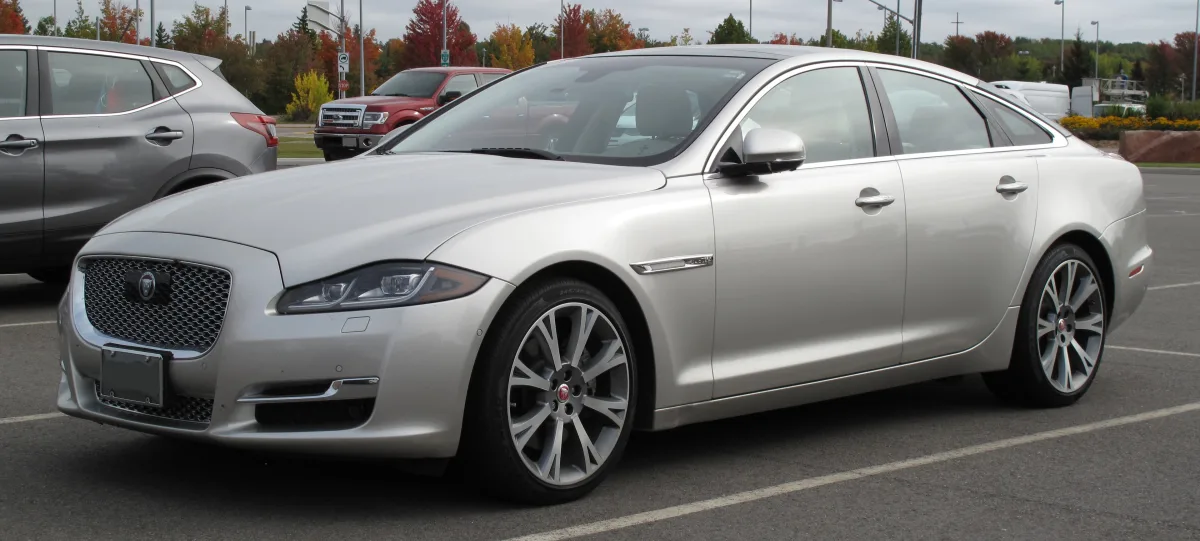
Jaguar XJ: X350 and X351 generations, engines and trims
The Jaguar XJ is the largest and most luxurious Jaguar saloon, produced from 1968 to 2019. We look at what sets apart the last two generations—the X350 and X351—what engines are most popular, how the trims differ, and what to check before buying used.






XJ in brief
The XJ has always been Jaguar’s flagship model—a large, low, and elegant saloon that competes with the Mercedes-Benz S-Class, BMW 7 Series, and Audi A8. Both of the latest generations feature a lightweight aluminium body and air suspension, with some models built with a long wheelbase (XJ L).
The XJ is praised for its distinctive design, smooth ride, and rarity—it’s far less common than its German rivals. Its value drops quickly in the used market, so you can pick up a luxury car relatively cheaply, but repairs and maintenance remain expensive.
X350 vs X351—what’s the difference
The X350 generation (2003–2009, refreshed in 2007) retained the classic XJ look with round headlights, but underneath lies a modern aluminium body. It’s a choice for traditional design lovers, but today it’s an old car where condition is more important than the trim.
The X351 generation (2009–2019) is a completely new, modern design with a coupe-like silhouette and a more contemporary interior. It’s the most popular XJ generation in the used market. From 2013, cars got an 8-speed automatic gearbox, and the 2015 refreshed models came with LED headlights and a newer infotainment system.
Engines and gearboxes
The X350 is most commonly found with a 2.7 V6 diesel (around 200 HP), as well as petrol 3.0 V6 and 3.5–4.2 V8 engines. The sporty XJR featured a 4.2 V8 with a supercharger (around 400 HP).
The X351 is most popular with a 3.0 V6 diesel (around 275–300 HP). Petrol options include a 3.0 V6 with a supercharger (around 340 HP) and a 5.0 V8, either naturally aspirated or with a supercharger (around 470–575 HP in the most powerful XJR versions). Some markets also had all-wheel-drive versions.
All versions come with an automatic transmission: X350 and early X351 models have a 6-speed, while later X351 models have an 8-speed. Most cars are rear-wheel drive.
What to check when buying a used XJ
Air suspension is a common issue in both generations: the car shouldn't sag on one corner after standing, and there shouldn't be any suspension faults in the instrument cluster. Check all the electronics too — windows, seat adjustments, multimedia, and sensors.
For diesel cars, check the diesel particulate filter (DPF), turbo, and engine noise when cold. In V8 engines, ask about the condition of the timing chain and its tensioners — noise when starting cold is a warning sign.
Repairing an aluminium body is expensive and requires specialist equipment, so check for repainted or unevenly fitted parts. Verify the service history and, before buying, it's worth getting a Jaguar specialist to inspect the car.


Trim levels
Names and equipment vary by market and year; we list the most commonly found trims in Europe.
Sovereign
X350 generationThe classic luxury X350 version.
- Leather interior and wood trim
- Air suspension
- Often — navigation and heated seats
Luxury
X351 generationThe base X351 trim, which already comes with plenty of luxury features.
- Leather interior and heated seats
- Navigation and automatic climate control
- Often — rear-view camera
Premium Luxury
X351 generationThe most popular choice — more comfort features.
- Larger alloy wheels
- Often — ventilated and massaging seats
- Often — panoramic sunroof
Portfolio
X351 generationA higher-class version with the best interior trim.
- Luxurious leather and trim details
- Often — Meridian sound system
- Often — four-zone climate control
R-Sport
X351 generation (post-2015)Sporty-looking version.
- Sporty bumpers and alloy wheels
- Sport seats and trim
- Often — 3.0 V6 diesel
XJR
X350 and X351 generationsSport version with the most powerful V8 engine.
- V8 engine with a supercharger
- Sportier suspension and brakes
- Distinctive bumpers and alloy wheels
Comparison of X351 generation trims
| Luxury | Premium Luxury | Portfolio | XJR | |
|---|---|---|---|---|
| Who's it for? | Luxury on a budget | Everyday comfort | Best interior | For driving pleasure |
| Wheels (most common) | 18–19 inch | 19 inch | 19–20 inch | 20 inch |
| Interior | Leather, heated seats | More comfort features | Premium leather and trim | Sport seats |
| Engine | Mostly 3.0 V6 diesel | 3.0 V6 diesel or petrol | 3.0 V6, 5.0 V8 | 5.0 V8 with supercharger |
| Price in the used market (relatively) | € | €€ | €€ | €€€ |
For most buyers, the best choice is the refreshed (2015–2019) X351 Premium Luxury or Portfolio with the 3.0 V6 diesel. The XJR is worth considering only if you're after a truly powerful car and are prepared for high running costs.
Pros
- Distinctive design and rarity
- Smooth, quiet ride
- Light aluminium body
- Lots of luxury kit for a relatively modest used car price
Cons
- Quickly depreciating value
- Expensive repairs and issues with air suspension
- The sloping roof means there's less headroom at the back than some rivals
Frequently asked questions
Which generation of the XJ is best to buy used?
For many buyers, the best choice is the 2015–2019 X351: more modern infotainment, LED headlights and an 8-speed gearbox. The X350 is cheaper and has a classic look, but it's now quite old, so its condition is crucial.
Is the Jaguar XJ reliable?
Engines and gearboxes usually last a long time if the oil is changed regularly, but the air suspension and electronics can be costly. Choose a car with a clear service history and have it checked by a specialist before buying.
What's the difference between the XJ and XJ L?
The XJ L has a longer wheelbase, so there's much more legroom for rear passengers. The mechanics and equipment are essentially the same, so the XJ L is worth choosing if you often carry adult passengers.
Updated 2026-10-09 · Trim levels and equipment vary by market and model year — check the equipment of the specific car. · Translated automatically


