 English
 Lietuvių
 Latviešu
 Eesti
 Polski
 Русский
 Українська
 Deutsch
 Nederlands
 Čeština
 Slovenčina
 Svenska
 Norsk
 Dansk
 Suomi


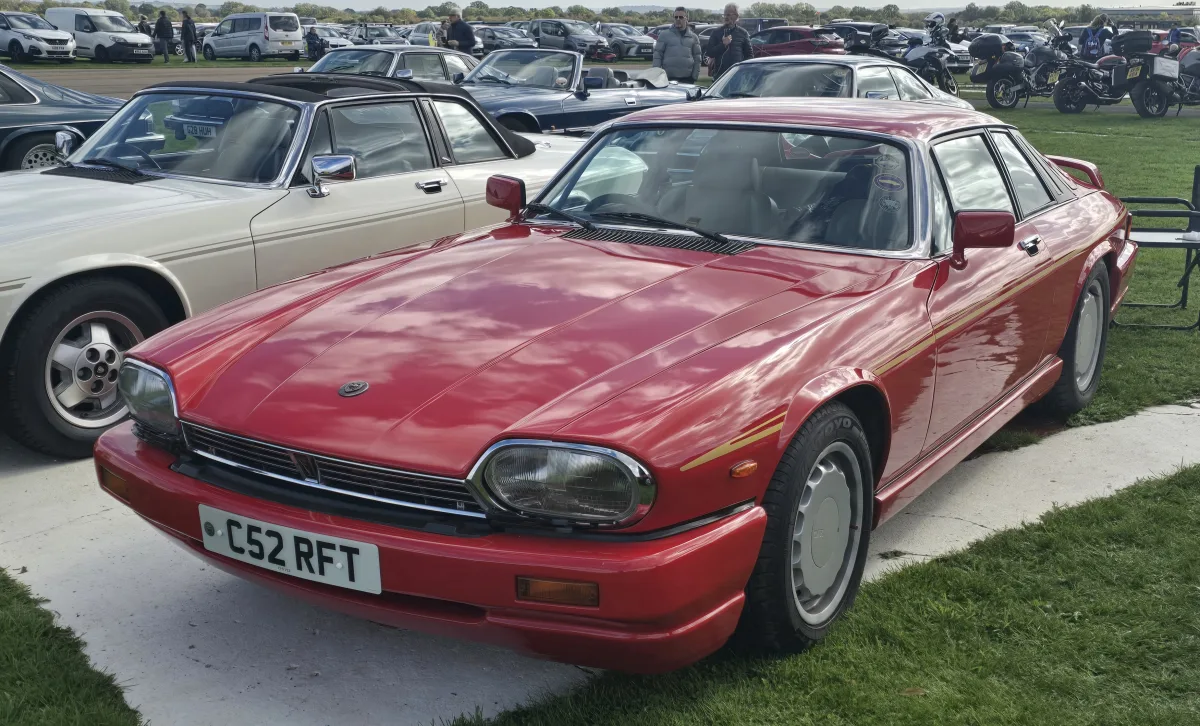
Jaguar XJS: engines, trims and what to check
The Jaguar XJS is a large grand tourer with six-cylinder and V12 engines, produced from 1975 to 1996. We look at its engines, notable trims, and what to check when buying a used XJS.






XJS in brief
The Jaguar XJS is a luxurious two-door grand tourer designed to replace the E-Type. It comes as a coupe, and later as a convertible, making it ideal for those who appreciate comfort and elegant design.
The car was produced for over twenty years, so its technology evolved: early models featured the V12 engine, later joined by six-cylinder versions, and in 1991 the car was updated.
Which trim to choose
Earlier models (pre-1991) have a simpler appearance and are more collectible. Post-1991 updated XJS models have a more modern body, improved technology, and are generally considered a better choice for daily use.
If you're looking for a more economical car, opt for the six-cylinder version. The V12 offers a unique driving experience, but its maintenance and running costs are significantly higher.
Engines and transmissions
The XJS had 3.6 and 4.0-litre straight-six engines, and 5.3 and later 6.0-litre V12s. The six-cylinder versions deliver around 220 hp, while the V12 offers around 300 hp and a much smoother ride.
Transmissions are manual (rarely) or automatic. Most cars have an automatic gearbox, which is suited to relaxed, comfortable driving.
What to check when buying a used XJS
First, inspect the body — look for dents, wheel arches, the floor, and the boot floor. Corrosion is a common issue with these cars, and restoration can be expensive.
In V12 versions, check the cooling system, electrical installation, and fuel system, and in six-cylinder models, look for oil and coolant leaks. More complex systems, like air conditioning and electrical equipment, can be costly to fix.
Check the brakes, especially the rear ones, as their repair is more complicated than usual. Ask for a full service history and, if possible, consult a "Jaguar" specialist.


Trim levels
Names and equipment vary by market and year; we list the most commonly found trim levels in Europe.
3.6
Up to 1991Six-cylinder version with simpler technology.
- 3.6-litre straight-six engine
- Often — automatic transmission
- More economical than the V12
4.0
After 1991Updated six-cylinder version.
- 4.0-litre engine, around 220 HP
- Improved technology
- More modern interior
V12
All generationsThe classic XJS with a V12 engine.
- 5.3 or 6.0-litre V12 engine
- Smooth, quiet ride
- Often — luxurious interior
XJR-S
1988–1993A sportier version with a more powerful V12.
- 6.0-litre V12 engine
- Sportier suspension
- Distinctive styling
Comparison of versions
| 3.6 | 4.0 | V12 | XJR-S | |
|---|---|---|---|---|
| Who it's for | For the budget-conscious GT enthusiast | For daily comfort | For luxury and classic appeal | For Enthusiasts |
| Engine | 3.6 l, 6 cylinders | 4.0 l, 6 cylinders | V12 | V12, more powerful |
| Maintenance | More basic | More basic | More expensive | Most expensive |
| Price in the used market (relatively) | € | €€ | €€ | €€€ |
For most buyers, the 4.0 l version will be the ticket — it's more economical and straightforward. The V12 and XJR-S are best left to enthusiasts prepared for higher maintenance costs.
Pros
- Elegant classic design
- Very comfortable ride
- Smooth V12 engine
- Wide range of body styles — from coupe to convertible
Cons
- Corrosion and bodywork repairs can be expensive
- High fuel consumption, especially with the V12
- Maintenance and parts can be pricey
Frequently asked questions
Is the XJS reliable?
With good upkeep — yes, but it's an old car, so the condition of the specific example and its service history are crucial.
Which XJS engine is the best?
For most, the 4.0-litre straight-six is the best bet due to simpler and cheaper maintenance. The V12 — for that unique driving feel.
Is the XJS suitable for daily use?
It can be, if it's well-maintained, but bear in mind the high running costs and more expensive repairs.
Updated 2026-10-19 · Trim levels and equipment vary by market and model year — check the equipment of the specific car. · Translated automatically


