 English
 Lietuvių
 Latviešu
 Eesti
 Polski
 Русский
 Українська
 Deutsch
 Nederlands
 Čeština
 Slovenčina
 Svenska
 Norsk
 Dansk
 Suomi


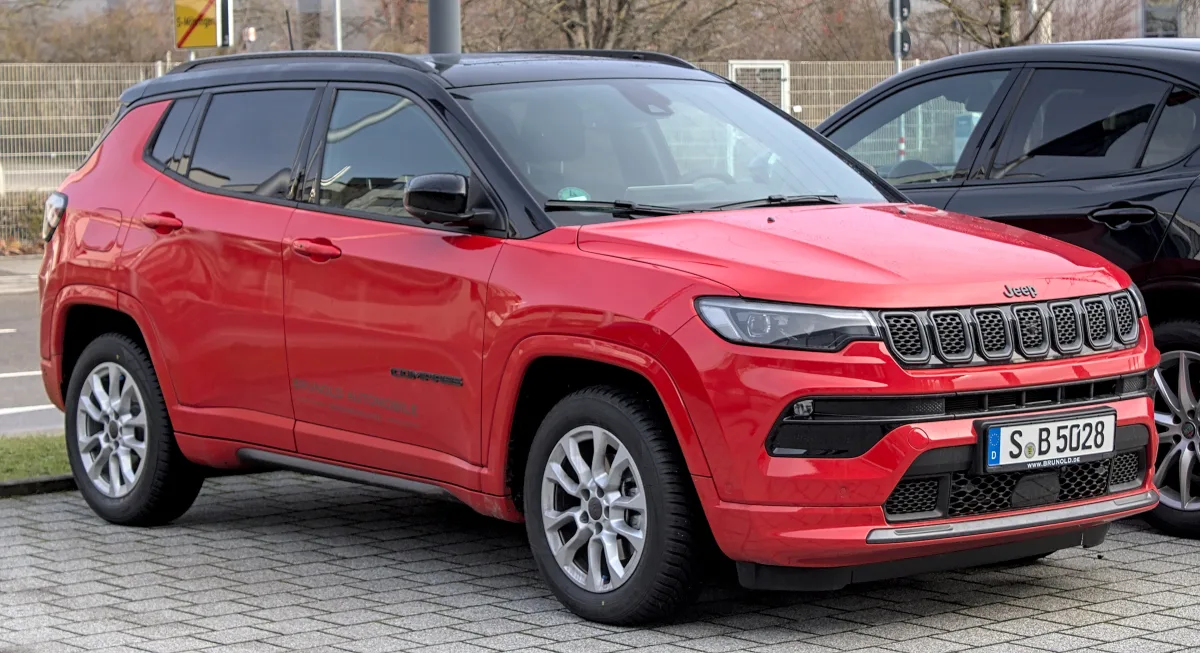
Jeep Compass: Generations, Engines, and Trims
The Jeep Compass is a compact SUV (crossover) that you'll most commonly encounter in Europe in its second-generation (MP) guise. We'll explore how the generations differ, which engines are most popular, how the trims vary, and what to check when buying a used Compass.






The Compass in brief
The first-generation Compass (circa 2006–2016) was rare in Europe and seldom found in the used market. The second generation (MP) went on sale in Europe in 2017, and since 2020, it has been produced in Italy at the Melfi plant. The all-new third generation was introduced in 2025.
The Compass is praised for its robust appearance, high driving position, and the availability of four-wheel drive and the Trailhawk version, tailored for off-road adventures.
Which generation to choose
The second generation, up until its 2021 refresh, is the most affordable way to get a modern Compass. The choice is wide: from basic front-wheel-drive models to four-wheel-drive diesel versions.
The 2021 refreshed Compass received a significantly more modern interior: a larger infotainment screen (up to 10.1 inches), a digital instrument cluster, and more driver-assistance systems. For most buyers, this is the best pick.
The third generation (from 2025) is built on a new platform and offers hybrid and electric powertrains. It's barely available in the used market yet.
Engines and transmissions
Up until 2020, the most common engines were the 1.4 MultiAir petrol (around 140–170 HP) and the 1.6 and 2.0 MultiJet diesels (around 120–170 HP). All-wheel-drive versions were usually paired with a 9-speed automatic gearbox.
From 2020, the 1.4 MultiAir was replaced by the 1.3 turbo petrol engine (around 130–150 HP), and the plug-in hybrid 4xe (around 190–240 HP) with an electric motor on the rear axle was introduced. Later, a mild hybrid with a 1.5 engine and a dual-clutch automated manual was also launched.
Front-wheel-drive Compass models come with a manual or dual-clutch automated manual gearbox, while all-wheel-drive versions typically have a 9-speed automatic or 4xe hybrid transmission.
What to check when buying a used Compass
The 9-speed automatic gearbox in earlier models sometimes shifts roughly or hesitates — a software update often helps, but pay attention to any jerkiness during a test drive.
The valve control module of the 1.4 MultiAir engine is sensitive to oil quality and change intervals, so service history is crucial. For diesel cars that have done a lot of city driving, check the diesel particulate filter (DPF) and EGR valve.
For 4xe hybrids, inquire about the battery condition and check for any electronic error codes. For all cars — verify the mileage according to service records and MOT history.


Trim levels
Names and equipment vary by market and year; we list the most common second-generation trims found in Europe.
Longitude
Second generation (MP)The main and one of the most popular trims.
- Light-alloy wheels
- Uconnect multimedia system
- Often — parking sensors and automatic climate control
Limited
Second generation (MP)For buyers valuing comfort.
- Larger wheels and chrome details
- Often — leather interior and heated seats
- Often — navigation and a larger screen
S
Second generation (MP)A sporty, elegant version with plenty of kit.
- Dark exterior details and large wheels
- Often — LED headlights
- Often — 4xe hybrid powertrain
Trailhawk
Second generation (MP)Version tailored for off-roading.
- Increased ground clearance and all-terrain tyres
- Four-wheel drive with additional off-road modes
- Red tow hooks and a matte engine cover
Night Eagle
Second generation (MP)Limited edition styling
- Black exterior details and black alloy wheels
- Distinctive interior trim
- Spec usually close to Longitude
Comparing second-gen trims
| Longitude | Limited | S | Trailhawk | |
|---|---|---|---|---|
| Who it's for | Daily driving | Comfort | Style and equipment | Boot space |
| Wheels (usually) | 16–17 inch | 18 inch | 19 inch | 17-inch alloy wheels |
| Interior | Base | Often leather | Sportier trim | Robust trim, Trailhawk details |
| Engine (most common) | 1.3 turbo, 1.6 MultiJet | 1.3 turbo, 2.0 MultiJet, 4xe | 1.3 turbo, 4xe | 2.0 MultiJet or 4xe |
| Price in the used market (relatively) | € | €€ | €€ | €€€ |
Most buyers will find the refreshed Longitude or Limited to be the best choice. The Trailhawk is worth considering only if you really do go off-road, while the S is the pick if style and plenty of kit are important.
Pros
- Sturdy looks and a commanding driving position
- All-wheel drive is offered
- The refreshed interior is well-equipped
- The Trailhawk version stands out with its off-road capabilities
Cons
- Less rear space and boot capacity than some rivals
- Early automatics can be unreliable
- High fuel consumption with petrol 4x4 engines
Frequently asked questions
Which Jeep Compass engine is the best?
For high-mileage drivers, the 2.0 MultiJet diesel is the way to go, especially with all-wheel drive. In the city, it's usually more sensible to choose the 1.3 turbo petrol engine or the 4xe hybrid, if you can charge it regularly.
Is the Compass suitable for off-roading?
All-wheel drive versions handle gravel, snow, and light off-roading with ease. For more serious off-roading, the Trailhawk version with increased ground clearance and additional off-road modes is the way to go.
Which years are best for buying a used Compass?
For most buyers, the best choice is the 2021 and later refreshed models: their interiors are more modern, and their engines are newer. Older models are cheaper, but it's crucial to check the automatic gearbox's operation and service history.
Updated 2026-10-09 · Trim levels and equipment vary by market and model year — check the equipment of the specific car. · Translated automatically


