 English
 Lietuvių
 Latviešu
 Eesti
 Polski
 Русский
 Українська
 Deutsch
 Nederlands
 Čeština
 Slovenčina
 Svenska
 Norsk
 Dansk
 Suomi


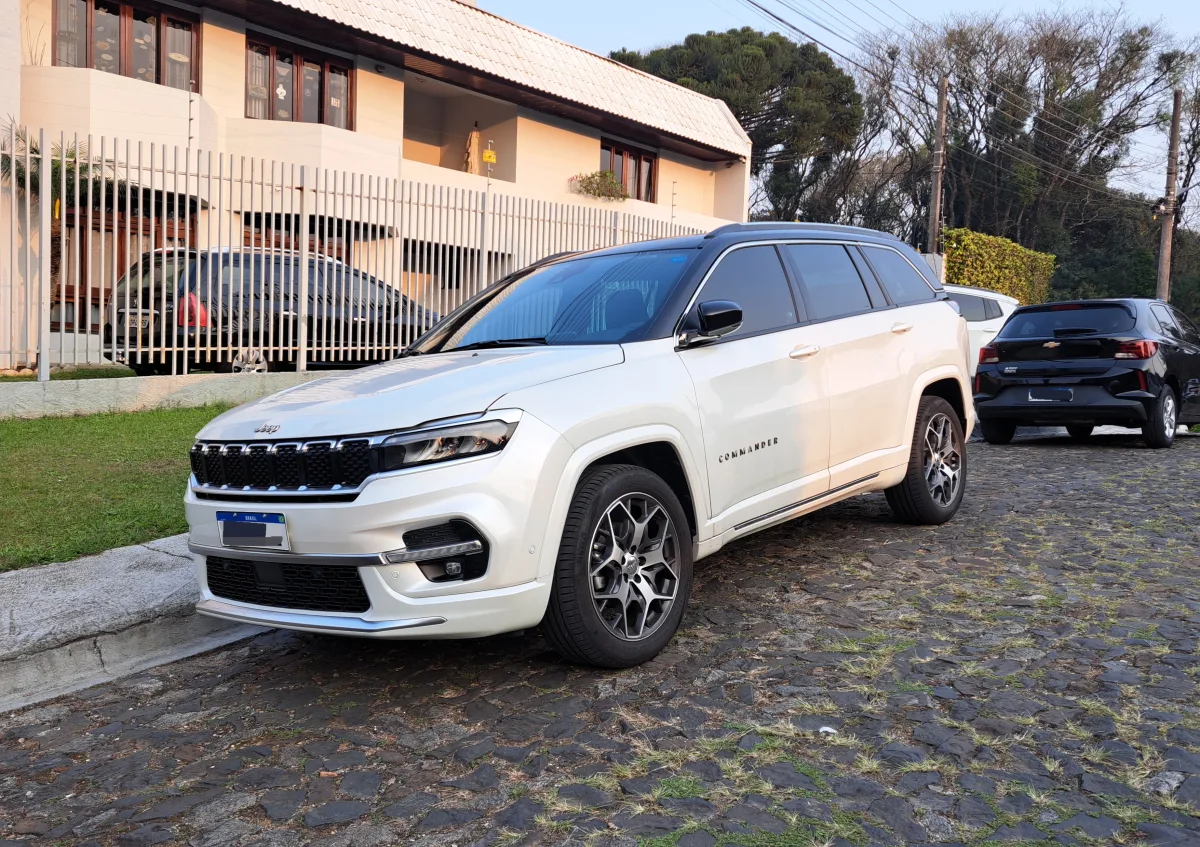
Jeep Commander: seven-seater SUV, engines and what the buyer should know
Jeep Commander (2005–2010) — a boxy seven-seater SUV offered with a diesel V6 and petrol V6 and V8 engines. We look at the engines, gearboxes, trims and what to check before buying a used Commander.






Commander in brief
Commander — Jeep's mid-size SUV with three rows of seats, featuring a boxy, 'classic' Jeep look and a high roof. It's built on the Grand Cherokee platform but is longer and roomier.
The used market Commander is rare and fairly affordable. It's a true SUV with four-wheel drive, but it drinks fuel and has high maintenance demands.
Early and later models
The Commander was produced in one generation from 2005–2010, so differences are minimal. During production, the interior trim was improved and some equipment was updated.
When buying, prioritise the engine, gearbox and service history over the year of manufacture. Some examples were imported from the USA, so equipment and engine offerings may vary.
Engines and gearboxes
In Europe, the most common is the 3.0-litre turbodiesel V6 (around 218hp), sourced from Mercedes-Benz, along with the petrol 3.7-litre V6 and 4.7 and 5.7-litre V8 engines. The V8s are thirsty, while the diesel is the most economical.
The gearbox is an automatic five-speed. The four-wheel drive with a reduction gear is for tougher terrain, not just city driving.
What to check when buying a used Commander
In diesel cars, check for cold starting issues, smoke, turbocharger noise, and the particulate filter. In petrol cars, look for oil leaks and engine noise.
Test the automatic transmission (smoothness, no jerking), all-wheel drive and differential, inspect the suspension, brakes, and steering mechanism. A heavy SUV will wear these parts out faster.
Check the electrical equipment, air conditioning, signs of corrosion, and the condition of the interior. Ask for a full service history.


Trim levels
Names and equipment vary by market and year; we list the most commonly found names in Europe.
Limited
2006–2010 model yearsHigher-spec trim.
- Often — leather upholstery
- Often — automatic climate control
- Often — lightweight alloy wheels
Overland
2006–2010 model yearsTop-of-the-range trim.
- Often — more luxurious upholstery
- Often — generous comfort equipment
- Often — larger alloy wheels
Engine comparison
| 3.0 CRD | 3.7 V6 | 5.7 V8 | |
|---|---|---|---|
| Who's it for? | Long distances and towing | Occasional use | Power enthusiasts |
| Fuel economy | Most economical | Least economical | Most powerful |
| Gearbox | Automatic | Automatic | Automatic |
| Price in the used market (relatively) | €€ | € | € |
Most buyers opt for diesel due to economy and pulling power. Petrol variants might only make sense if you cover few miles.
Pros
- Seven seats and a spacious interior
- A genuine 4x4 with four-wheel drive
- A distinctive, classic Jeep look
- Prices are relatively low in the used market
Cons
- Very high fuel consumption in petrol versions
- Maintenance and parts are more expensive than average for SUVs
- Interior trim quality is a bit basic
Frequently asked questions
Is the Commander suitable for off-roading?
Yes. It has four-wheel drive and a high ride height, but due to its size and weight, it's better suited to lighter off-roading.
Does the Commander have a diesel engine?
Yes, in Europe, a 3.0-litre turbo-diesel V6 from Mercedes-Benz was offered, which is often considered the best choice.
How many seats does the Commander have?
The Commander has three rows of seats and seven seating positions, although the third row is more suited to children or short journeys.
Updated 2026-10-19 · Trim levels and equipment vary by market and model year — check the equipment of the specific car. · Translated automatically


