 English
 Lietuvių
 Latviešu
 Eesti
 Polski
 Русский
 Українська
 Deutsch
 Nederlands
 Čeština
 Slovenčina
 Svenska
 Norsk
 Dansk
 Suomi


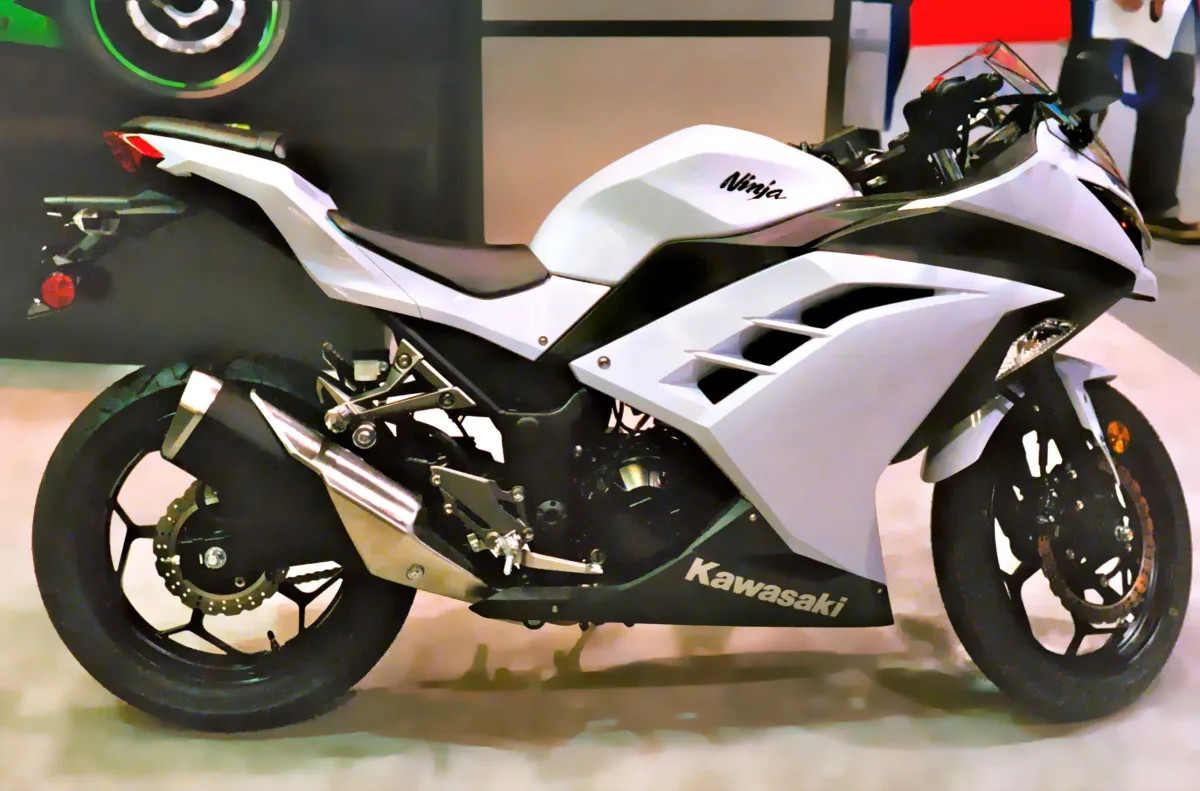
Kawasaki Ninja 300: a sporty-style motorcycle for the A2 category
The Kawasaki Ninja 300 (2012–2017) is a small, easy-to-handle sporty-style motorcycle with a 296 cm³ twin-cylinder engine, perfect for beginners and A2 category riders. We look at the versions, engine, and what to check when buying used.






Ninja 300 in brief
The Ninja 300 was designed as an accessible sporty machine for beginners. It's lightweight, has a full fairing, and a lively enough engine to handle both city streets and open roads.
This motorcycle updated the Ninja 250R: it got a larger engine, a more modern look, and a slipper clutch that eases quick downshifts. In 2018, it was replaced by the Ninja 400.
Versions — what's the difference
The Ninja 300 was offered as the base version and with ABS. There were also special editions, like the SE, with additional features and colour schemes. Specific equipment should be verified through documents or VIN.
The technical base is the same across all versions, so the main difference is ABS and trim. When buying used, it's worth choosing models with ABS if possible, as it enhances safety.
Engine, gearbox, and running gear
The engine is a 296 cm³ liquid-cooled parallel twin with electronic fuel injection, around 39 hp. By power, the motorcycle is suitable for A2 category riders. It pulls smoothly from low revs and revs sportily to high.
The transmission is a six-speed box with a slipper clutch. The final drive is chain-driven. The motorcycle is light and agile, with straightforward handling.
What to check when buying a used Ninja 300
Beginner-friendly motorcycles are often favoured by many riders, so first look for signs of drops on the fairings, crash bars, exhaust system, and footpegs. Check if the engine starts easily and runs smoothly.
Inspect the chain, sprockets, brakes, tyres, swingarm bushings, and electrical equipment. If it has ABS, ensure the warning light isn’t illuminated. Ask for the service history and inquire if the motorcycle was track-used.


Trim levels and versions
Names and equipment vary by market and year; we list the versions most commonly found in Europe.
Ninja 300
2012–2017The base version is a lightweight, sporty-style motorcycle.
- 296 cc twin-cylinder engine
- Six-speed transmission and slipper clutch
- Full fairing
Ninja 300 ABS
2012–2017The ABS version is safer for daily commuting.
- ABS
- The same engine base
- Often comes with additional colour schemes
Ninja 300 SE
2012–2017Special edition with extra trim.
- The same technical base
- Often — ABS
- Special colours and trim
Comparing versions
| Ninja 300 | Ninja 300 ABS | Ninja 300 SE | |
|---|---|---|---|
| Who it suits | For a lower starting price | For safer daily driving | For those who value appearance |
| ABS | Often not included | There is | Often included |
| Engine | 296 cc, around 39 hp | 296 cc, around 39 hp | 296 cc, around 39 hp |
| Price in the used market (relatively) | € | €€ | €€ |
Most buyers' top pick is the Ninja 300 with ABS. The base version is a solid choice if budget is a priority. The SE is worth considering for its styling.
Pros
- Ideal for beginners and A2 licence holders
- Light and agile
- Sporty looks for a modest price
- Reliable, straightforward engine
Cons
- Modest power on the motorway
- Sporty riding position for long journeys
- Many examples have been ridden hard – check for wear
Frequently asked questions
Is the Ninja 300 suitable for an A2 licence?
Yes, but check the specific motorcycle's documents before buying.
Does the Ninja 300 have ABS?
Some examples do, but it depends on the version. Check the documents or VIN.
How does the Ninja 300 differ from the Ninja 400?
The Ninja 400 is the newer model with a larger engine, while the Ninja 300 is the older, lighter, and more affordable option.
Updated 2026-10-21 · Trim levels and equipment vary by market and model year — check the equipment of the specific car. · Translated automatically


