 English
 Lietuvių
 Latviešu
 Eesti
 Polski
 Русский
 Українська
 Deutsch
 Nederlands
 Čeština
 Slovenčina
 Svenska
 Norsk
 Dansk
 Suomi


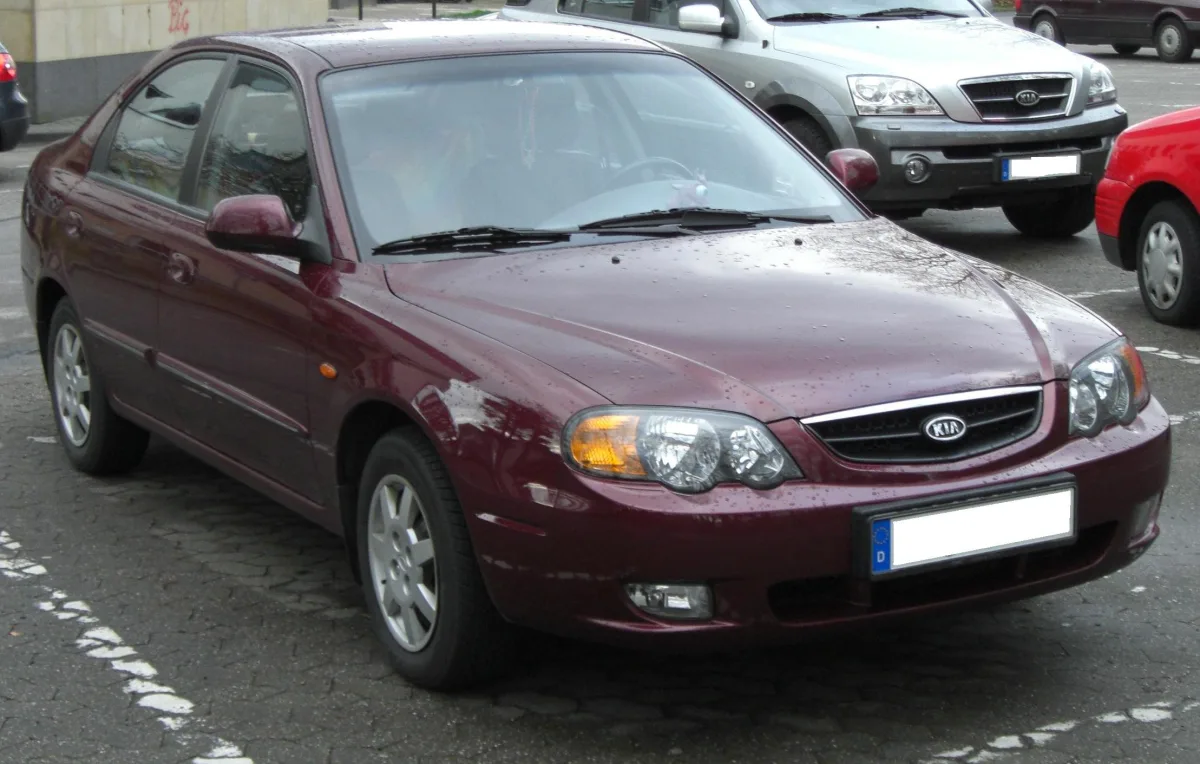
Kia Shuma: compact hatchback, engines and what the buyer should know
Kia Shuma (1997–2004) — a compact class hatchback, one of the first Kia models to gain popularity in Europe. We look at the first and second generations, engines and what to check before buying a used Shuma.






The Shuma in brief
The Shuma was Kia's compact hatchback aimed at the European market: simple, affordable and practical. It competed with the Opel Astra, Ford Focus and other compact class models of the time, offering more kit for less money.
Today, it's a budget option in the used market, often bought as a first or second car. Most remaining Shumas are now quite old, so the key factors are the technical condition and body corrosion.
Shuma and Shuma II
The first Shuma (1997–2001) has a simpler design and interior. The second generation (Shuma II, 2001–2004) got a new front end, improved interior and a more modern engine.
The Shuma II is usually better equipped and more refined, but it's less common. When choosing, prioritise condition and service history over generation.
Engines and gearboxes
The Shuma came with petrol engines: 1.5-litre (around 88hp) and 1.6-litre 16-valve (around 100hp). There were no diesel versions. The engines are simple, low-power units suitable for everyday driving.
The gearbox is a five-speed manual; some cars had an automatic option. The design is simple, so repairs are usually inexpensive.
What to check when buying a used Shuma
First, inspect the body: check for dents, wheel arches, door sills, and the boot floor. Corrosion is the primary risk with cars of this age.
Check the engine's operation, oil leaks, service history of the distribution system, clutch, and gearbox. Test the brakes, steering play, and ride.
Check the electrical equipment and interior condition. Ask for the service history and verify that the car hasn't been in an accident.


Versions
Names and equipment vary by market and year; we list the most commonly encountered names in Europe.
1.5
1997–2004The base version with a 1.5-litre petrol engine.
- Around 88 hp
- Simple construction
- Low running costs
1.6
Later yearsThe more powerful version with a 1.6-litre 16-valve engine.
- Around 100 hp
- Better driving dynamics
- Often comes with more luxurious equipment
Engine comparison
| 1.5 | 1.6 | |
|---|---|---|
| Who it's for | For daily driving | For more dynamism |
| Approximate power | Around 88 hp | Around 100 hp |
| Fuel consumption | Average | Slightly higher |
| Price in the used market (relatively) | € | € |
The 1.5-litre version is ideal for most buyers due to its simplicity. Opt for the 1.6 if you're after a more spirited drive.
Pros
- Very affordable in the used market
- Simple design and cheap to maintain
- Practical compact body
- Often — good value for money
Cons
- Corrosion risk due to age
- Plush comfort and safety
- Parts availability is narrower than for popular models
Frequently asked questions
Is the Shuma suitable for daily use?
Yes, if the car is in good condition. Due to its age, it will require more attention than a modern car.
Does the Shuma have a diesel engine?
No. Only petrol engines are offered — 1.5 and 1.6 litre.
How does the Shuma II differ from the original Shuma?
The Shuma II received a refreshed front end, interior, and a more modern engine. Technically, it's the same base, but a better-equipped car.
Updated 2026-10-19 · Trim levels and equipment vary by market and model year — check the equipment of the specific car. · Translated automatically


