 English
 Lietuvių
 Latviešu
 Eesti
 Polski
 Русский
 Українська
 Deutsch
 Nederlands
 Čeština
 Slovenčina
 Svenska
 Norsk
 Dansk
 Suomi


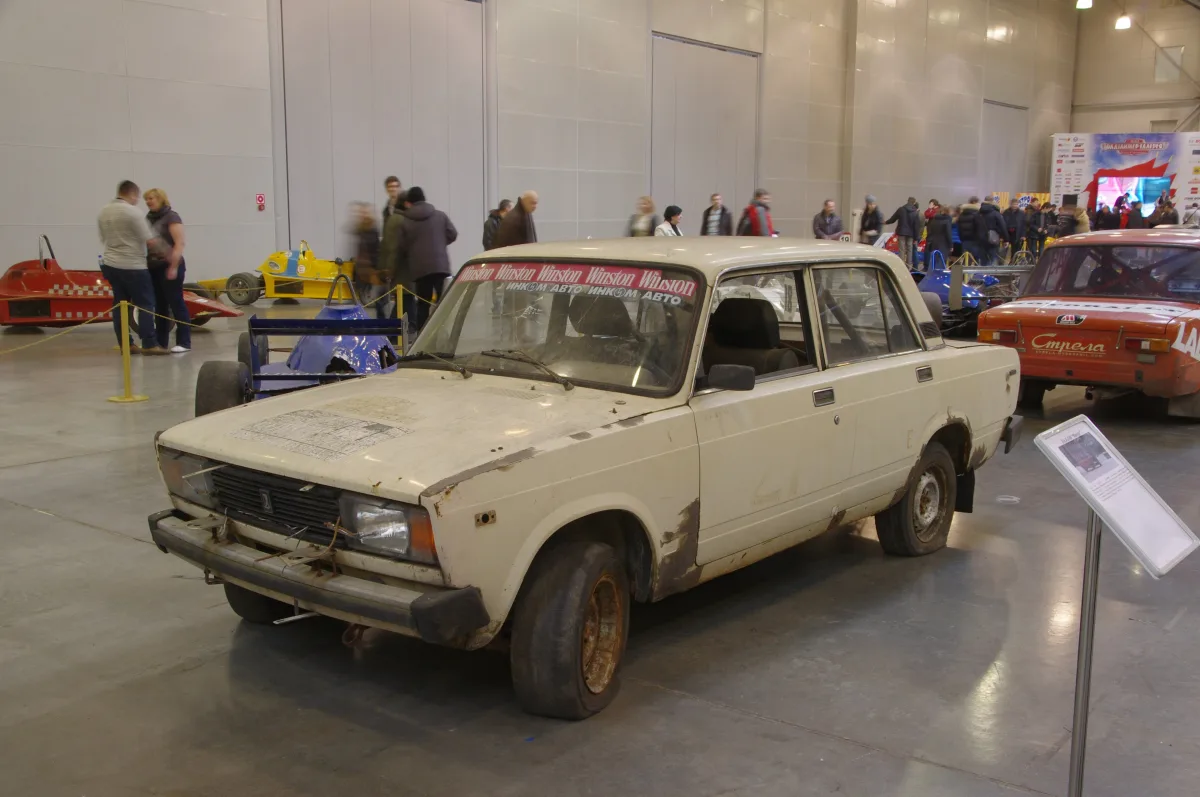
Lada 2105: sedan, engines, and buying advice
Lada 2105 (1980–2010) — a rear-wheel-drive sedan, one of the longest-running 'classic' Lada models. We'll look at the engines, trims, and what to check before buying such an old car.






Lada 2105 in brief
The 2105 is a straightforward sedan that hails from earlier 'classic' Lada models. In Europe, it was known as the Lada Riva. It was produced for a long time, so you'll find cars of varying ages.
It's not expensive and is easy to fix, but it has an outdated design, minimal safety features, and a comfort level that doesn't match modern models.
Which trim to choose
Earlier models usually have carburettor engines and basic interior trim. Later ones might be better equipped.
When buying, it's more important to assess the specific car's condition, the body's corrosion level, and maintenance history than the year of manufacture.
Engines and gearboxes
You'll commonly find petrol engines ranging from about 1.2 to 1.6 litres, with 4 or 5-speed manual gearboxes.
The engine technology is simple, but it requires regular maintenance — valve adjustments, ignition timing, and carburettor tuning.
What to check when buying a used Lada 2105
Corrosion is the biggest issue: inspect the sills, wheel arches, boot floor, and the bottom of the windscreen.
Check the engine condition (oil leaks, smoke), suspension, brakes, and electrical equipment. If the car is converted to run on gas, make sure it was done legally.


Trim levels
Names and equipment vary by market and year; we list the most common trims found in Europe.
Ankstyvieji (iki ~1990 m.)
1980–1990The oldest and most basic versions.
- Often a carburettor engine
- Basic interior trim
- Minimal equipment
Vidurinio laikotarpio
1990–2000The most commonly encountered cars.
- Often a 1.3–1.6-litre engine
- Often a better interior
- Often additional comfort features
Vėlyvieji (po 2000 m.)
2000–2010Newer cars.
- Often in better condition
- Often with lower mileage
- Often comes with more kit
Lada Riva
1980–2010Export name in Europe.
- Same tech as the 2105
- Different market spec
- Often comes with extra trim
Version comparison
| Ankstyvieji | Vidurinio laikotarpio | Vėlyvieji | |
|---|---|---|---|
| Who it suits | A basic workhorse | Everyday use | The newer version |
| Engine | Carburetted | 1.3–1.6-litre | Various |
| Interior | Basic | A bit better | A bit more comfortable |
| Price in the used market (relatively) | € | € | € |
The 2105 is chosen for its simplicity and low cost. Opt for examples with a sound body and working mechanics.
Pros
- Simple, easy-to-fix mechanics
- Moderate spare parts costs
- Rear-wheel drive
- Widely available, many mechanics know it
Cons
- Minimal safety features
- Rust and outdated design
- Low comfort and high fuel consumption
Frequently asked questions
Is the Lada 2105 suitable for daily use?
It can be cheap and suitable for simple driving, but the comfort and safety are far inferior to those of modern cars.
How does the 2105 differ from the 2107?
The 2107 is the more luxurious version, while the 2105 is the more basic; technically, they are very similar.
Are parts easy to find?
Usually yes, as it's a simple and widely available model.
Updated 2026-10-09 · Trim levels and equipment vary by market and model year — check the equipment of the specific car. · Translated automatically


