 English
 Lietuvių
 Latviešu
 Eesti
 Polski
 Русский
 Українська
 Deutsch
 Nederlands
 Čeština
 Slovenčina
 Svenska
 Norsk
 Dansk
 Suomi


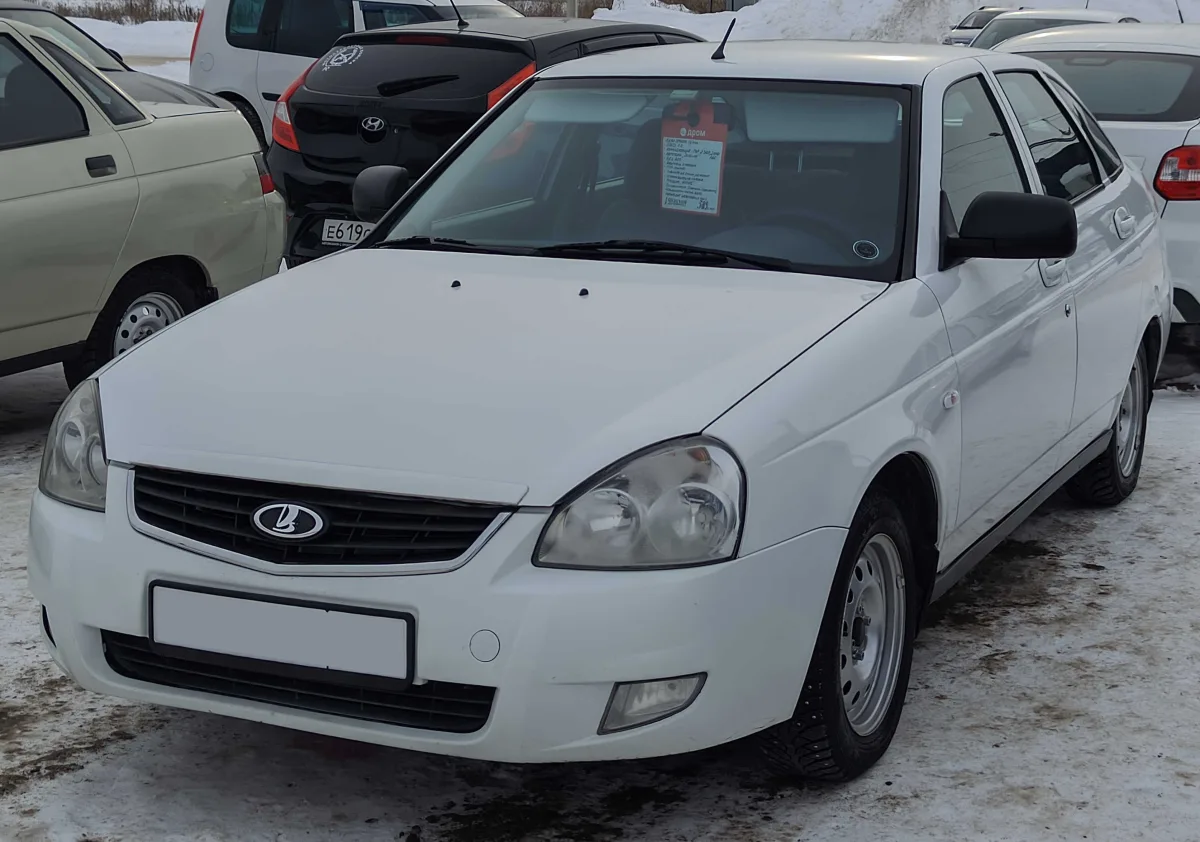
Lada Priora: bodies, engines and trims
The Lada Priora is a compact Russian car produced from 2007 to 2018, available as a sedan, hatchback, estate and coupé. We look at the engines you'll find in the used market, how the trims differ and what to check when buying.






Priora in brief
The Priora was created as a more modern successor to earlier Lada models: a newer body, sturdier construction and better equipment. It was offered in four body styles – sedan, hatchback, estate and coupé.
It's a simple, budget-friendly car with minimal electronics, so it's cheap to run and easy to fix. However, it does lag behind European rivals in terms of comfort and interior quality.
Which version to choose
The Priora was produced in one generation, but around 2013 it was refreshed: the design was updated, the interior improved and more equipment added. Refreshed versions look more modern and usually command a higher price.
Earlier versions are cheaper, but their age means that service history and overall condition are more important than the trim level. Opt for examples with a clear service history.
Engines and gearboxes
The most common engine is the 1.6-litre petrol, offered with 8 and 16 valves. Power ranges from around 80–110hp, depending on the version.
The Priora usually has a manual five-speed gearbox. Some versions had an automated manual gearbox, so it's worth checking when buying.
What to check when buying a used Priora
First, inspect the body for rust, especially around the sills, arches, and boot floor. Check that the doors close properly and there are no uneven gaps.
The engine should run smoothly, without vibration. Check for oil leaks and ask about the timing belt change. Test the clutch, gearbox shifting, and brakes.
It's important to check the electrical equipment and air conditioning, as older cars often have minor faults. Since parts aren't expensive, usually the overall condition of the car is what matters.


Trim levels
Names and equipment vary by market and year; we list the most commonly found trims.
Standart
2007–2018The most basic version with minimal equipment.
- Often — steel wheels
- Basic interior trim
- Often — no air conditioning
Norma
2007–2018Mid-range trim with essential comforts.
- Often — electric front windows
- Often — central locking
- Simpler sound system
Lux
2007–2018Top-of-the-range standard version.
- Often — air conditioning
- Often — alloy wheels
- Often — parking sensors and extra trim
Trim comparison
| Standart | Norma | Lux | |
|---|---|---|---|
| Who it suits | The budget buy | For daily driving | More comfort |
| Wheels (most often) | 14-inch | 14–15-inch | 15-inch |
| Engine | 1.6-litre 8-valve | 1.6-litre 8 or 16-valve | 1.6-litre 16-valve |
| Price in the used market (relatively) | Budget-friendly | Budget-friendly | Mid-range |
For most buyers, the standard trim will suffice. Lux is worth considering if air conditioning and extra features are important.
Pros
- Low cost and simple maintenance
- Cheap spare parts
- Simple, easily repairable design
- Wide range of body styles
Cons
- Better interior quality and comfort
- Less safety equipment than European competitors
- May have corrosion damage
Frequently asked questions
Is the Priora reliable?
It's a straightforward car that's easy to maintain, but reliability depends heavily on the condition of the specific example. It's crucial to inspect the body and engine.
What body styles does the Priora come in?
The Priora is offered as a sedan, hatchback, estate and coupé.
How does the Priora differ from the Kalina?
The Priora is larger and roomier, while the Kalina is a more compact car.
Updated 2026-10-17 · Trim levels and equipment vary by market and model year — check the equipment of the specific car. · Translated automatically


