 English
 Lietuvių
 Latviešu
 Eesti
 Polski
 Русский
 Українська
 Deutsch
 Nederlands
 Čeština
 Slovenčina
 Svenska
 Norsk
 Dansk
 Suomi


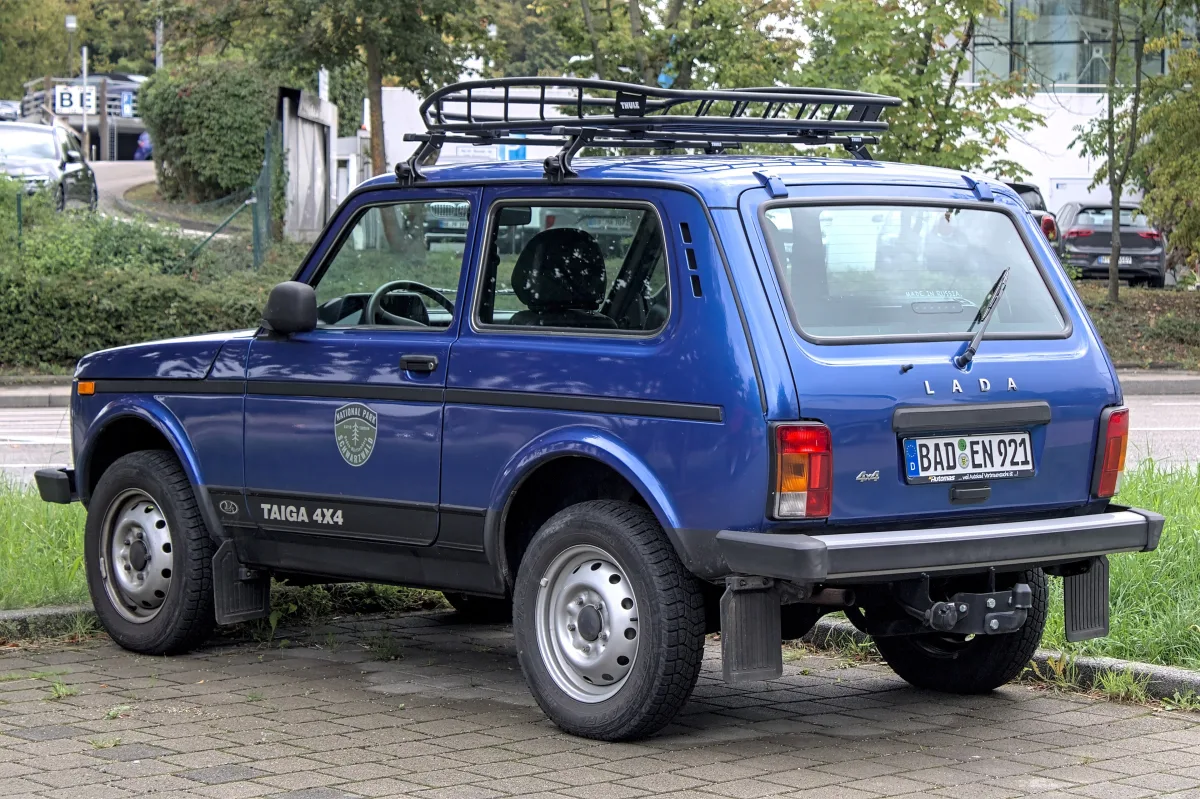
Lada Niva: history, engine and trims
The Lada Niva is a legendary compact SUV that has been produced since 1977 with virtually no changes to its core design. We look at how the Niva (4x4, Legend) variants differ, the technology used, the trims on offer and what to check when buying a used Niva.






Niva in brief
The Niva (VAZ-2121) was the first compact SUV with permanent four-wheel drive and a unibody design. Its construction is simple: a lightweight body, permanent four-wheel drive with a central differential lock and a low-range gear set.
Thanks to this simple design, the Niva stands out with its off-road capabilities despite its compact size. Over nearly half a century, the body has changed little, making the model easy to recognise.
Which version to choose
The most common variant is the three-door model. It was sold for a long time as the Lada Niva or Lada 4x4, and since 2020, this variant has been renamed the Niva Legend. There is also a longer five-door version.
Newer cars have better interiors and safety features, but the core mechanics remain largely the same. Older examples are cheaper, but require more attention due to rust and wear.
Engine and gearbox
In recent decades, the Niva has had a 1.7-litre petrol engine with around 80hp. It's not quick, but it's simple, inexpensive to repair and well-suited to off-roading.
The gearbox is a 5-speed manual, supplemented with a low-range gear set (transfer case). There are no automatic versions.
What to check when buying a used Niva
First, inspect the body for rust – check the sills, arches, floor, and boot area. Rust is one of the most common issues if the car has been kept outdoors.
Check the operation of the gearbox and transmission, look for any grinding noises, and see how the central differential lock works. Inspect the suspension, brakes, and engine mounts.
Pay attention to whether the car has been used off-road: if so, the mechanics could be significantly worn.


Trim levels
Names and equipment vary by market and year; we list the most commonly found trims.
Pagrindinė
up to 2020Basic version without additional equipment.
- Steel wheels
- Basic interior
- No air conditioning
Urban
2014–2020City-friendly version with enhancements.
- Often – lighter interior trim
- Often – air conditioning
- Often – alloy wheels
Legend
from 2020Renamed classic model.
- Often — refreshed interior
- Often — electric windows
- Often — additional safety features
Legend Black
post-2020Distinctive dark-colour version.
- Often — black details
- Often — special alloy wheels
- Often — extra safety
Trim comparison
| Pagrindinė | Urban | Legend | |
|---|---|---|---|
| Who it's for | For the commute and work | For the city and commute | Everyday with more comfort |
| Most common modifications | 16-inch steel wheels | 16-inch light-alloy wheels | 16-inch wheels |
| Engine | 1.7-litre petrol | 1.7-litre petrol | 1.7-litre petrol |
| Price in the used market (relatively) | Budget-friendly | Budget-friendly | Mid-range |
For occasional use, a basic version usually suffices, while for daily driving, the Urban or Legend trims are ideal. The car's technical condition is key.
Pros
- Excellent off-road capabilities
- Simple and cost-effective mechanics
- Compact dimensions
- Permanent four-wheel drive
Cons
- Weak performance and high fuel consumption
- Cabin comfort and noise levels are modest
- Susceptible to rust
Frequently asked questions
Does the Niva handle well off-road?
Yes, it's renowned for its excellent off-road capabilities thanks to its light weight, permanent four-wheel drive, locking centre differential, and low-range gearing.
Is the Niva suitable for daily driving?
It might be, but comfort levels are modest and the engine isn't particularly swift. It's best for those who prioritise capability over comfort.
What are the most common problems?
Rust, worn-out suspension, and transmission noise, especially in older models.
Updated 2026-10-17 · Trim levels and equipment vary by market and model year — check the equipment of the specific car. · Translated automatically


